
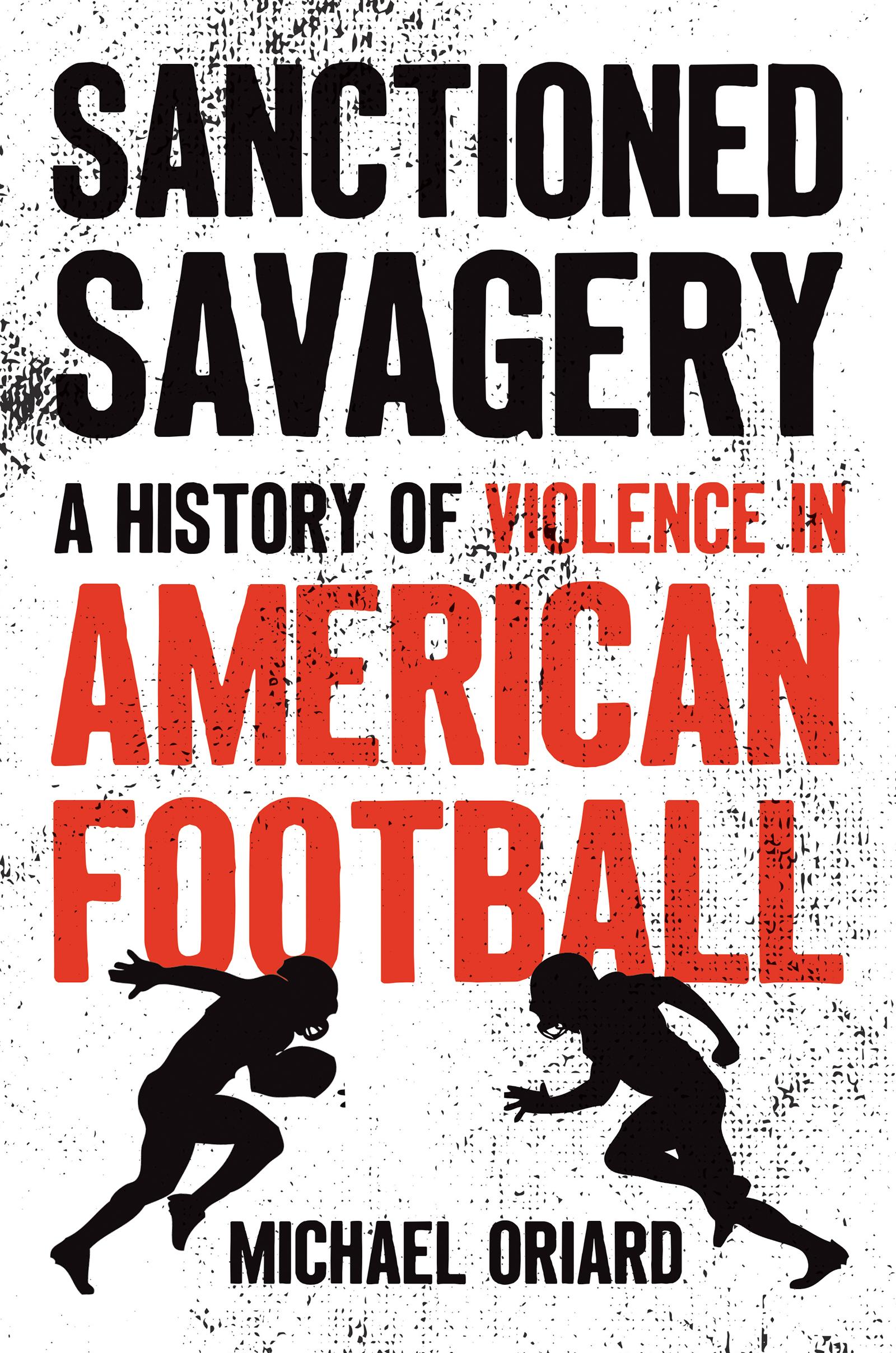
American football was a violent sport from its beginning as a college game in the 1870s and 1880s, in part because learning how to deal with the pain and violence, to “take it,” made men out of college boys. Michael Oriard, former NFL linebacker and professor emeritus of English, shows us that this fundamental belief persisted for more than a century, until signs of chronic traumatic encephalopathy (CTE) were found in Pittsburgh Steelers' center Mike Webster’s brain. Suddenly, the cost of “taking it” could mean long-term damage not just to the body but also to the brain. Without anyone knowing it, that risk had soared since the 1950s and 1960s, when the hardshell plastic helmet became the primary weapon for blocking and tackling, as taught by a new generation of college coaches, led by the University of Alabama’s Bear Bryant.
In this cultural history of football at nearly all levels—high school, college, and pro—Oriard traces the perennial tension between health and culture regarding football as reflected in what the public read in newspapers, magazines, and online. Through examining how we once felt and how we now feel about the game, Oriard challenges us to grapple with the possibility that football might be too violent, in an intolerable way.
In this cultural history of football at nearly all levels—high school, college, and pro—Oriard traces the perennial tension between health and culture regarding football as reflected in what the public read in newspapers, magazines, and online. Through examining how we once felt and how we now feel about the game, Oriard challenges us to grapple with the possibility that football might be too violent, in an intolerable way.
Pay easily by card, Klarna, Apple Pay or Google Pay. Not happy? You always have a 14-day money-back guarantee. Read more in our terms. If you have any questions, email us at hello@memmo.org.
Memmo makes studying easier – wherever you are in the world. We bring your course books and smart study tools together in one place: summaries, quizzes, podcasts and flashcards. Plus Ted, your study buddy who answers anything you wonder. Over 75,000 students already study here – built to help you learn faster and stress less.
You might also like
Buy the book0