
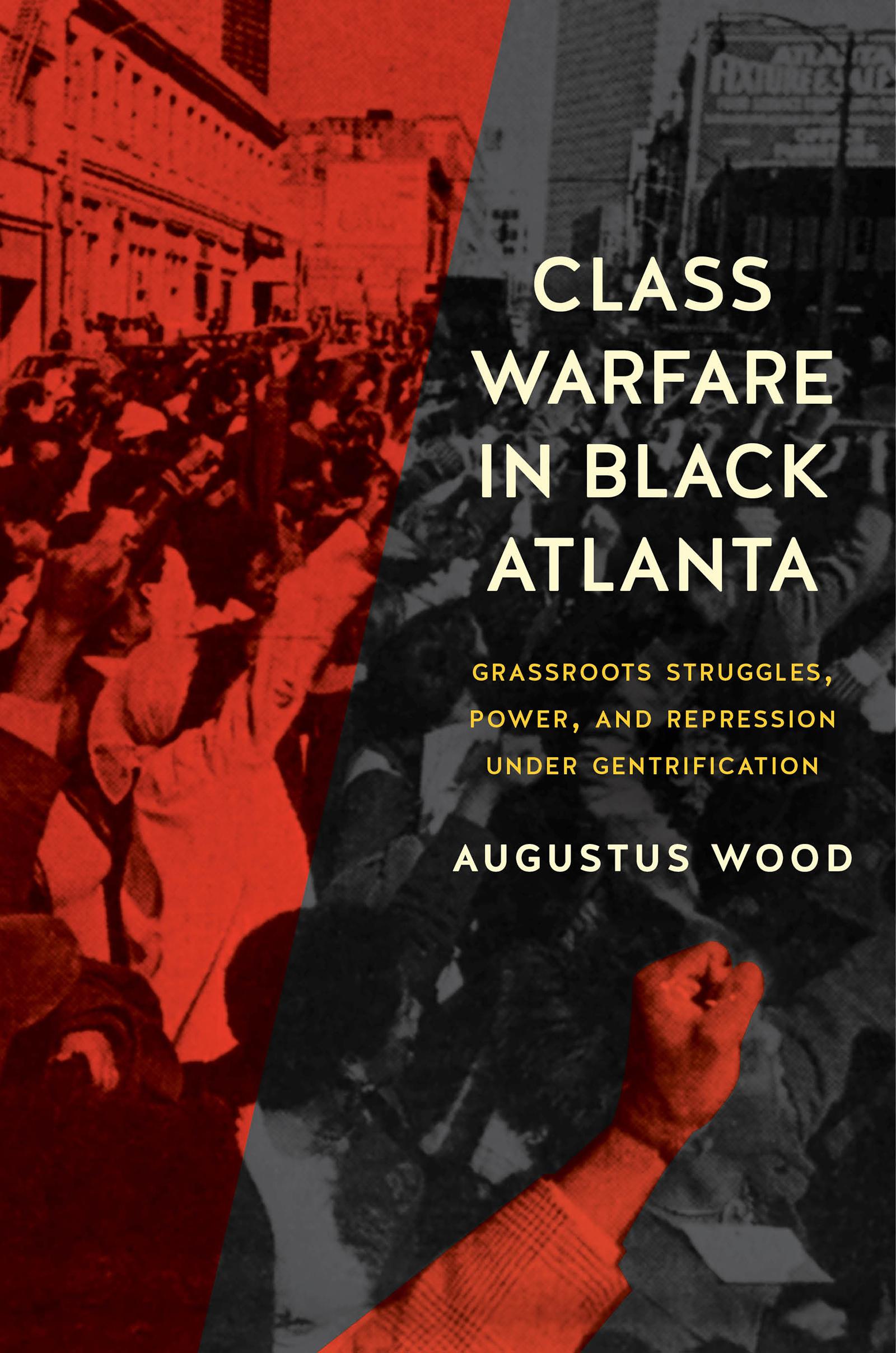
Between 1966 and 2015, the city of Atlanta was transformed. In the late 1960s, Black politicians ascended to the top of the power structure for the first time thanks to newly enfranchised Black working-class voters. Through the early 1970s, the demographics of the city shifted, and the combination of Black empowerment and white flight produced a growing Black working-class majority that increasingly demanded Black Power policies that often clashed with the policies supported by affluent residents. But by the 2010s, Atlanta’s city core had been thoroughly gentrified, and the ability of Black working-class Atlantans to organize and build power had diminished significantly.
Tracing the history of post–civil rights Black Atlanta through rigorous class analysis, Augustus Wood argues that Black and white elites responded to an energized and politicized Black working class by forging a public-private partnership power bloc that included the small but growing Black political leadership, expanding the racial class contradictions in Black Atlanta. This bloc worked to shift state funding away from public services and toward gentrification projects that demolished subsidized housing, and it ramped up police surveillance to deter working-class resistance. Paying close attention to political economy and class while drawing on unexamined archival sources and oral histories of Black working-class Atlantans, especially Black women, Wood reframes our understanding of contemporary Black urban life by highlighting the centrality of the dynamics of intraracial class conflict in urban space.
Tracing the history of post–civil rights Black Atlanta through rigorous class analysis, Augustus Wood argues that Black and white elites responded to an energized and politicized Black working class by forging a public-private partnership power bloc that included the small but growing Black political leadership, expanding the racial class contradictions in Black Atlanta. This bloc worked to shift state funding away from public services and toward gentrification projects that demolished subsidized housing, and it ramped up police surveillance to deter working-class resistance. Paying close attention to political economy and class while drawing on unexamined archival sources and oral histories of Black working-class Atlantans, especially Black women, Wood reframes our understanding of contemporary Black urban life by highlighting the centrality of the dynamics of intraracial class conflict in urban space.
Pay easily by card, Klarna, Apple Pay or Google Pay. Not happy? You always have a 14-day money-back guarantee. Read more in our terms. If you have any questions, email us at hello@memmo.org.
Memmo makes studying easier – wherever you are in the world. We bring your course books and smart study tools together in one place: summaries, quizzes, podcasts and flashcards. Plus Ted, your study buddy who answers anything you wonder. Over 50,000 students already study here – built to help you learn faster and stress less.
You might also like
Buy the book0