
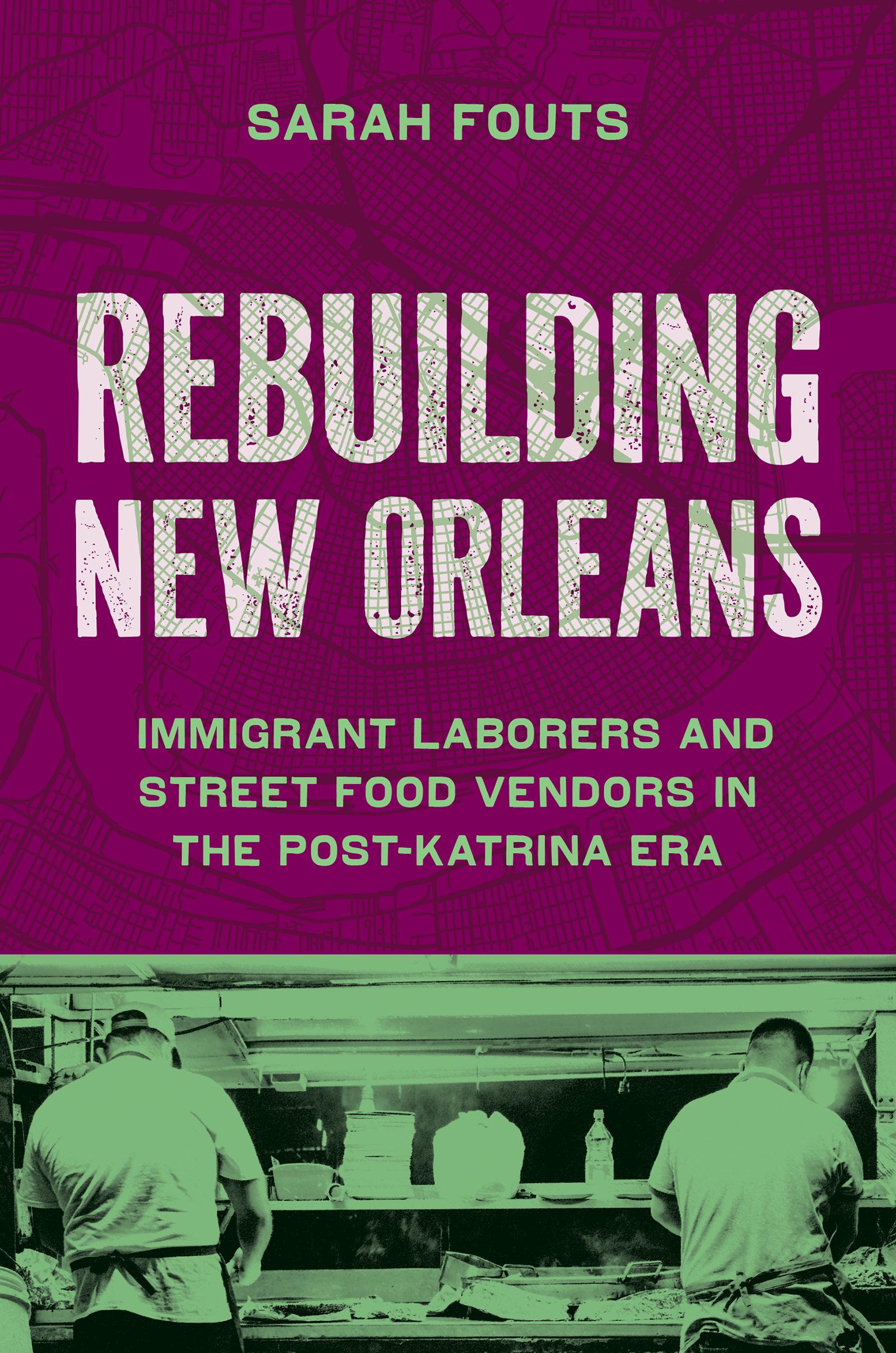
In the aftermath of Hurricane Katrina, Central American and Mexican immigrants arrived in New Orleans to help clean up and rebuild. When federal relief services overlooked the needs of immigrant-led construction and cleanup crews as part of post-Katrina mass feeding strategies, street food stands and taco trucks stepped in to ensure food security for these workers. Many of these food vendors settled in the city over the next decade, opening restaurants and other businesses. Yet, in a city experiencing whitewashed redevelopment, new immigrants were frequently pitted against Black poor and working-class New Orleanians for access to housing and other resources.
During Fouts’s five years as a volunteer with the New Orleans Workers' Center for Racial Justice, she came to know and interview the day laborers, food workers, culture producers, and community organizers whose stories shape this book. Her work reveals how, after the storm, immigrant communities have culturally and politically reshaped New Orleans and its suburbs. Fouts also highlights how immigrants forged multiracial solidarities to foster inclusive change at the local level. By connecting migration, labor, and food, Rebuilding New Orleans centers human experiences to illustrate how immigrant and established communities of color resisted criminalization and racial capitalism to create a more just New Orleans.
Pay easily by card, Klarna, Apple Pay or Google Pay. Not happy? You always have a 14-day money-back guarantee. Read more in our terms. If you have any questions, email us at hello@memmo.org.
Memmo makes studying easier – wherever you are in the world. We bring your course books and smart study tools together in one place: summaries, quizzes, podcasts and flashcards. Plus Ted, your study buddy who answers anything you wonder. Over 50,000 students already study here – built to help you learn faster and stress less.