
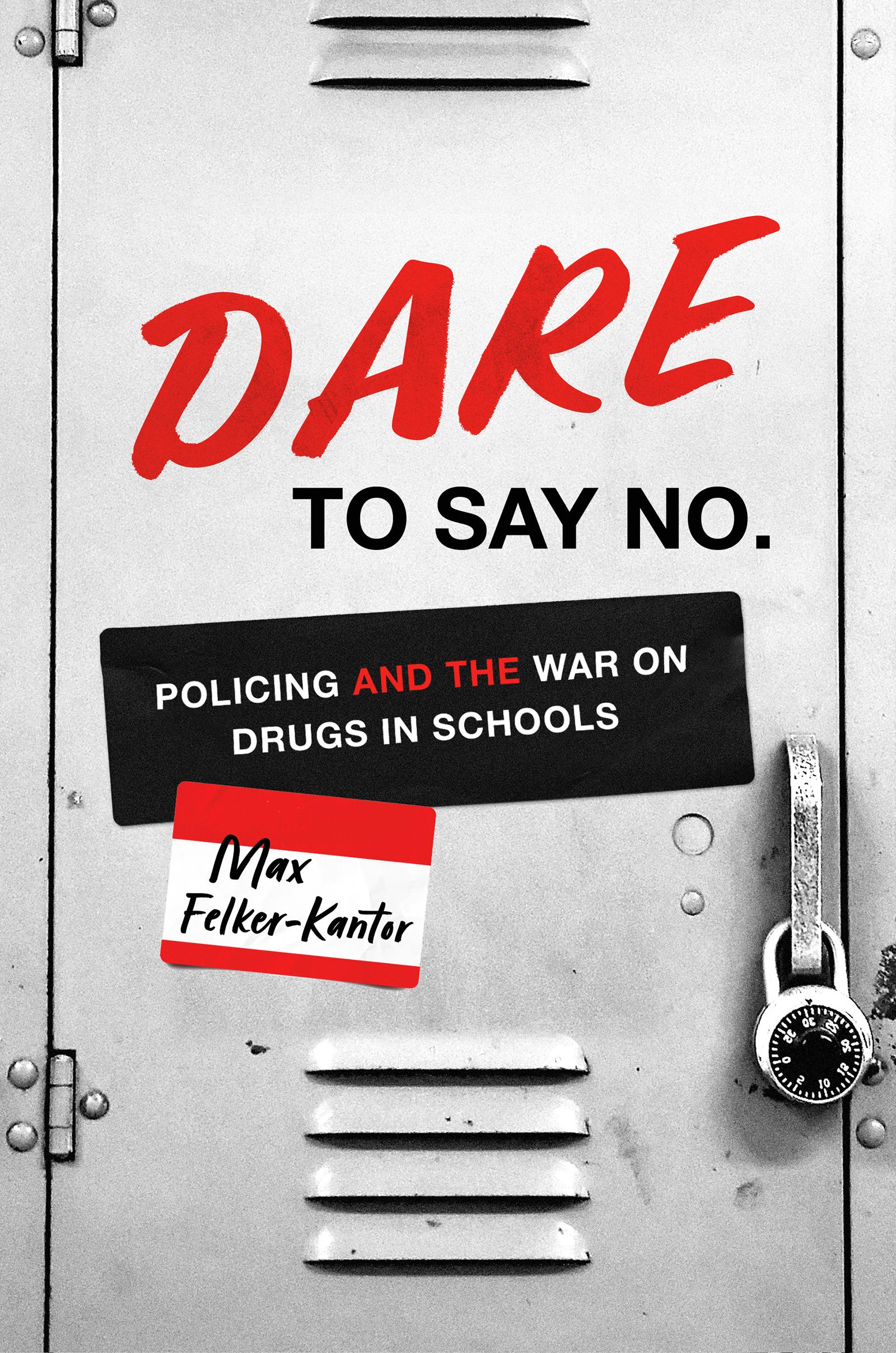
With its signature “DARE to keep kids off drugs” slogan and iconic t-shirts, DARE (Drug Abuse Resistance Education) was the most popular drug education program of the 1980s and 1990s. But behind the cultural phenomenon is the story of how DARE and other antidrug education programs brought the War on Drugs into schools and ensured that the velvet glove of antidrug education would be backed by the iron fist of rigorous policing and harsh sentencing.
Max Felker-Kantor has assembled the first history of DARE, which began in Los Angeles in 1983 as a joint venture between the police department and the unified school district. By the mid-90s, it was taught in 75 percent of school districts across the United States. DARE received near-universal praise from parents, educators, police officers, and politicians and left an indelible stamp on many millennial memories. But the program had more nefarious ends, and Felker-Kantor complicates simplistic narratives of the War on Drugs. He shows how policing entered US schools and framed drug use as the result of personal responsibility, moral failure, and poor behavior deserving of punishment rather than something deeply rooted in state retrenchment, the abandonment of social service provisions, and structures of social and economic inequality.
Max Felker-Kantor has assembled the first history of DARE, which began in Los Angeles in 1983 as a joint venture between the police department and the unified school district. By the mid-90s, it was taught in 75 percent of school districts across the United States. DARE received near-universal praise from parents, educators, police officers, and politicians and left an indelible stamp on many millennial memories. But the program had more nefarious ends, and Felker-Kantor complicates simplistic narratives of the War on Drugs. He shows how policing entered US schools and framed drug use as the result of personal responsibility, moral failure, and poor behavior deserving of punishment rather than something deeply rooted in state retrenchment, the abandonment of social service provisions, and structures of social and economic inequality.
Pay easily by card, Klarna, Apple Pay or Google Pay. Not happy? You always have a 14-day money-back guarantee. Read more in our terms. If you have any questions, email us at hello@memmo.org.
Memmo makes studying easier – wherever you are in the world. We bring your course books and smart study tools together in one place: summaries, quizzes, podcasts and flashcards. Plus Ted, your study buddy who answers anything you wonder. Over 50,000 students already study here – built to help you learn faster and stress less.
You might also like
Buy the book0