
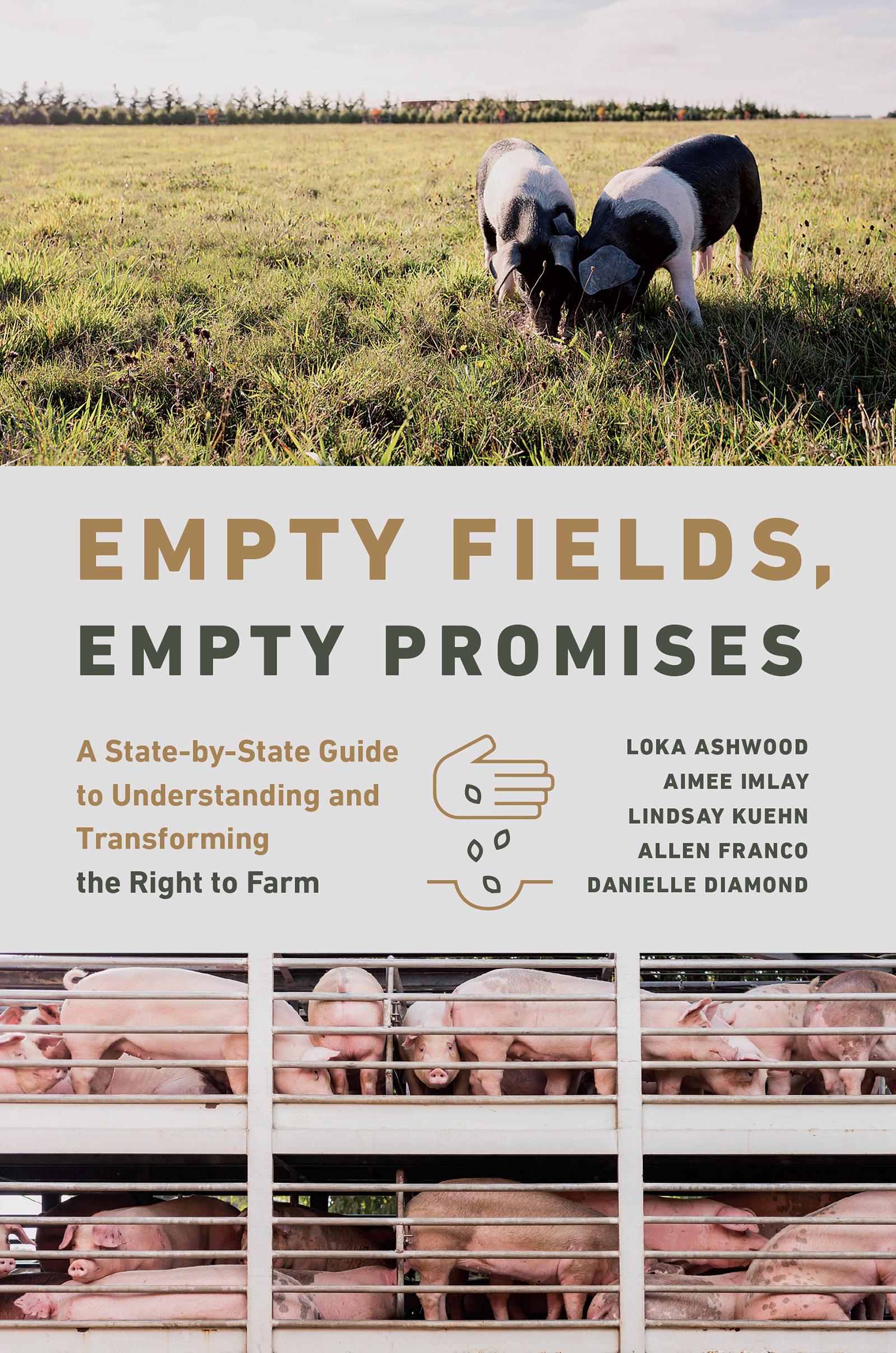
The right to farm is essential to everyone’s survival. Since the late 1970s, states across the nation have adopted so-called right-to-farm laws to limit nuisance suits loosely related to agriculture. But since their adoption, there has yet to be a comprehensive analysis of what these laws do and who they benefit. This book offers the first national analysis and guide to these laws. It reveals that they generally benefit the largest operators, like processing plants, while traditional farmers benefit the least. Disfavored most of all are those seeking to defend their homes and environment against multinational corporations that use right-to-farm laws to strip neighboring owners of their property rights. Through what the book calls the “midburden,” right-to-farm laws dispossess the many in favor of the few, paving the path to rural poverty.
Empty Fields, Empty Promises summarizes every state’s right-to-farm laws to help readers track and navigate their local and regional legal landscape. The book concludes by offering paths forward for a more distributed and democratic agrifood system that achieves agricultural, rural, and environmental justice.
Empty Fields, Empty Promises summarizes every state’s right-to-farm laws to help readers track and navigate their local and regional legal landscape. The book concludes by offering paths forward for a more distributed and democratic agrifood system that achieves agricultural, rural, and environmental justice.
Pay easily by card, Klarna, Apple Pay or Google Pay. Not happy? You always have a 14-day money-back guarantee. Read more in our terms. If you have any questions, email us at hello@memmo.org.
Memmo makes studying easier – wherever you are in the world. We bring your course books and smart study tools together in one place: summaries, quizzes, podcasts and flashcards. Plus Ted, your study buddy who answers anything you wonder. Over 50,000 students already study here – built to help you learn faster and stress less.
You might also like
Buy the book0