
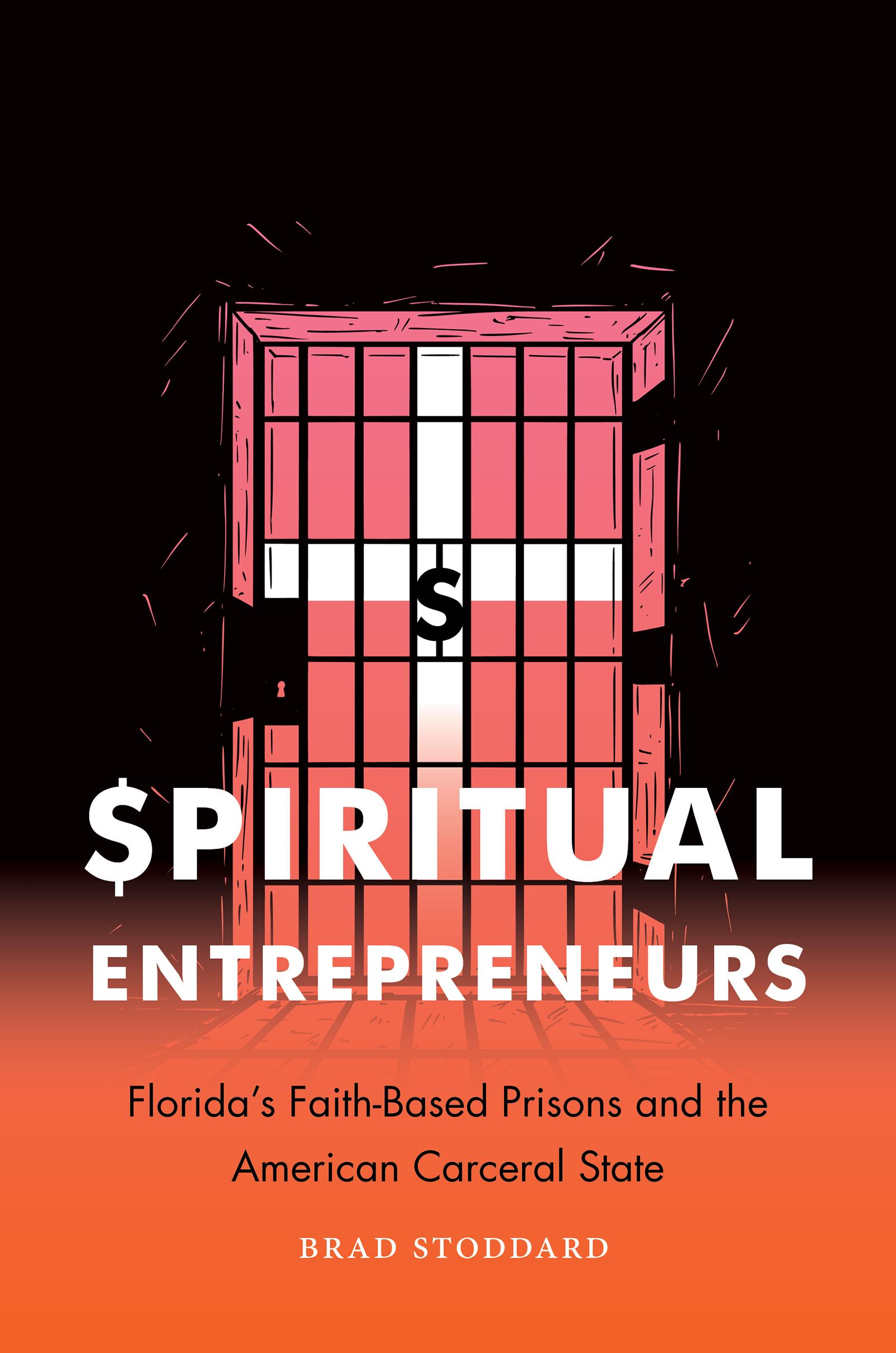
The overall rate of incarceration in the United States has been on the rise since 1970s, skyrocketing during Ronald Reagan’s presidency, and recently reaching unprecedented highs. Looking for innovative solutions to the crises produced by gigantic prison populations, Florida’s Department of Corrections claims to have found a partial remedy in the form of faith and character-based correctional institutions (FCBIs). While claiming to be open to all religious traditions, FCBIs are almost always run by Protestants situated within the politics of the Christian right. The religious programming is typically run by the incarcerated along with volunteers from outside the prison. Stoddard takes the reader deep inside FCBIs, analyzing the subtle meanings and difficult choices with which the incarcerated, prison administrators, staff, and chaplains grapple every day. Drawing on extensive ethnographic research and historical analysis, Brad Stoddard argues that FCBIs build on and demonstrate the compatibility of conservative Christian politics and neoliberal economics.
Even without authoritative data on whether FCBIs are assisting rehabilitation and reducing recidivism rates, similar programs are appearing across the nation—only Iowa has declared them illegal under non-establishment-of-religion statutes. Exposing the intricate connections among incarceration, neoliberal economics, and religious freedom, Stoddard makes a timely contribution to debates about religion’s role in American society.
Even without authoritative data on whether FCBIs are assisting rehabilitation and reducing recidivism rates, similar programs are appearing across the nation—only Iowa has declared them illegal under non-establishment-of-religion statutes. Exposing the intricate connections among incarceration, neoliberal economics, and religious freedom, Stoddard makes a timely contribution to debates about religion’s role in American society.
Pay easily by card, Klarna, Apple Pay or Google Pay. Not happy? You always have a 14-day money-back guarantee. Read more in our terms. If you have any questions, email us at hello@memmo.org.
Memmo makes studying easier – wherever you are in the world. We bring your course books and smart study tools together in one place: summaries, quizzes, podcasts and flashcards. Plus Ted, your study buddy who answers anything you wonder. Over 50,000 students already study here – built to help you learn faster and stress less.
You might also like
Buy the book0