
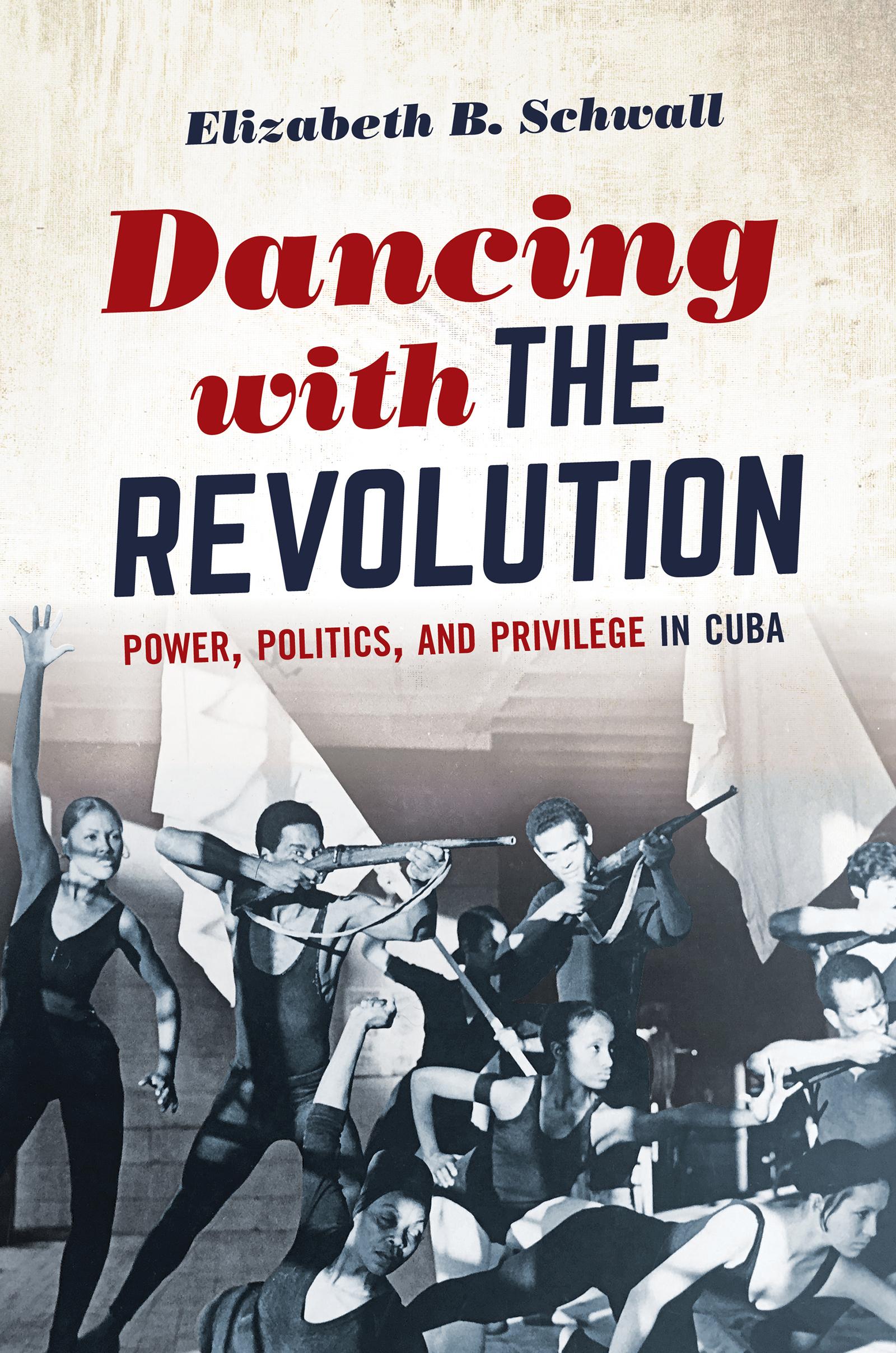
Elizabeth B. Schwall aligns culture and politics by focusing on an art form that became a darling of the Cuban revolution: dance. In this history of staged performance in ballet, modern dance, and folkloric dance, Schwall analyzes how and why dance artists interacted with republican and, later, revolutionary politics. Drawing on written and visual archives, including intriguing exchanges between dancers and bureaucrats, Schwall argues that Cuban dancers used their bodies and ephemeral, nonverbal choreography to support and critique political regimes and cultural biases.
As esteemed artists, Cuban dancers exercised considerable power and influence. They often used their art to posit more radical notions of social justice than political leaders were able or willing to implement. After 1959, while generally promoting revolutionary projects like mass education and internationalist solidarity, they also took risks by challenging racial prejudice, gender norms, and censorship, all of which could affect dancers personally. On a broader level, Schwall shows that dance, too often overlooked in histories of Latin America and the Caribbean, provides fresh perspectives on what it means for people, and nations, to move through the world.
As esteemed artists, Cuban dancers exercised considerable power and influence. They often used their art to posit more radical notions of social justice than political leaders were able or willing to implement. After 1959, while generally promoting revolutionary projects like mass education and internationalist solidarity, they also took risks by challenging racial prejudice, gender norms, and censorship, all of which could affect dancers personally. On a broader level, Schwall shows that dance, too often overlooked in histories of Latin America and the Caribbean, provides fresh perspectives on what it means for people, and nations, to move through the world.
Pay easily by card, Klarna, Apple Pay or Google Pay. Not happy? You always have a 14-day money-back guarantee. Read more in our terms. If you have any questions, email us at hello@memmo.org.
Memmo makes studying easier – wherever you are in the world. We bring your course books and smart study tools together in one place: summaries, quizzes, podcasts and flashcards. Plus Ted, your study buddy who answers anything you wonder. Over 75,000 students already study here – built to help you learn faster and stress less.
You might also like
Buy the book0