
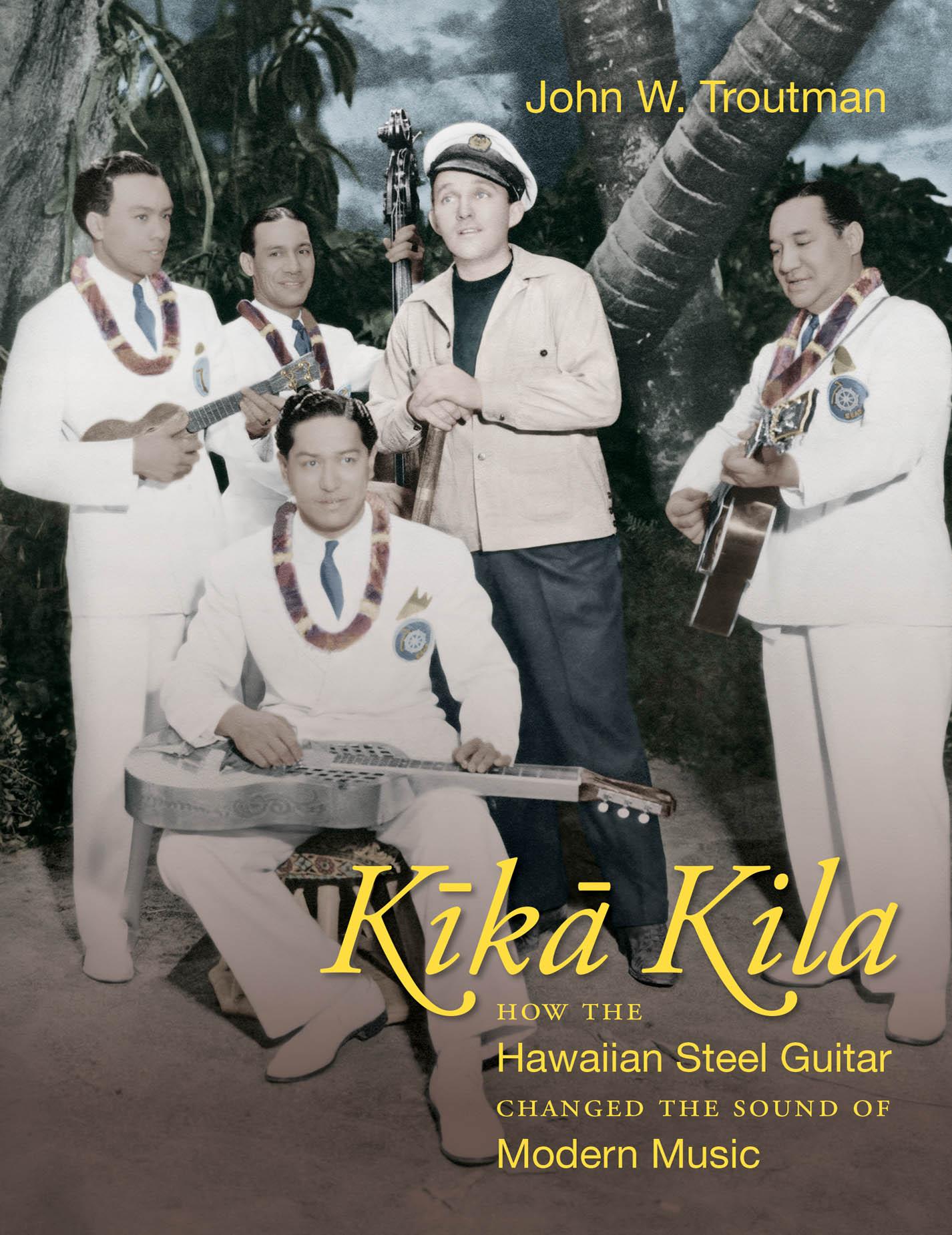
Since the nineteenth century, the distinct tones of kīkā kila, the Hawaiian steel guitar, have defined the island sound. Here historian and steel guitarist John W. Troutman offers the instrument’s definitive history, from its discovery by a young Hawaiian royalist named Joseph Kekuku to its revolutionary influence on American and world music. During the early twentieth century, Hawaiian musicians traveled the globe, from tent shows in the Mississippi Delta, where they shaped the new sounds of country and the blues, to regal theaters and vaudeville stages in New York, Berlin, Kolkata, and beyond. In the process, Hawaiian guitarists recast the role of the guitar in modern life. But as Troutman explains, by the 1970s the instrument’s embrace and adoption overseas also worked to challenge its cultural legitimacy in the eyes of a new generation of Hawaiian musicians. As a consequence, the indigenous instrument nearly disappeared in its homeland.
Using rich musical and historical sources, including interviews with musicians and their descendants, Troutman provides the complete story of how this Native Hawaiian instrument transformed not only American music but the sounds of modern music throughout the world.
Using rich musical and historical sources, including interviews with musicians and their descendants, Troutman provides the complete story of how this Native Hawaiian instrument transformed not only American music but the sounds of modern music throughout the world.
Pay easily by card, Klarna, Apple Pay or Google Pay. Not happy? You always have a 14-day money-back guarantee. Read more in our terms. If you have any questions, email us at hello@memmo.org.
Memmo makes studying easier – wherever you are in the world. We bring your course books and smart study tools together in one place: summaries, quizzes, podcasts and flashcards. Plus Ted, your study buddy who answers anything you wonder. Over 50,000 students already study here – built to help you learn faster and stress less.
You might also like
Buy the book0