
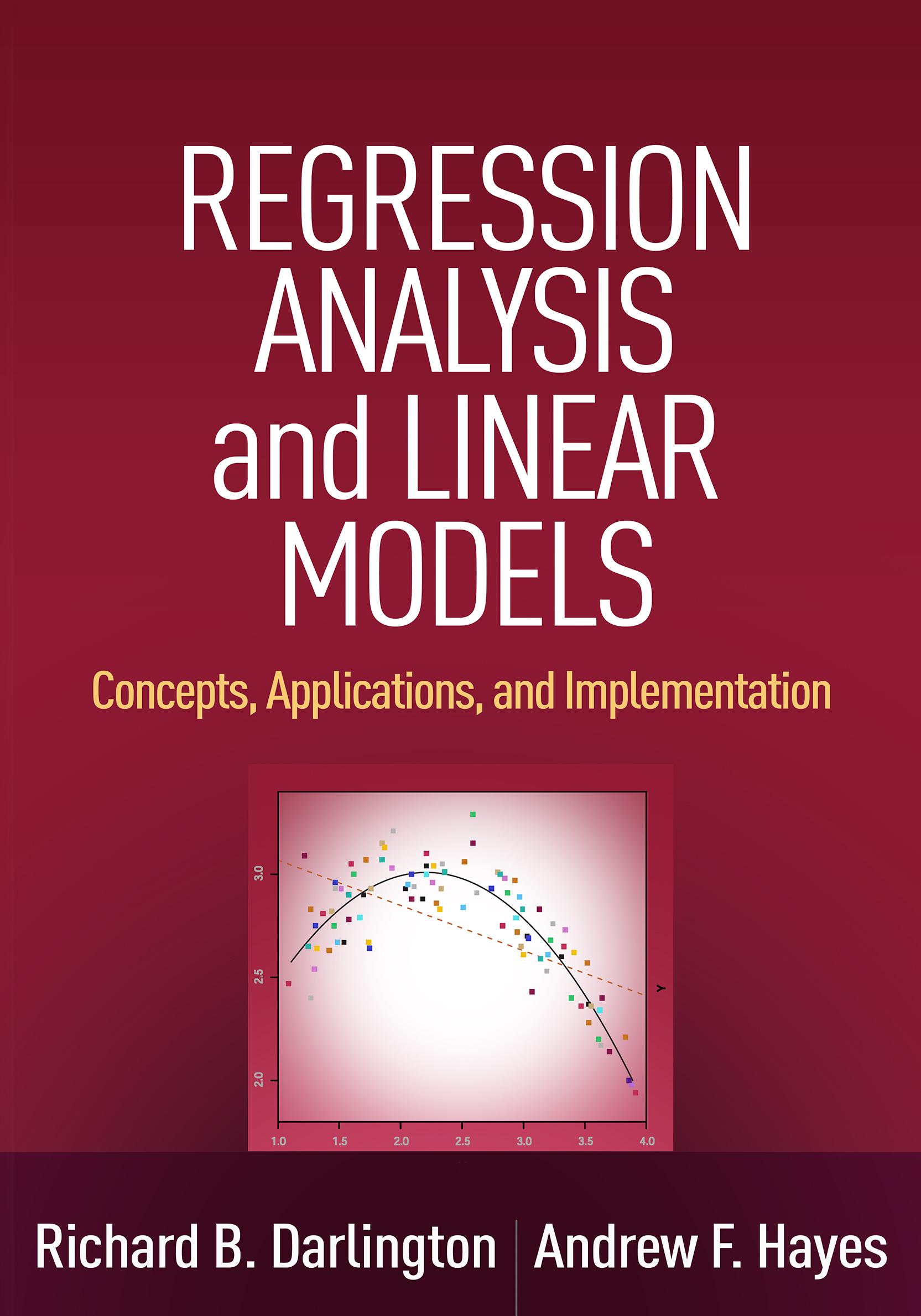
Emphasizing conceptual understanding over mathematics, this user-friendly text introduces linear regression analysis to students and researchers across the social, behavioral, consumer, and health sciences. Coverage includes model construction and estimation, quantification and measurement of multivariate and partial associations, statistical control, group comparisons, moderation analysis, mediation and path analysis, and regression diagnostics, among other important topics. Engaging worked-through examples demonstrate each technique, accompanied by helpful advice and cautions. The use of SPSS, SAS, and STATA is emphasized, with an appendix on regression analysis using R. The companion website (www.afhayes.com) provides datasets for the book's examples as well as the RLM macro for SPSS and SAS.
Pedagogical Features:
*Chapters include SPSS, SAS, or STATA code pertinent to the analyses described, with each distinctively formatted for easy identification.
*An appendix documents the RLM macro, which facilitates computations for estimating and probing interactions, dominance analysis, heteroscedasticity-consistent standard errors, and linear spline regression, among other analyses.
*Students are guided to practice what they learn in each chapter using datasets provided online.
*Addresses topics not usually covered, such as ways to measure a variable’s importance, coding systems for representing categorical variables, causation, and myths about testing interaction.
Pedagogical Features:
*Chapters include SPSS, SAS, or STATA code pertinent to the analyses described, with each distinctively formatted for easy identification.
*An appendix documents the RLM macro, which facilitates computations for estimating and probing interactions, dominance analysis, heteroscedasticity-consistent standard errors, and linear spline regression, among other analyses.
*Students are guided to practice what they learn in each chapter using datasets provided online.
*Addresses topics not usually covered, such as ways to measure a variable’s importance, coding systems for representing categorical variables, causation, and myths about testing interaction.
Pay easily by card, Klarna, Apple Pay or Google Pay. Not happy? You always have a 14-day money-back guarantee. Read more in our terms. If you have any questions, email us at hello@memmo.org.
Memmo makes studying easier – wherever you are in the world. We bring your course books and smart study tools together in one place: summaries, quizzes, podcasts and flashcards. Plus Ted, your study buddy who answers anything you wonder. Over 75,000 students already study here – built to help you learn faster and stress less.
You might also like
Buy the book0