
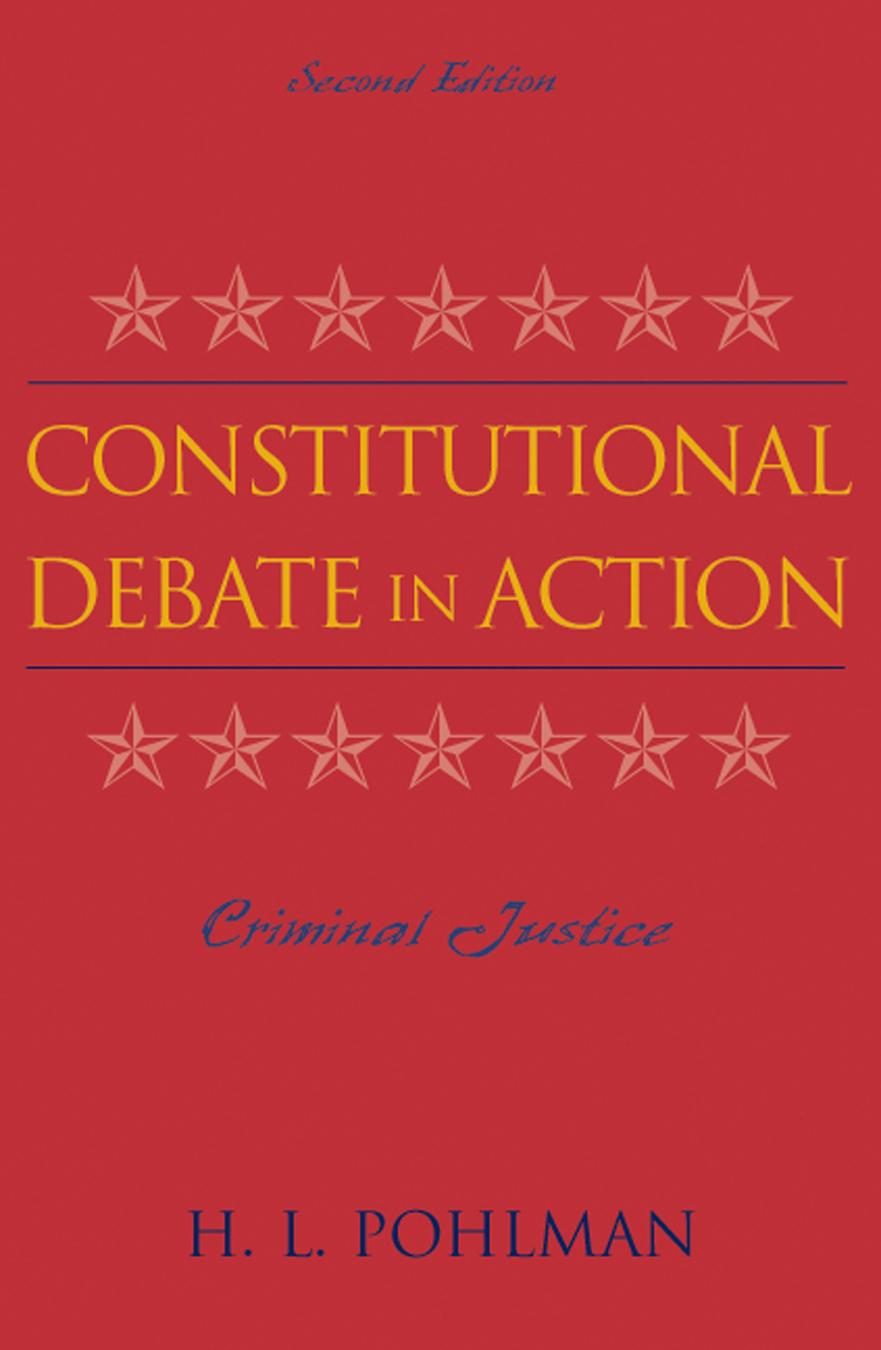
Taking into account the political and intellectual forces that shape Supreme Court decisions, Constitutional Debate in Action examines how and why the U.S. Constitution continues to grow and adapt to human wants, passions, and values. Not your traditional constitutional-law textbook, this three-volume set views the Constitution as an institutionalized form of debate by which people press their political demands and arguments upon the Supreme Court.
This process-oriented approach goes beyond a straightforward examination of how the decisions of Supreme Court justices have transformed constitutional doctrine through the ages; it explores the actual process of adjudication itself. Each case study covers the legal and political background; including relevant out-of-court discussions, to help students understand the political framework in which the Supreme Court operates. Actual legal briefs filed in landmark cases, and corresponding oral arguments before the Supreme Court, provide students with a front-row seat to the process of constitutional argumentation. As they evaluate the opposing viewpoints, students are better equipped to evaluate critically final Supreme Court decisions and opinions. In addition, students gain a valuable perspective on the role of the Supreme Court in our constitutional democracy.
Each volume provides in-depth and updated examinations of key landmark decisions. Criminal Justice covers: Incorporation and the Right to a Jury Trial: Duncan v. Louisiana, Police Confessions: Miranda v. Arizona, Plea Bargaining North Carolina v. Alford, The Exclusionary Rule: United States v. Leon, and The Death Penalty: Gregg v. Georgia.
This process-oriented approach goes beyond a straightforward examination of how the decisions of Supreme Court justices have transformed constitutional doctrine through the ages; it explores the actual process of adjudication itself. Each case study covers the legal and political background; including relevant out-of-court discussions, to help students understand the political framework in which the Supreme Court operates. Actual legal briefs filed in landmark cases, and corresponding oral arguments before the Supreme Court, provide students with a front-row seat to the process of constitutional argumentation. As they evaluate the opposing viewpoints, students are better equipped to evaluate critically final Supreme Court decisions and opinions. In addition, students gain a valuable perspective on the role of the Supreme Court in our constitutional democracy.
Each volume provides in-depth and updated examinations of key landmark decisions. Criminal Justice covers: Incorporation and the Right to a Jury Trial: Duncan v. Louisiana, Police Confessions: Miranda v. Arizona, Plea Bargaining North Carolina v. Alford, The Exclusionary Rule: United States v. Leon, and The Death Penalty: Gregg v. Georgia.
Pay easily by card, Klarna, Apple Pay or Google Pay. Not happy? You always have a 14-day money-back guarantee. Read more in our terms. If you have any questions, email us at hello@memmo.org.
Memmo makes studying easier – wherever you are in the world. We bring your course books and smart study tools together in one place: summaries, quizzes, podcasts and flashcards. Plus Ted, your study buddy who answers anything you wonder. Over 50,000 students already study here – built to help you learn faster and stress less.