
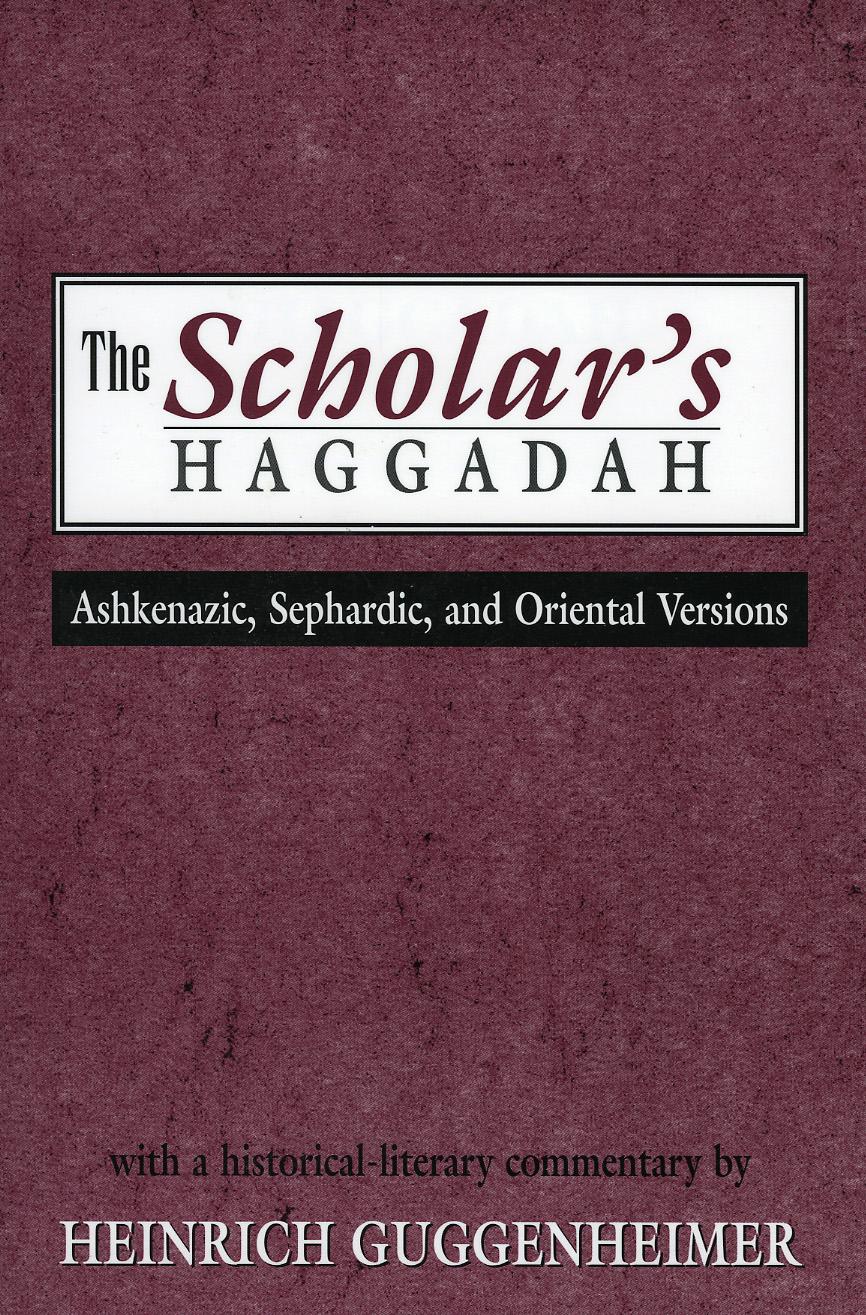
In this unprecedented masterwork, The Scholar's Haggadah: Ashkenazic, Sephardic, and Oriental Versions, Heinrich Guggenheimer presents the first Haggadah to treat the texts of all Jewish groups on an equal footing and to use their divergences and concurrences as a key to the history of the text and an understanding of its development.
The Seder (the ceremony of the Passover night) is one of the most universally celebrated rituals among Jewish families, for what it commemorates–Jewish freedom from bondage–is the glue that bonds all Jews together, traditional and modern, Ashkenazic and Sephardic alike. In the Book of Exodus the Jewish people are instructed to tell their children of how God brought the Israelites out of slavery from Egypt, and thousands of years later this timeless tradition remains an immutable factor in Jewish homes on Passover night.
While many commentaries have been written on the Haggadah during the last one thousand years–most delineating the spiritual meaning or the ritual details of the Passover ceremonies–few historical investigations have dealt with texts that are not wholly Ashkenazic. Available for the first time to the reader is a Haggadah that includes the customs and ceremonies of not only Ashkenazic and Sephardic Jewry, but of Yemenite Jews as well. Additionally, the author provides a commentary that not only offers a key to the roots of the Passover ceremonies and an introduction to the thought and practice of talmudic-rabbinic Judaism, but also presents a history of the development of text and practice of the Seder celebration.
While Yemenite Jewry still follows texts and prescriptions of Maimonides practically in their original form, unchanged for at least 800 years, European Ashkenazic and Sephardic practices have undergone many changes. While the history of Yemenite Jews is riddled with oppression and migration, the Moslem rulers of their country never extended their persecutions to Jewish books. On the other hand, the history of European Jews is dominated by
The Seder (the ceremony of the Passover night) is one of the most universally celebrated rituals among Jewish families, for what it commemorates–Jewish freedom from bondage–is the glue that bonds all Jews together, traditional and modern, Ashkenazic and Sephardic alike. In the Book of Exodus the Jewish people are instructed to tell their children of how God brought the Israelites out of slavery from Egypt, and thousands of years later this timeless tradition remains an immutable factor in Jewish homes on Passover night.
While many commentaries have been written on the Haggadah during the last one thousand years–most delineating the spiritual meaning or the ritual details of the Passover ceremonies–few historical investigations have dealt with texts that are not wholly Ashkenazic. Available for the first time to the reader is a Haggadah that includes the customs and ceremonies of not only Ashkenazic and Sephardic Jewry, but of Yemenite Jews as well. Additionally, the author provides a commentary that not only offers a key to the roots of the Passover ceremonies and an introduction to the thought and practice of talmudic-rabbinic Judaism, but also presents a history of the development of text and practice of the Seder celebration.
While Yemenite Jewry still follows texts and prescriptions of Maimonides practically in their original form, unchanged for at least 800 years, European Ashkenazic and Sephardic practices have undergone many changes. While the history of Yemenite Jews is riddled with oppression and migration, the Moslem rulers of their country never extended their persecutions to Jewish books. On the other hand, the history of European Jews is dominated by
Pay easily by card, Klarna, Apple Pay or Google Pay. Not happy? You always have a 14-day money-back guarantee. Read more in our terms. If you have any questions, email us at hello@memmo.org.
Memmo makes studying easier – wherever you are in the world. We bring your course books and smart study tools together in one place: summaries, quizzes, podcasts and flashcards. Plus Ted, your study buddy who answers anything you wonder. Over 50,000 students already study here – built to help you learn faster and stress less.