
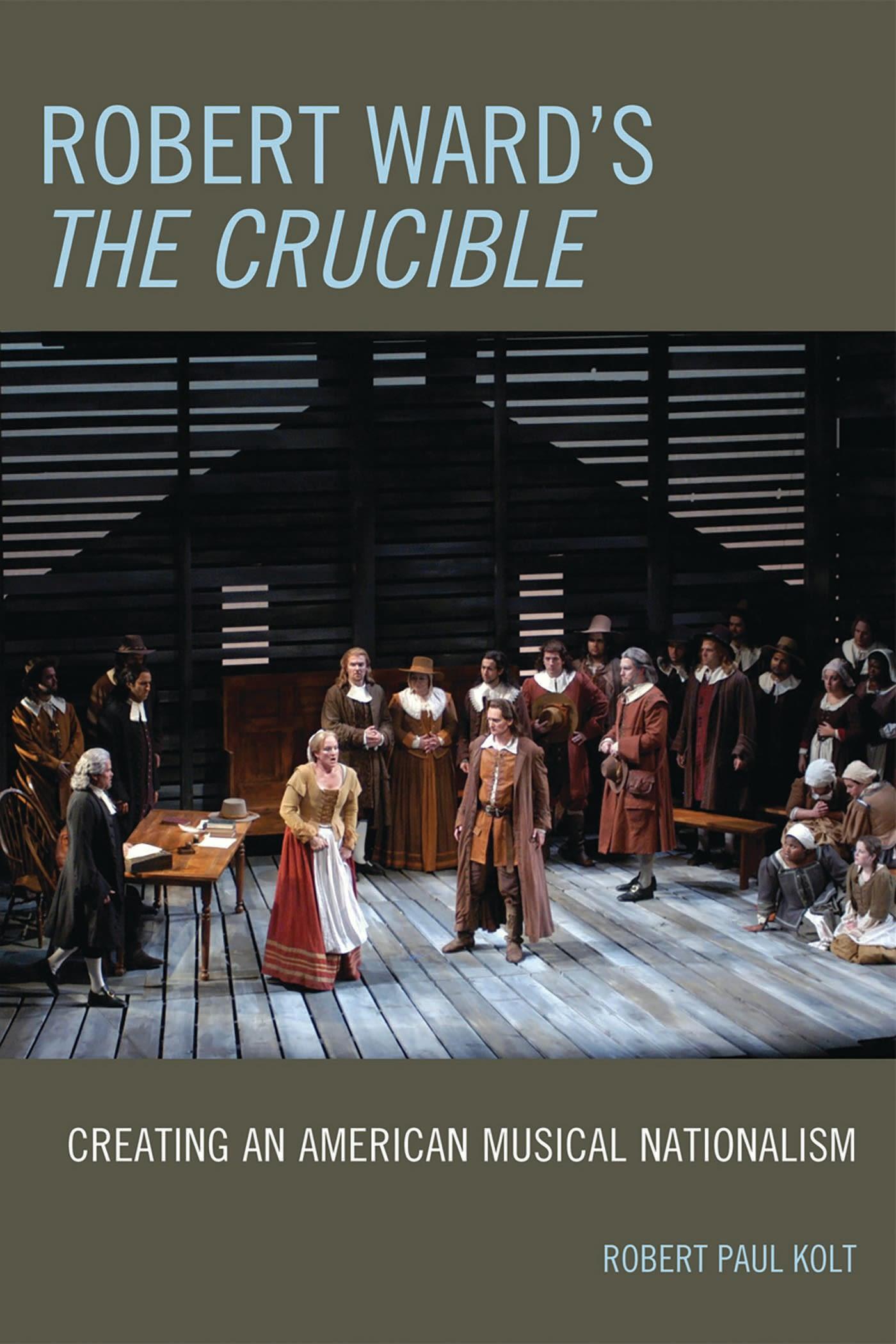
In Robert Ward's The Crucible: Creating an American Musical Nationalism, Robert Paul Kolt explores the life of the American composer Robert Ward through an examination of his most popular and enduring work, The Crucible. Focusing on the musical-linguistic relationships within the opera, Kolt demonstrates Ward's unique synthesis of text and music, one that lends itself to the perception of American musical nationalism.
This book contains the most thorough and in-depth biography of Ward yet in print. Based on interviews with the composer, Kolt presents new information about Ward's life and career, focusing on his opera and examining the formation and construction of The Crucible's libretto and score, in turn offering new insights into the process of composing an opera. Kolt observes how the libretto's linguistic aspects helped Ward formulate the opera's melodic and rhythmic musical material. A detailed and unique analysis of the opera, particularly the musical and linguistic techniques Ward employed, demonstrates how these techniques lend themselves to the opera's reception as a work of American musical nationalism. The book also provides yet unpublished information on Arthur Miller's play, examining how it came to be written and soon after became the basis for Ward's work. Several appendixes provide a fuller picture, including a deleted scene from Miller's play and Ward's version of the scene, a chronological overview of the Salem Witchcraft Trials, and illustrations and photo reproductions from Ward's manuscript.
This book contains the most thorough and in-depth biography of Ward yet in print. Based on interviews with the composer, Kolt presents new information about Ward's life and career, focusing on his opera and examining the formation and construction of The Crucible's libretto and score, in turn offering new insights into the process of composing an opera. Kolt observes how the libretto's linguistic aspects helped Ward formulate the opera's melodic and rhythmic musical material. A detailed and unique analysis of the opera, particularly the musical and linguistic techniques Ward employed, demonstrates how these techniques lend themselves to the opera's reception as a work of American musical nationalism. The book also provides yet unpublished information on Arthur Miller's play, examining how it came to be written and soon after became the basis for Ward's work. Several appendixes provide a fuller picture, including a deleted scene from Miller's play and Ward's version of the scene, a chronological overview of the Salem Witchcraft Trials, and illustrations and photo reproductions from Ward's manuscript.
Pay easily by card, Klarna, Apple Pay or Google Pay. Not happy? You always have a 14-day money-back guarantee. Read more in our terms. If you have any questions, email us at hello@memmo.org.
Memmo makes studying easier – wherever you are in the world. We bring your course books and smart study tools together in one place: summaries, quizzes, podcasts and flashcards. Plus Ted, your study buddy who answers anything you wonder. Over 50,000 students already study here – built to help you learn faster and stress less.