
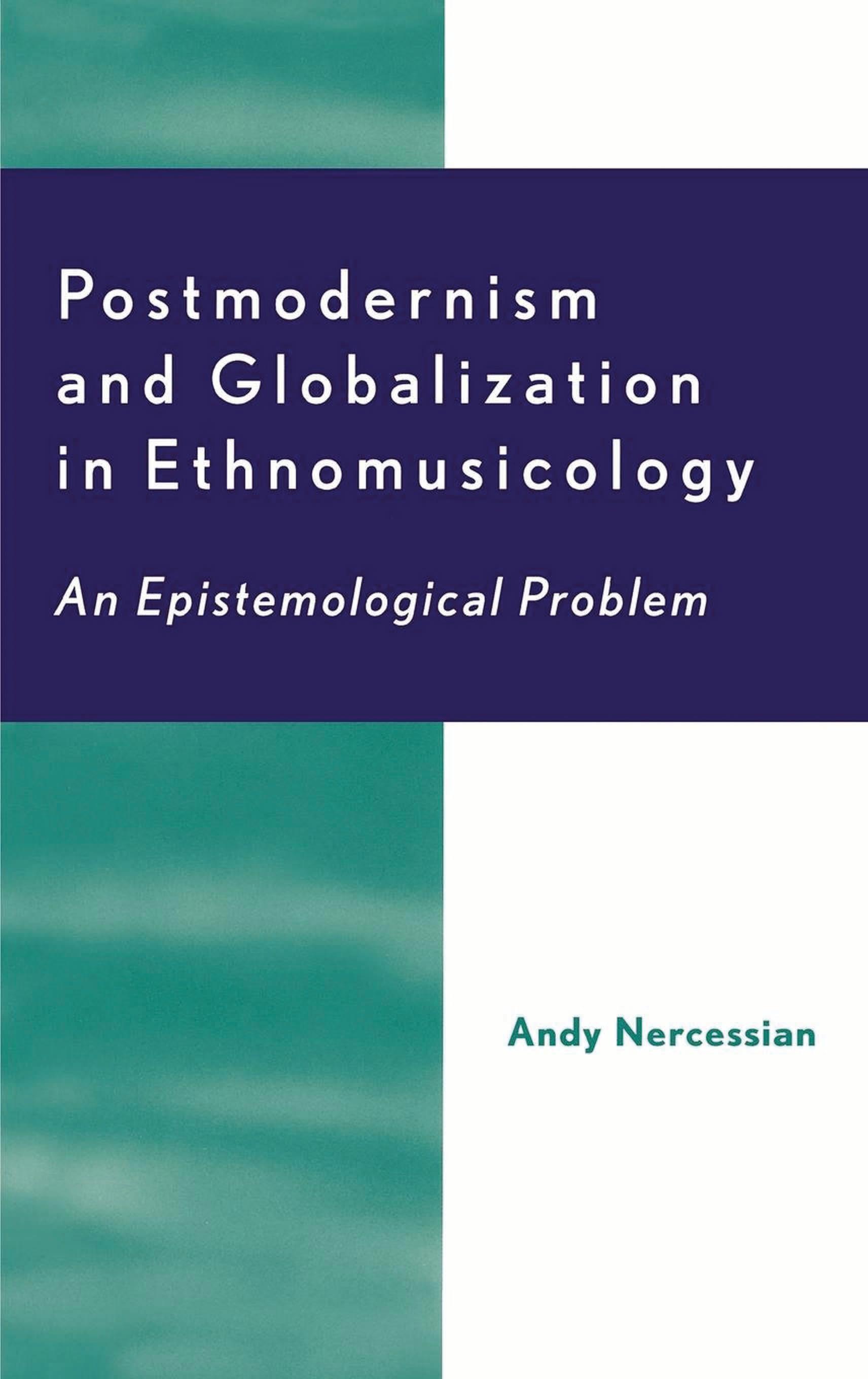
Is the music world clinging to an outdated school of thought in ethnomusicology? Nercessian shows how the theory of cultural relativism continues to detrimentally pervade ethnomusicological thought, and then offers a solution that may better serve musical study in today's more globalized world. At the heart of cultural relativism, which seeks to avoid imposing the standards of an outside culture on a work, is the emic-etic dichotomy, which delineates the perspective of the outsider and that of the culture of origin. Nercessian points out that in our increasingly globalized society, cultures are no longer separate and distinct. A new theory is necessary to account for the cultural overlap.
Borrowing from Derrida, the author offers a new solution that will allow for multiple perspectives, without favoring that of the insider or emic.
Of importance to students and scholars of ethnomusicology, this book also speaks to other fields of study where cultural relativism continues to dominate.
Borrowing from Derrida, the author offers a new solution that will allow for multiple perspectives, without favoring that of the insider or emic.
Of importance to students and scholars of ethnomusicology, this book also speaks to other fields of study where cultural relativism continues to dominate.
Pay easily by card, Klarna, Apple Pay or Google Pay. Not happy? You always have a 14-day money-back guarantee. Read more in our terms. If you have any questions, email us at hello@memmo.org.
Memmo makes studying easier – wherever you are in the world. We bring your course books and smart study tools together in one place: summaries, quizzes, podcasts and flashcards. Plus Ted, your study buddy who answers anything you wonder. Over 50,000 students already study here – built to help you learn faster and stress less.