
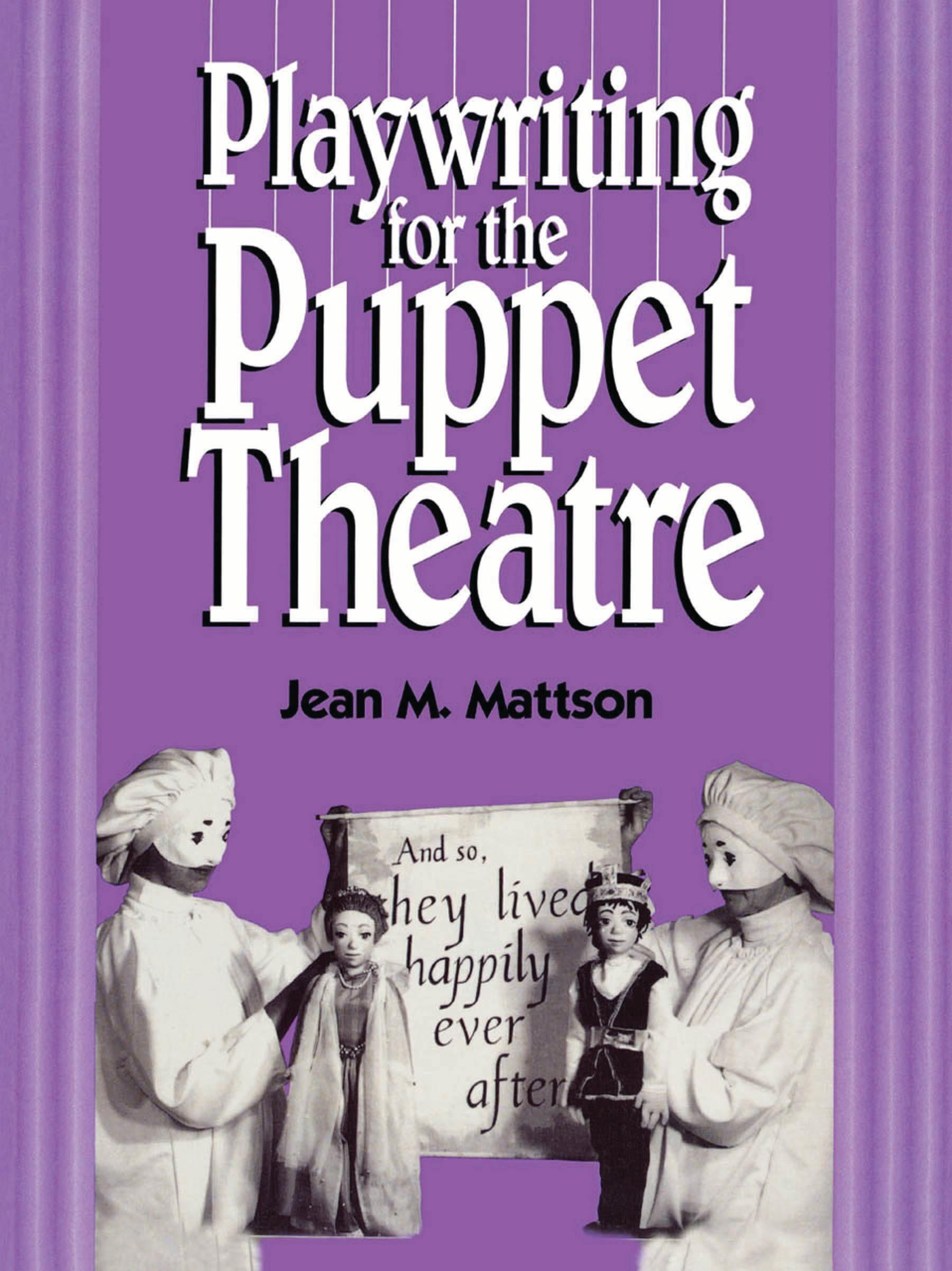
Playwriting for Puppet Theatre provides a foundation for those puppeteers, teachers and librarians who want to develop suitable scripts for puppet theatre. Mattson explores the difference between traditional theatre and puppet theatre and notes the special characteristics of the various puppets. The important aspects of script writing are then addressed.
She considers the many general questions which must be answered by the playwright: the type of puppet to be used, the audience, and availability of resources and facilities. Suggestions are then given for dramatizing original ideas and for adapting well-known stories. The chapter on plot development emphasizes the importance of perspective, transitional material and the need for action. One chapter proposes various ways to develop a character through dialogue, names, and behavior. Another chapter demonstrates how the use of rhyme can add interest and humor to a puppet play. Teachers will find suggestions on how to develop a play on a specific theme or about a specific character. Some attention is also given to the mechanics of writing a play.
Includes a group of puppet plays which have been successfully performed by Seattle Puppetory Theatre. Among them are Rumplestiltskin, The Princess and the Pea, The Bad-Tempered Wife, The Golden Axe, The Swineherd, and The Fisherman and His Wife. Production notes follow each script. Several samples of manipulation charts are included which may be used as an aid in blocking the puppets and the puppeteers for the various hand puppet productions.
She considers the many general questions which must be answered by the playwright: the type of puppet to be used, the audience, and availability of resources and facilities. Suggestions are then given for dramatizing original ideas and for adapting well-known stories. The chapter on plot development emphasizes the importance of perspective, transitional material and the need for action. One chapter proposes various ways to develop a character through dialogue, names, and behavior. Another chapter demonstrates how the use of rhyme can add interest and humor to a puppet play. Teachers will find suggestions on how to develop a play on a specific theme or about a specific character. Some attention is also given to the mechanics of writing a play.
Includes a group of puppet plays which have been successfully performed by Seattle Puppetory Theatre. Among them are Rumplestiltskin, The Princess and the Pea, The Bad-Tempered Wife, The Golden Axe, The Swineherd, and The Fisherman and His Wife. Production notes follow each script. Several samples of manipulation charts are included which may be used as an aid in blocking the puppets and the puppeteers for the various hand puppet productions.
Pay easily by card, Klarna, Apple Pay or Google Pay. Not happy? You always have a 14-day money-back guarantee. Read more in our terms. If you have any questions, email us at hello@memmo.org.
Memmo makes studying easier – wherever you are in the world. We bring your course books and smart study tools together in one place: summaries, quizzes, podcasts and flashcards. Plus Ted, your study buddy who answers anything you wonder. Over 75,000 students already study here – built to help you learn faster and stress less.