
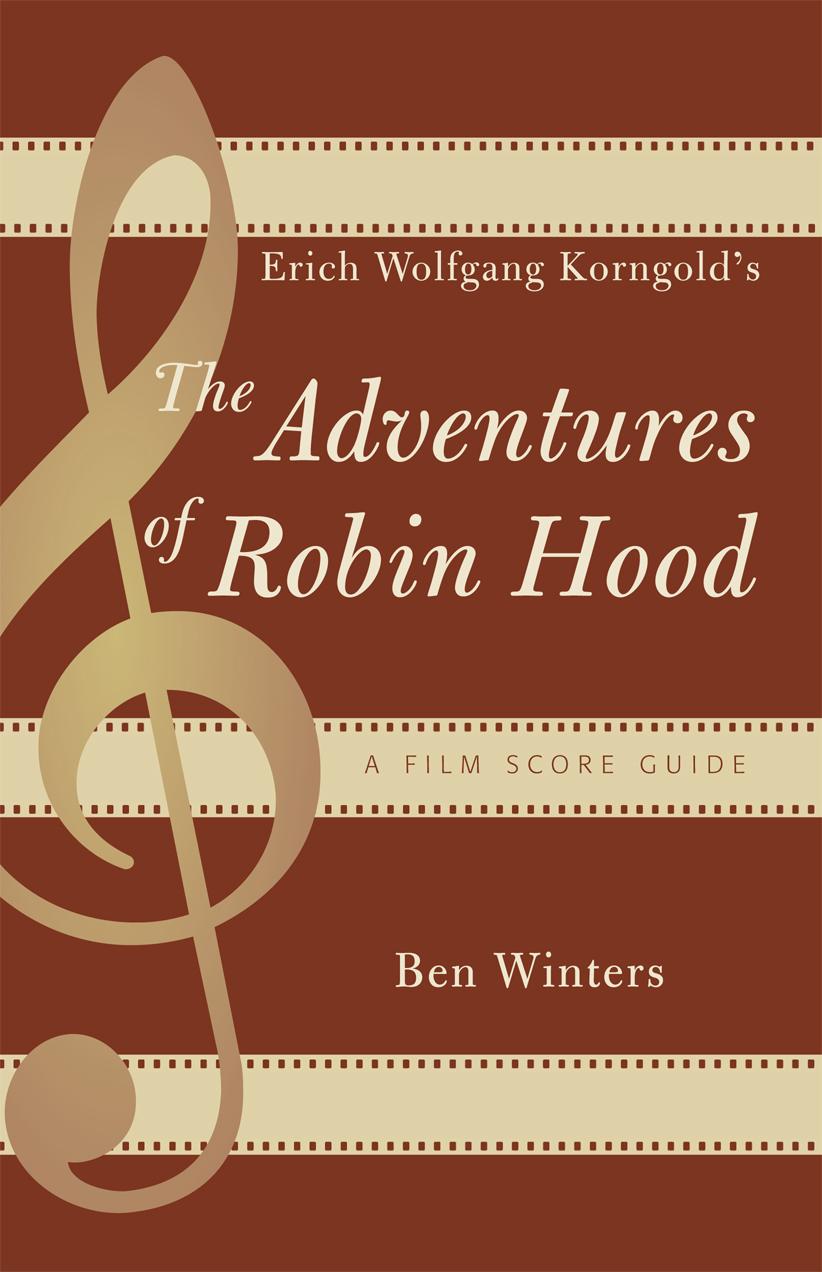
Among the many fine examples of film scores by Erich Wolfgang Korngold (1897-1957), the score for The Adventures of Robin Hood (1938) stands out the most. Winner of the Academy Award™ for best dramatic score in 1938, it is seen by many as the archetypal accompaniment to a Warner Brothers swashbuckler, and it established Korngold as one of the leading exponents of film score composition at a formative point in its history.
In Erich Wolfgang Korngold's The Adventures of Robin Hood: A Film Score Guide, author Ben Winters uses manuscript and archival research to challenge preconceived notions about the score's composer and its authorship. In the first two chapters, Winters examines Korngold's career on its own and in relation to the film, including his background in composing concert music and opera, his film scoring techniques, and his engagement with the Hollywood studio system. Chapter three focuses on the Robin Hood film while placing Korngold's music in a larger framework. It examines the film's treatment of the Robin Hood legend, its historical and critical contexts, and its place within the swashbuckler genre and the studio's anti-fascist agenda. While looking closely at the composer's work on this score, chapter four shows sources Korngold used, the music's production process, and the changes the score had undergone. The book concludes with a thematic analysis and reading of the score, identifying the various musical 'voices' that the listener weaves together as he or she experiences the film. This detailed consideration of Korngold's masterpiece will be continually turned to by film and music scholars alike.
In Erich Wolfgang Korngold's The Adventures of Robin Hood: A Film Score Guide, author Ben Winters uses manuscript and archival research to challenge preconceived notions about the score's composer and its authorship. In the first two chapters, Winters examines Korngold's career on its own and in relation to the film, including his background in composing concert music and opera, his film scoring techniques, and his engagement with the Hollywood studio system. Chapter three focuses on the Robin Hood film while placing Korngold's music in a larger framework. It examines the film's treatment of the Robin Hood legend, its historical and critical contexts, and its place within the swashbuckler genre and the studio's anti-fascist agenda. While looking closely at the composer's work on this score, chapter four shows sources Korngold used, the music's production process, and the changes the score had undergone. The book concludes with a thematic analysis and reading of the score, identifying the various musical 'voices' that the listener weaves together as he or she experiences the film. This detailed consideration of Korngold's masterpiece will be continually turned to by film and music scholars alike.
Pay easily by card, Klarna, Apple Pay or Google Pay. Not happy? You always have a 14-day money-back guarantee. Read more in our terms. If you have any questions, email us at hello@memmo.org.
Memmo makes studying easier – wherever you are in the world. We bring your course books and smart study tools together in one place: summaries, quizzes, podcasts and flashcards. Plus Ted, your study buddy who answers anything you wonder. Over 50,000 students already study here – built to help you learn faster and stress less.