
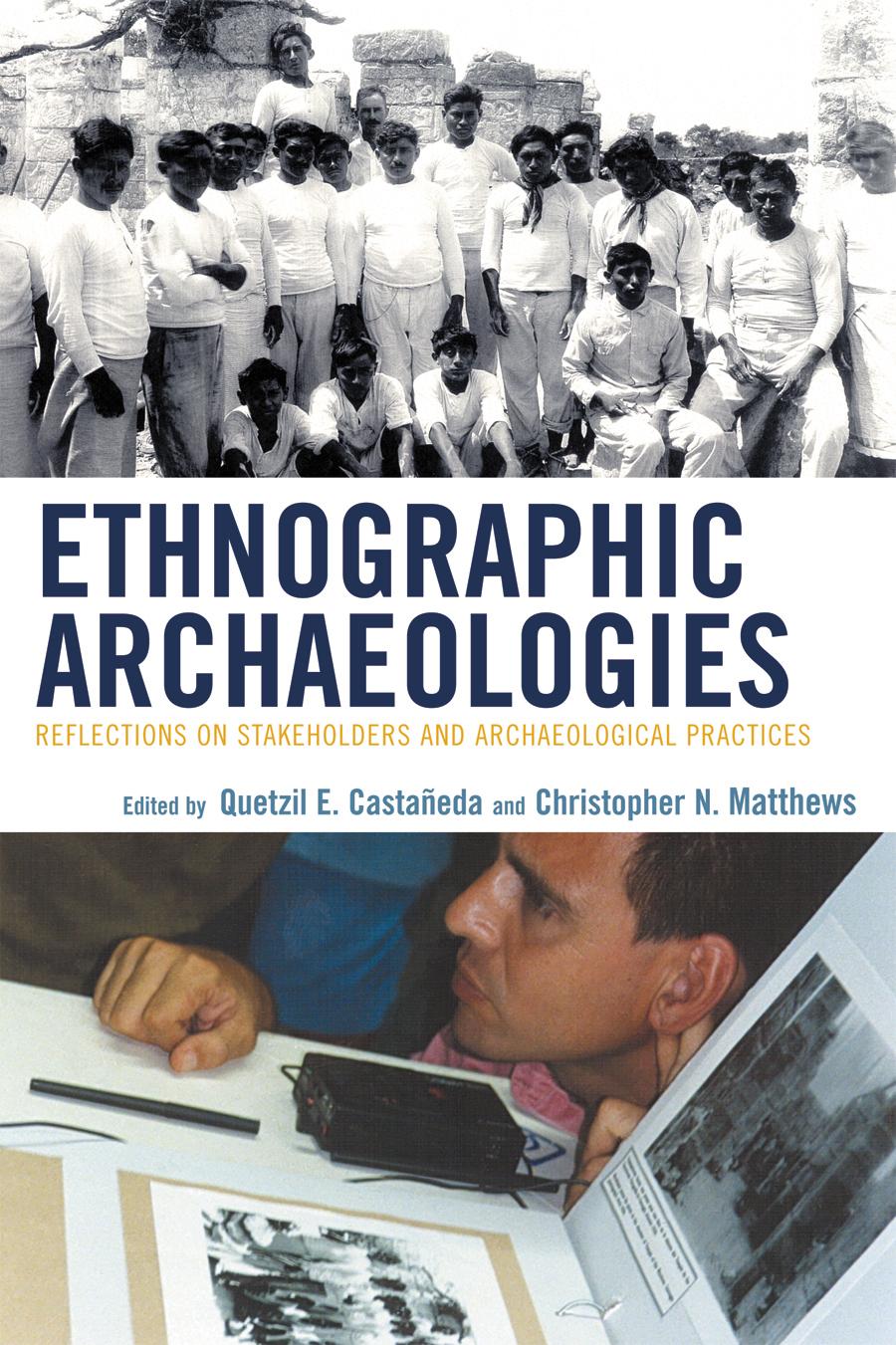
Ethnographic archaeology has emerged as a form of inquiry into archaeological dilemmas that arise as scholars question older, more positivistic paradigms. Ethnographic Archaeologies describes diverse methods, objectives, and rationalities currently employed in the making of engaged and collaborative archaeological research.The contributors to this volume, for example, understand ethnographic archaeology variously as a means of critical engagement with heritage stakeholders, as the basis of public-policy debates, as a critical archaeological study of ethnic groups, as the study of what archaeology actually does (as opposed to what researchers often think they are doing) in excavations and surveys, and as a foundation for transnational collaborations among archaeologists. What keeps the term 'ethnographic archaeology' coherent and relevant is the consensus among practitioners that they are embarking on a new archaeological path by attempting to engage the present directly and fundamentally.
Pay easily by card, Klarna, Apple Pay or Google Pay. Not happy? You always have a 14-day money-back guarantee. Read more in our terms. If you have any questions, email us at hello@memmo.org.
Memmo makes studying easier – wherever you are in the world. We bring your course books and smart study tools together in one place: summaries, quizzes, podcasts and flashcards. Plus Ted, your study buddy who answers anything you wonder. Over 75,000 students already study here – built to help you learn faster and stress less.