
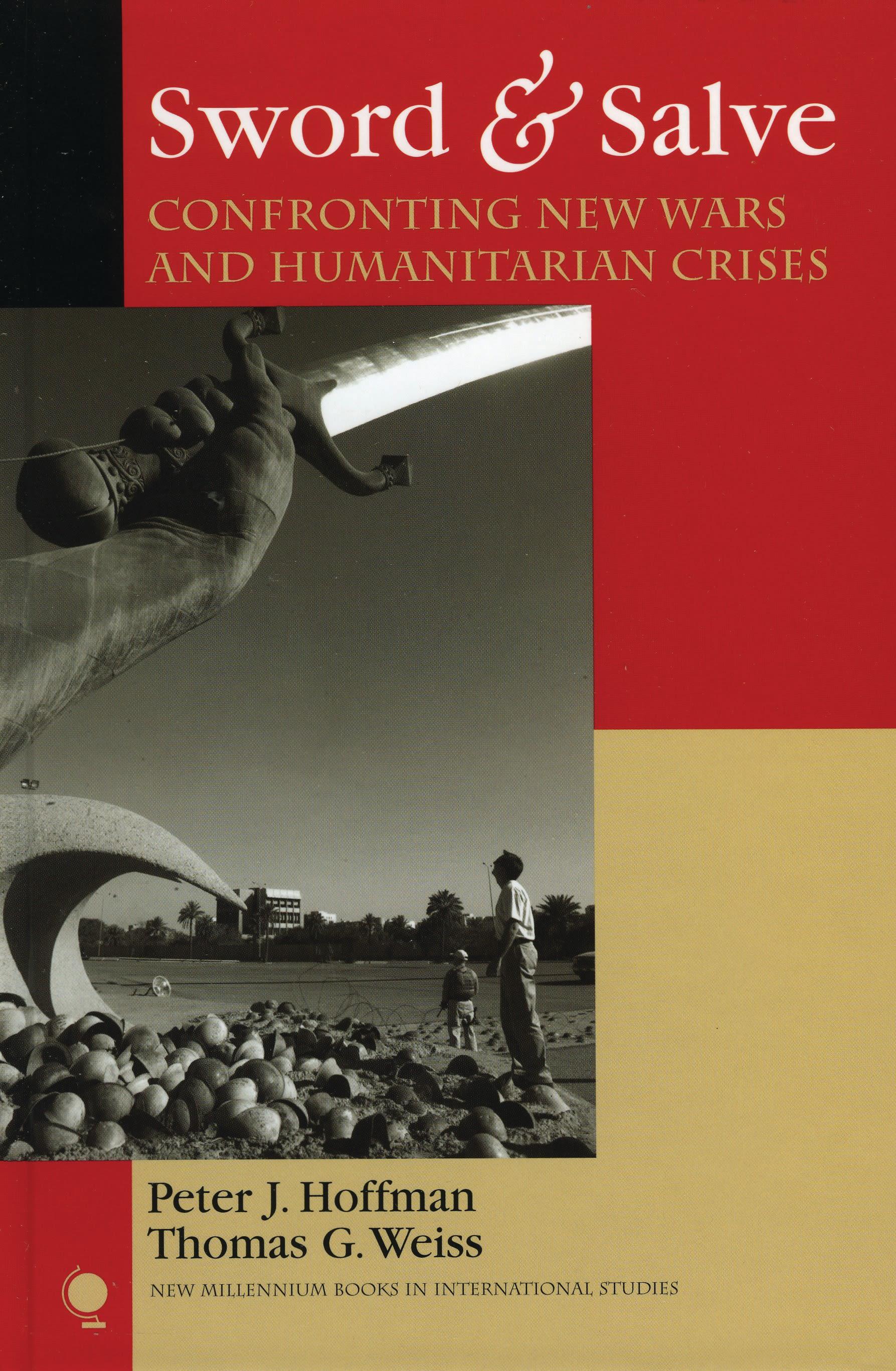
Arguing forcefully that changing times are a clarion call for new thinking, this book convincingly shows that if humanitarian organizations continue to operate as they have in the past, they will fail to help the very victims whom they try to save. Focusing especially on the emergence of "new wars," Hoffman and Weiss insist that humanitarian organizations must recognize that they live in a political world and that their actions and goals are invariably affected by military action. The brand of warfare that erupted in the 1990s-marked by civil or transnational armed conflicts featuring potent non-state actors, altered political economies, a high proportion of civilian casualties, and a globalized media-produced horrors that shocked consciences and led humanitarian agencies to question their unyielding stance of neutrality and impartiality. Indeed, in a departure from earlier norms and practices, some have reinvented their policies and tools and created "new humanitarianisms."
This authoritative book traces the evolution of the international humanitarian system from its inception in the 1860s, parses the dynamics of war and emergency response from the 1980s through the current disasters in Afghanistan and Iraq, and provides a strategic roadmap for practitioners. By bringing historical perspective to bear, this volume provides an invaluable analytical framework for grasping the nature of humanitarian crises and how agencies can respond strategically rather than reactively to change. Students will find its blend of clearly presented theory and case studies a powerful tool for understanding the roles of state and non-state actors in international relations. By charting the tides of continuity and change, this book will prepare agencies to dodge both figurative and actual bullets that threaten humanitarian action at the outset of the millennium.
This authoritative book traces the evolution of the international humanitarian system from its inception in the 1860s, parses the dynamics of war and emergency response from the 1980s through the current disasters in Afghanistan and Iraq, and provides a strategic roadmap for practitioners. By bringing historical perspective to bear, this volume provides an invaluable analytical framework for grasping the nature of humanitarian crises and how agencies can respond strategically rather than reactively to change. Students will find its blend of clearly presented theory and case studies a powerful tool for understanding the roles of state and non-state actors in international relations. By charting the tides of continuity and change, this book will prepare agencies to dodge both figurative and actual bullets that threaten humanitarian action at the outset of the millennium.
Pay easily by card, Klarna, Apple Pay or Google Pay. Not happy? You always have a 14-day money-back guarantee. Read more in our terms. If you have any questions, email us at hello@memmo.org.
Memmo makes studying easier – wherever you are in the world. We bring your course books and smart study tools together in one place: summaries, quizzes, podcasts and flashcards. Plus Ted, your study buddy who answers anything you wonder. Over 50,000 students already study here – built to help you learn faster and stress less.