
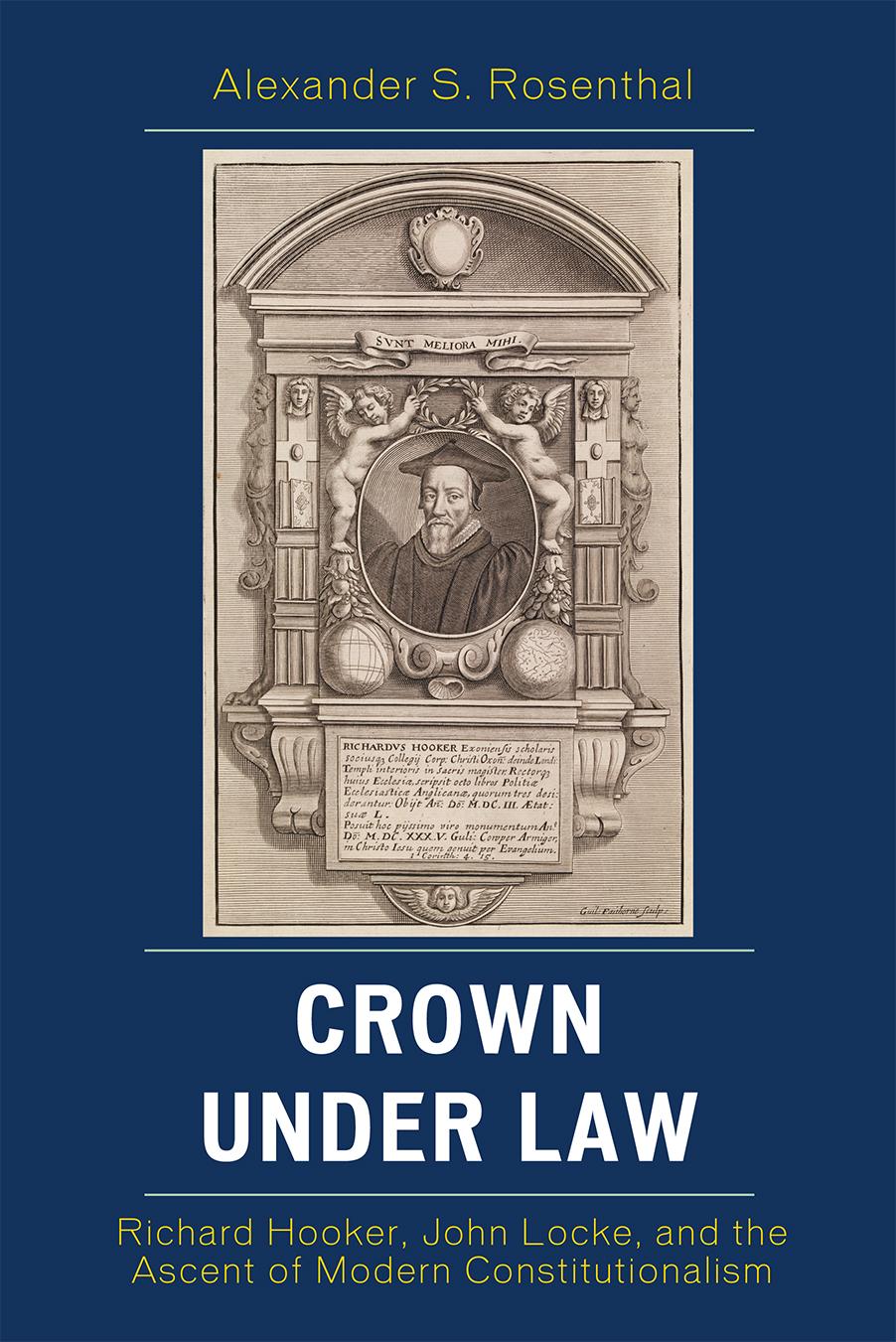
Crown under Law is an account of how and why the constitutional idea arose in early modern England. The book focuses on two figures-Richard Hooker and John Locke. Rosenthal represents Hooker as a transitional figure who follows in the medieval natural law tradition even while laying the groundwork for Locke's political thought. The book challenges the influential interpretation of Locke by Leo Strauss (who saw Locke as a radical modernist) by illustrating the lines of continuity between Locke's argument in the Two Treatises of Government and the earlier political tradition represented by Hooker. By illustrating the often distinctive manner in which Hooker addressed the great questions, and how he powerfully affected later developments such as Locke's conception of the state, Rosenthal's Crown under Law establishes the important place of Richard Hooker in the history of political thought.
Pay easily by card, Klarna, Apple Pay or Google Pay. Not happy? You always have a 14-day money-back guarantee. Read more in our terms. If you have any questions, email us at hello@memmo.org.
Memmo makes studying easier – wherever you are in the world. We bring your course books and smart study tools together in one place: summaries, quizzes, podcasts and flashcards. Plus Ted, your study buddy who answers anything you wonder. Over 50,000 students already study here – built to help you learn faster and stress less.