
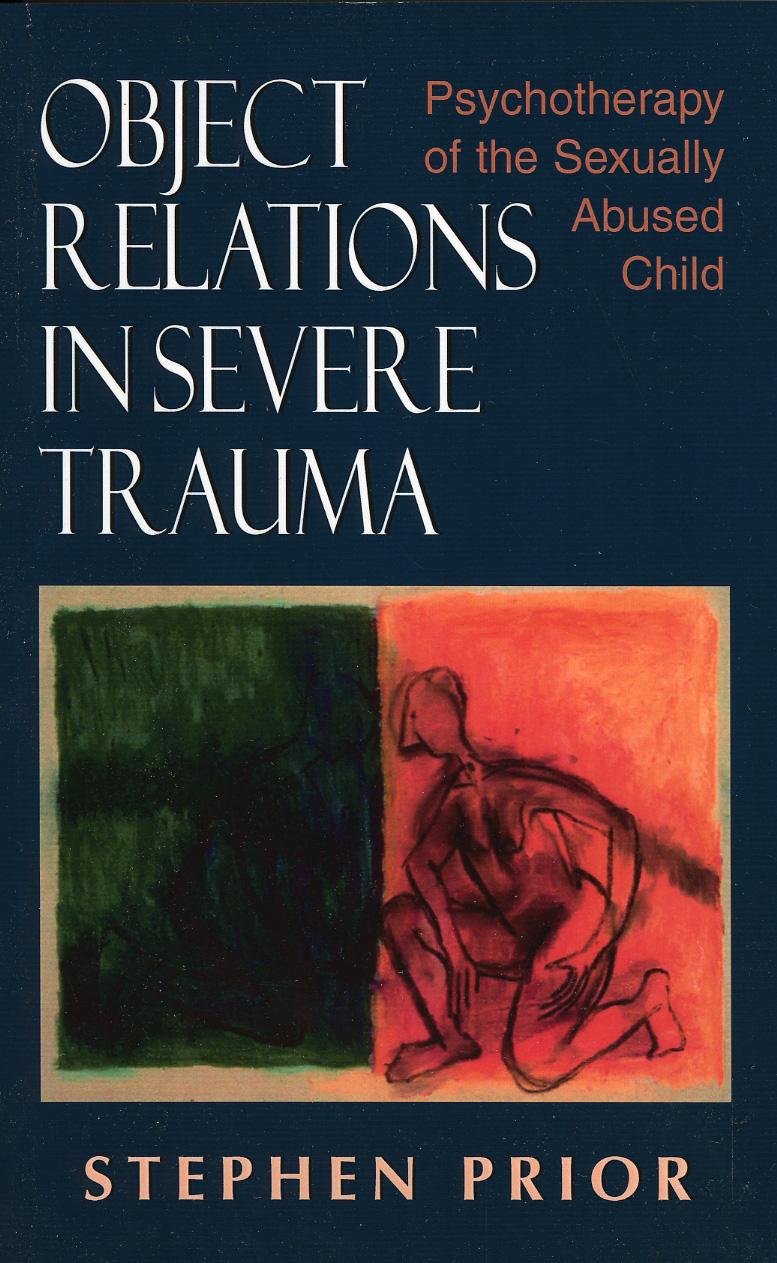
Building upon the theoretical work of Ferenczi, Fairbairn, and Berliner, the author describes four basic relational patterns in the lives of abused children: the reliving of abusive relationships, either as victim or as perpetrator; identification with the aggressor; masochistic self-blame; and the seeking of object contact though sex or violence. The interweaving of these patterns creates what Dr. Prior calls "relational dilemmas." According to him, these four basic relational patterns are held in place by the child's profound fear of falling into primitive states of unrelatedness and consequent annihilation anxiety. For example, the abused child believes that victimization by or identification with the bad object, no matter how horrible that may be, is preferable to the psychic disintegration that complete nonrelatedness creates. Dilemmas of this nature tear apart the child's psyche, leading to unstable and tormented models of self, other, and relationship.
Object Relations in Severe Trauma provides sensitive understanding of childhood traumatization and a conceptual and technical framework for the treatment of patients-both children and adults-who have suffered from it.
Object Relations in Severe Trauma provides sensitive understanding of childhood traumatization and a conceptual and technical framework for the treatment of patients-both children and adults-who have suffered from it.
Pay easily by card, Klarna, Apple Pay or Google Pay. Not happy? You always have a 14-day money-back guarantee. Read more in our terms. If you have any questions, email us at hello@memmo.org.
Memmo makes studying easier – wherever you are in the world. We bring your course books and smart study tools together in one place: summaries, quizzes, podcasts and flashcards. Plus Ted, your study buddy who answers anything you wonder. Over 50,000 students already study here – built to help you learn faster and stress less.