
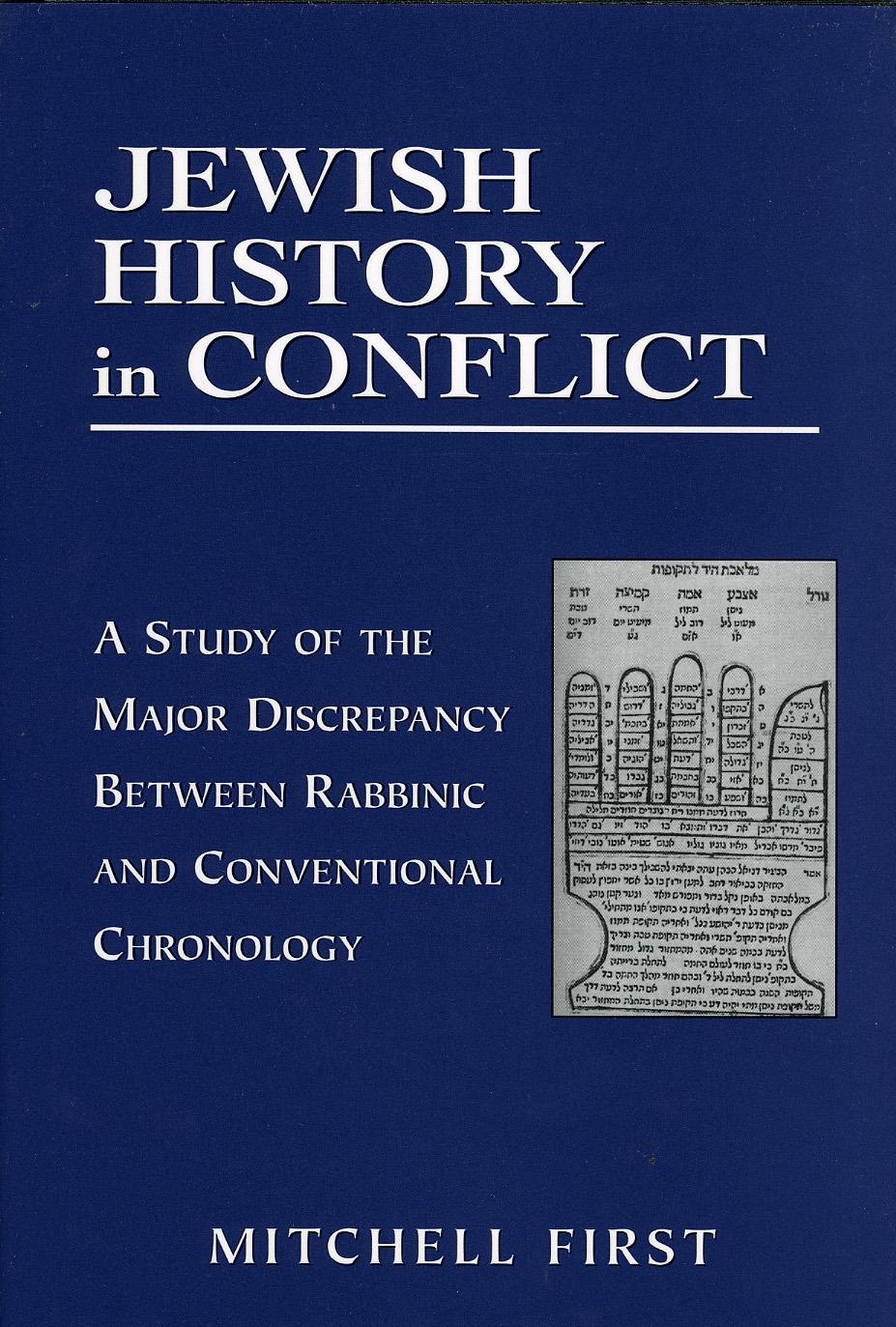
The author writes:
“According to Seder Olam Rabbah, the work that forms the basis for almost all rabbinic chronology, the .period from the defeat of the Babylonians by the Medeo-Persians until the beginning of Greek rule, encompassed 52 years and spanned the reigns of three Persian kings. According to the chronology that is universally accepted by historians today (conventional chronology), this period of Persian rule over the land of Israel encompassed 207 years (539 to 332 BCE) and during this period more than ten Persian kings reigned.
“This discrepancy between the traditional Jewish chronology and conventional chronology has not gone unnoticed. The purpose of this study is to collect and categorize the variety of Jewish responses to this discrepancy, both by Jewish scholars and rabbinic authorities. Part I provides an introduction to the discrepancy. Part II contains the earliest Jewish responses to the discrepancy. In the major part of the study, Part III, the responses to the discrepancy from the time of Azariah de Rossi (16th century) to the present time are collected and categorized. This unified collection and categorization of the many responses will enable students and scholars to have easy access to what has been written by Jewish scholars and rabbinic authorities about the discrepancy and will facilitate scholarly evaluation of the responses.
“Part IV is an evaluation of the responses’ attempts to answer the fundamental question raised by the discrepancy. Part V presents observations on the rabbinic responses. Part VI is a summary and conclusion.”
“According to Seder Olam Rabbah, the work that forms the basis for almost all rabbinic chronology, the .period from the defeat of the Babylonians by the Medeo-Persians until the beginning of Greek rule, encompassed 52 years and spanned the reigns of three Persian kings. According to the chronology that is universally accepted by historians today (conventional chronology), this period of Persian rule over the land of Israel encompassed 207 years (539 to 332 BCE) and during this period more than ten Persian kings reigned.
“This discrepancy between the traditional Jewish chronology and conventional chronology has not gone unnoticed. The purpose of this study is to collect and categorize the variety of Jewish responses to this discrepancy, both by Jewish scholars and rabbinic authorities. Part I provides an introduction to the discrepancy. Part II contains the earliest Jewish responses to the discrepancy. In the major part of the study, Part III, the responses to the discrepancy from the time of Azariah de Rossi (16th century) to the present time are collected and categorized. This unified collection and categorization of the many responses will enable students and scholars to have easy access to what has been written by Jewish scholars and rabbinic authorities about the discrepancy and will facilitate scholarly evaluation of the responses.
“Part IV is an evaluation of the responses’ attempts to answer the fundamental question raised by the discrepancy. Part V presents observations on the rabbinic responses. Part VI is a summary and conclusion.”
Pay easily by card, Klarna, Apple Pay or Google Pay. Not happy? You always have a 14-day money-back guarantee. Read more in our terms. If you have any questions, email us at hello@memmo.org.
Memmo makes studying easier – wherever you are in the world. We bring your course books and smart study tools together in one place: summaries, quizzes, podcasts and flashcards. Plus Ted, your study buddy who answers anything you wonder. Over 50,000 students already study here – built to help you learn faster and stress less.