
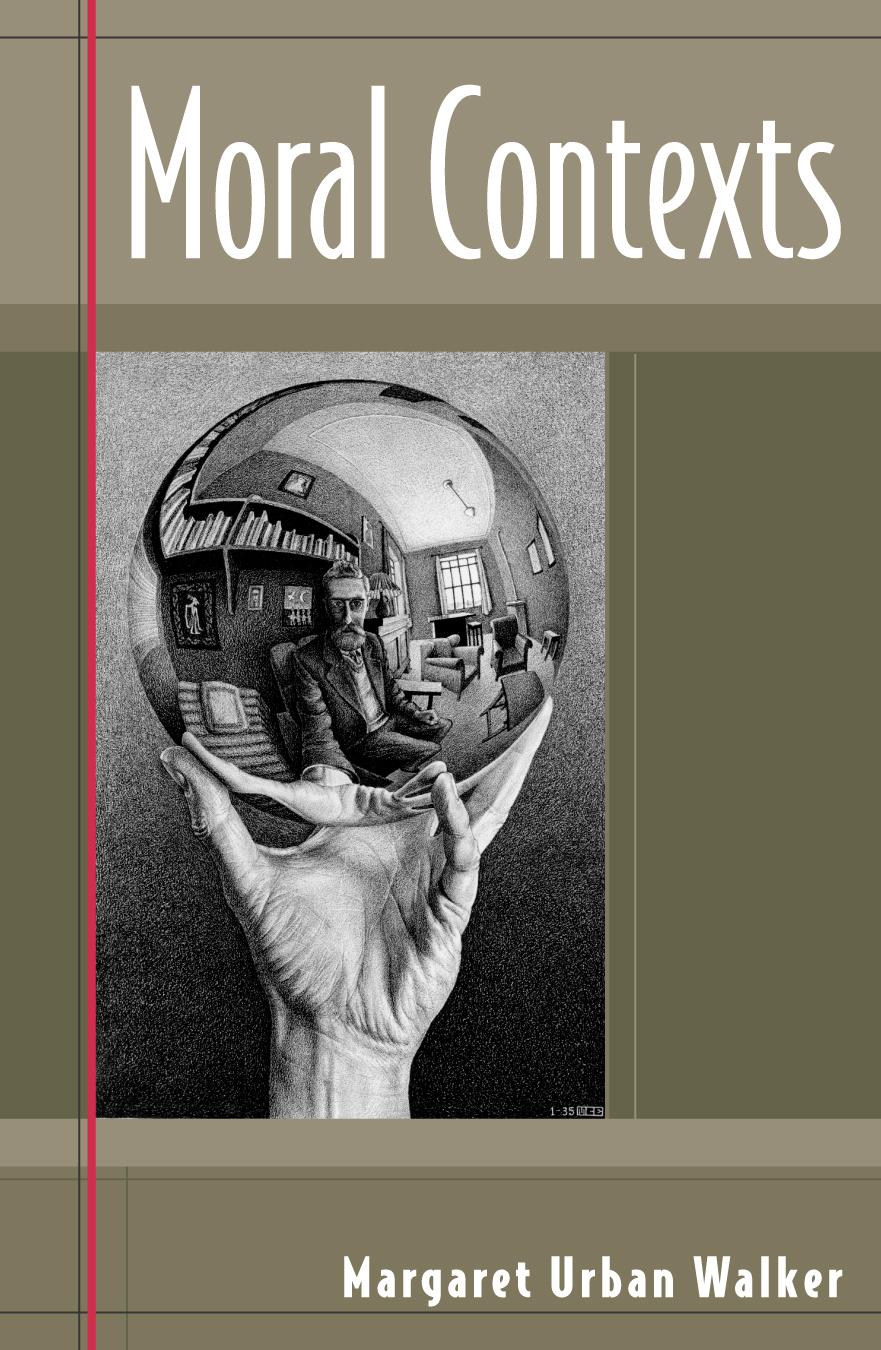
Many contexts shape and limit moral thinking in philosophy and life. Human conditions of vulnerability and interdependency, of limited awareness and control, of imperfect insight into ourselves and others are inevitable contexts that neither moral thought nor theory should forget. To be truly reflective, moral thinking and moral philosophy must become aware of the contexts that bind our thinking about how to live. This collection of essays by Margaret Urban Walker seek to show how to do this, and why it makes a difference.
Contingent and changeable contexts that shape moral thinking include our individual histories, our social positions, and institutional roles, relationships, cultural settings, and social arrangements, and the specific moral idioms we pick up along the way. The paradigms and specialized language of ethical theory are contexts, too; they shape how moral theory looks and what or whom it looks at. Ethical theory and practice are meaningless without these Moral Contexts.
Contingent and changeable contexts that shape moral thinking include our individual histories, our social positions, and institutional roles, relationships, cultural settings, and social arrangements, and the specific moral idioms we pick up along the way. The paradigms and specialized language of ethical theory are contexts, too; they shape how moral theory looks and what or whom it looks at. Ethical theory and practice are meaningless without these Moral Contexts.
Pay easily by card, Klarna, Apple Pay or Google Pay. Not happy? You always have a 14-day money-back guarantee. Read more in our terms. If you have any questions, email us at hello@memmo.org.
Memmo makes studying easier – wherever you are in the world. We bring your course books and smart study tools together in one place: summaries, quizzes, podcasts and flashcards. Plus Ted, your study buddy who answers anything you wonder. Over 50,000 students already study here – built to help you learn faster and stress less.