
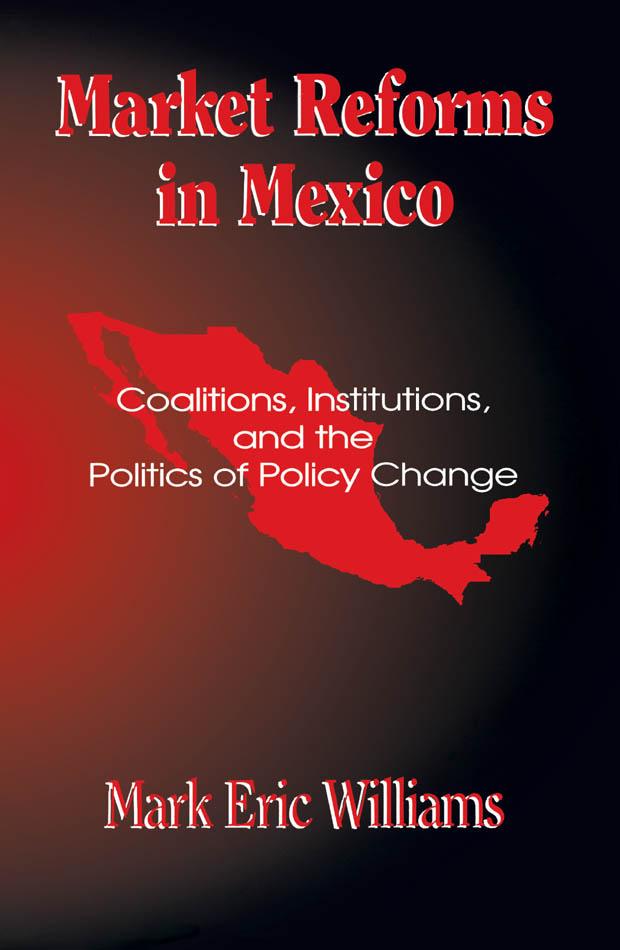
The last two decades saw a host of governments abandon statist development models for more market-friendly ones. However, not all reform attempts fared equally well. Why do some governments succeed in implementing market reforms while others fail? Why might the same government succeed in one policy area but not another? Market Reforms in Mexico explores these central questions by examining Mexico's reform experience in privatization, deregulation, and environmental policy. More than simply a book on "Mexican politics," this study speaks to the broader political dynamics behind the success or failure to implement reforms; first, by assessing new policy initiatives in multiple arenas across presidential administrations in Mexico, then by comparing Mexico's privatization experience to that of Argentina's. Through structured, focused comparison of select case studies, the author argues that the fate of dramatic reform initiatives turned on coalition politics (both inside and outside the state), and explains how institutional dynamics and the capacity to solve the problem of policy "costs" strongly affected reformers' prospects of success.
Pay easily by card, Klarna, Apple Pay or Google Pay. Not happy? You always have a 14-day money-back guarantee. Read more in our terms. If you have any questions, email us at hello@memmo.org.
Memmo makes studying easier – wherever you are in the world. We bring your course books and smart study tools together in one place: summaries, quizzes, podcasts and flashcards. Plus Ted, your study buddy who answers anything you wonder. Over 50,000 students already study here – built to help you learn faster and stress less.