
“Relentlessly, remorselessly, endlessly, we are told there is no alternative to globalization, whether our lecturers are bourgeois economists, progressive journalists, or imaginative litterateurs. Eric Cazdyn and Imre Szeman dare to go beyond the standard thinking of the day and query the very heart of mobile capital and its impact on daily life. Their alternative vision breathes new life into our sense of evolution and inevitability.”
Toby Miller, author of Globalization and Sport and Global Hollywood
“Cazdyn and Szeman begin with the idea that the current economic crisis has historicized globalization, turning it from a process that looked as inevitable as, say, global warming still does, into an episode in the history of capitalism: hence the possibility not just of more globalization but of an “after globalization.” And hence also, they argue, the renewed possibility of an “after capitalism.” In powerful critiques of what they describe as the common sense of capital today they sketch out the terms in which changes more radical than substituting generous and honest leaders for the greedy and dishonest ones we’ve currently got might begin to be imagined.”
Walter Benn Michaels, University of Illinois at Chicago
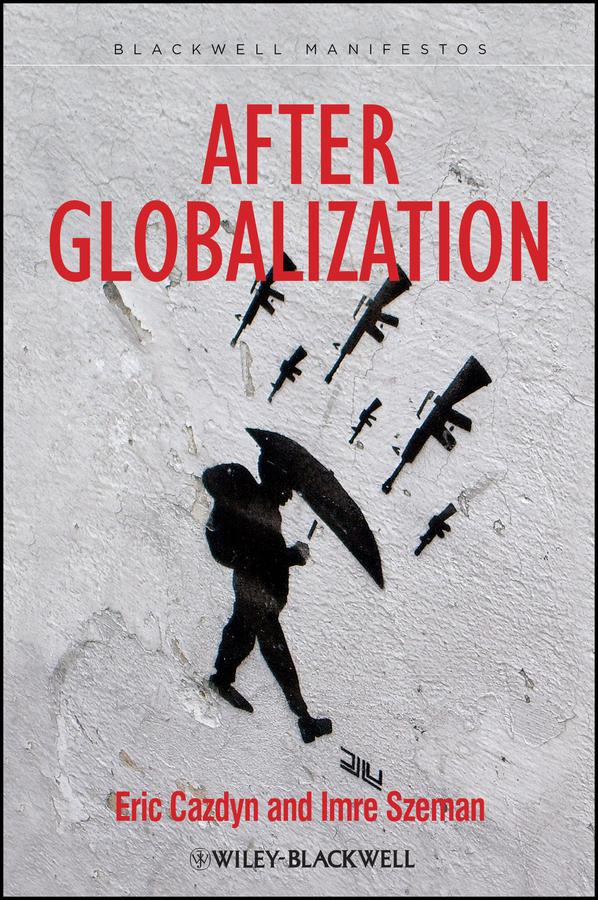
In lively and unflinching prose, Eric Cazdyn and Imre Szeman argue that contemporary thought about the world is disabled by a fatal flaw: the inability to think “an after” to globalization. After establishing seven theses (on education, morality, nation, future, history, capitalism, and common sense) that challenge the false promises that sustain this time limit, After Globalization examines four popular thinkers (Richard Florida, Thomas Friedman, Paul Krugman, and Naomi Klein) and considers how their work is dulled by these promises. Cazdyn and Szeman then speak to students from around the globe who are both unconvinced and uninterested in these promises and who understand the world very differently than the way it is popularly represented.
After Globalization argues that a true capacity to think an after to globalization is the very beginning of politics today.
Pay easily by card, Klarna, Apple Pay or Google Pay. Not happy? You always have a 14-day money-back guarantee. Read more in our terms. If you have any questions, email us at hello@memmo.org.
Memmo makes studying easier – wherever you are in the world. We bring your course books and smart study tools together in one place: summaries, quizzes, podcasts and flashcards. Plus Ted, your study buddy who answers anything you wonder. Over 50,000 students already study here – built to help you learn faster and stress less.