
“An important and ground-breaking study which links growing interest in Augustine and medieval philosophy with cutting-edge questions in contemporary philosophy of religion, particularly concerning epistemology and the ‘rationality’ of religion.”
Janet Soskice, University of Cambridge
“In this lucidly argued and solidly documented study, Schumacher uncovers the roots of problems notoriously besetting modern theories of knowledge in conflicting medieval interpretations of Augustine’s assumptions about knowledge as divine illumination: an intriguing thesis, which she handles with delicacy and flair.”
Fergus Kerr, O.P. University of Edinburgh
“Challenges the traditional history of theories of knowledge. A bold and provocative reading.”
Olivier Boulnois, École Pratique des Hautes Études (University of Paris, Sorbonne)
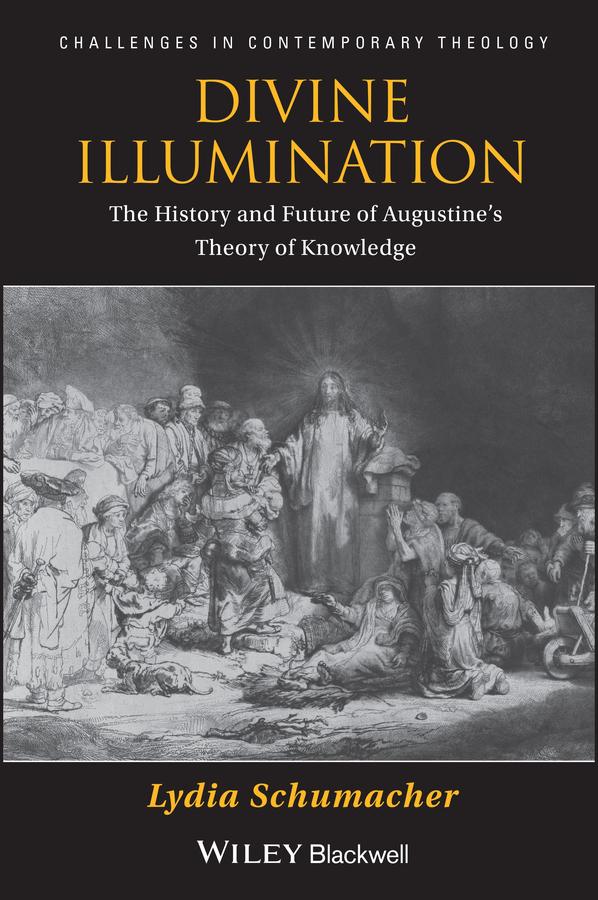
Divine Illumination offers an original interpretation of Augustine’s theory of knowledge, tracing its development in the work of medieval thinkers such as Anselm, Bonaventure, Thomas Aquinas, and John Duns Scotus. Although Scotus is often deemed responsible for finally pronouncing Augustine’s longstanding illumination account untenable, Schumacher shows that he only rejected a version that was the byproduct of a shift in the understanding of illumination and knowledge more generally within the thirteenth-century Franciscan school of thought.
To reckon with the challenges in contemporary thought on knowledge that were partly made possible by this shift, Schumacher recommends relearning a way of thinking about knowledge that was familiar to Augustine and those who worked in continuity with him.
Her book thus anticipates a new approach to dealing with debates in contemporary epistemology, philosophy of religion, and theology, even while correcting some longstanding assumptions about Augustine and his most significant medieval readers.
Pay easily by card, Klarna, Apple Pay or Google Pay. Not happy? You always have a 14-day money-back guarantee. Read more in our terms. If you have any questions, email us at hello@memmo.org.
Memmo makes studying easier – wherever you are in the world. We bring your course books and smart study tools together in one place: summaries, quizzes, podcasts and flashcards. Plus Ted, your study buddy who answers anything you wonder. Over 50,000 students already study here – built to help you learn faster and stress less.