
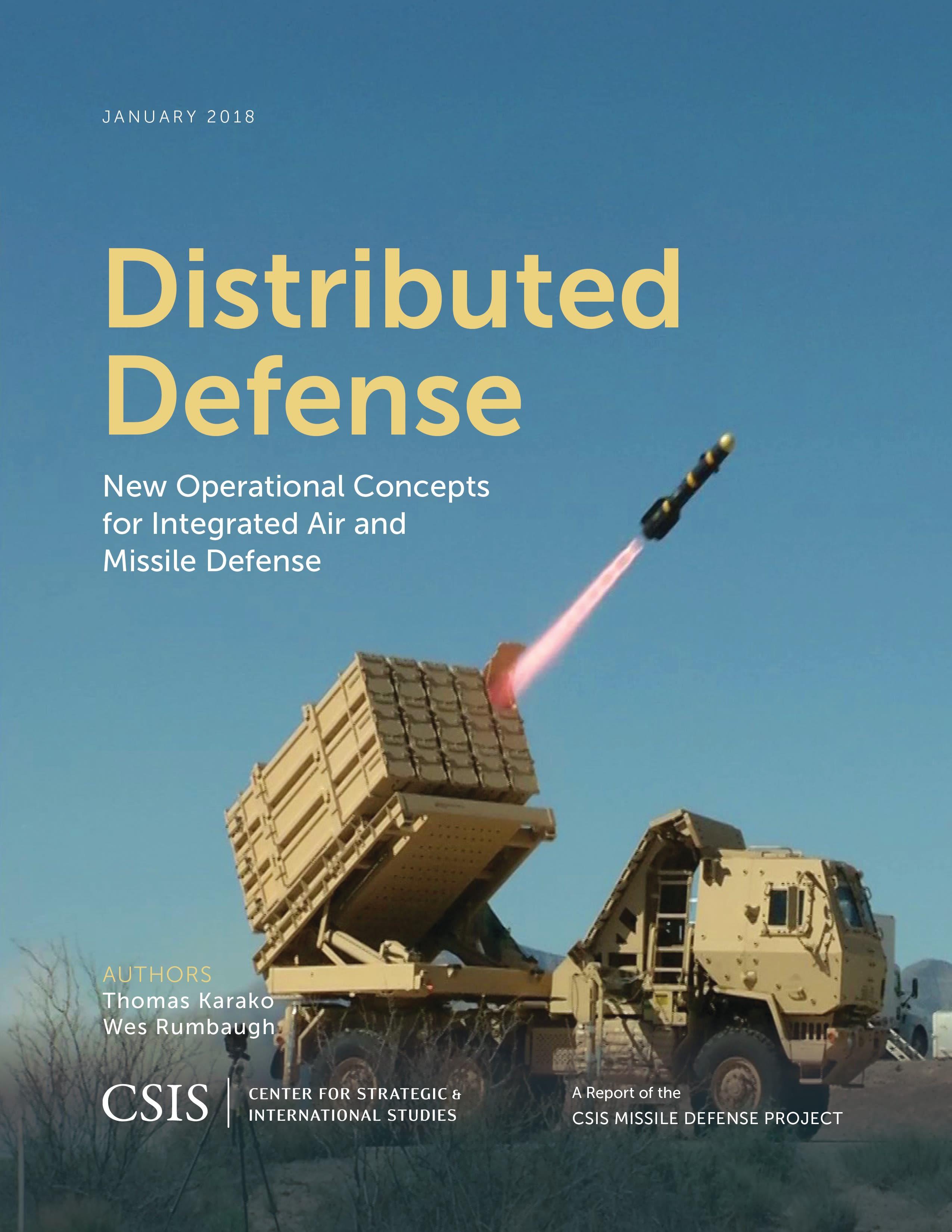
Despite the rising salience of missile threats, current air and missile defense forces are far too susceptible to suppression. Today’s U.S. air and missile defense (AMD) force lacks the depth, capacity, and operational flexibility to simultaneously perform both missions. Discussions about improving AMD usually revolve around improvements to the capability and capacity of interceptors or sensors. Rather than simply doing more of the same, the joint integrated air and missile defense (IAMD) efforts might be well served by new or reinvigorated operational concepts, here discussed collectively as “Distributed Defense.” By leveraging networked integration, Distributed Defense envisions a more flexible and more dispersible air and missile defense force capable of imposing costs and dilemmas on an adversary, complicating the suppression of U.S. air and missile defenses. Although capability and capacity improvements remain essential to the high-end threats, the Distributed Defense concept focuses on creating a new architecture for today’s fielded or soon-to-be fielded IAMD force to boost flexibility and resilience.
Pages: 54
Category: Statsvetenskap & Politik
e-ISBN: 9781442280441
Shipping weight: 1.2 kg
Ships in: 1-2 days
Pay easily by card, Klarna, Apple Pay or Google Pay. Not happy? You always have a 14-day money-back guarantee. Read more in our terms. If you have any questions, email us at hello@memmo.org.
Memmo makes studying easier – wherever you are in the world. We bring your course books and smart study tools together in one place: summaries, quizzes, podcasts and flashcards. Plus Ted, your study buddy who answers anything you wonder. Over 50,000 students already study here – built to help you learn faster and stress less.