
Muslims believe that the Koran is God’s message in Arabic, revealed through the medium of the Prophet Muhammad for the guidance of the Arabs and subsequently for all humanity. There is both unity and variety in the Islamic world. Muslims are not a homogeneous people who can be explained solely by their normative texts: the Koran and the Sunnah. Muslims differ vastly in their interpretation of Islam: modernists want to reinterpret Islam to adapt to the requirements of modern times while traditionalists tend to look to the classical and medieval periods of Islam as their model of the Islamic state.
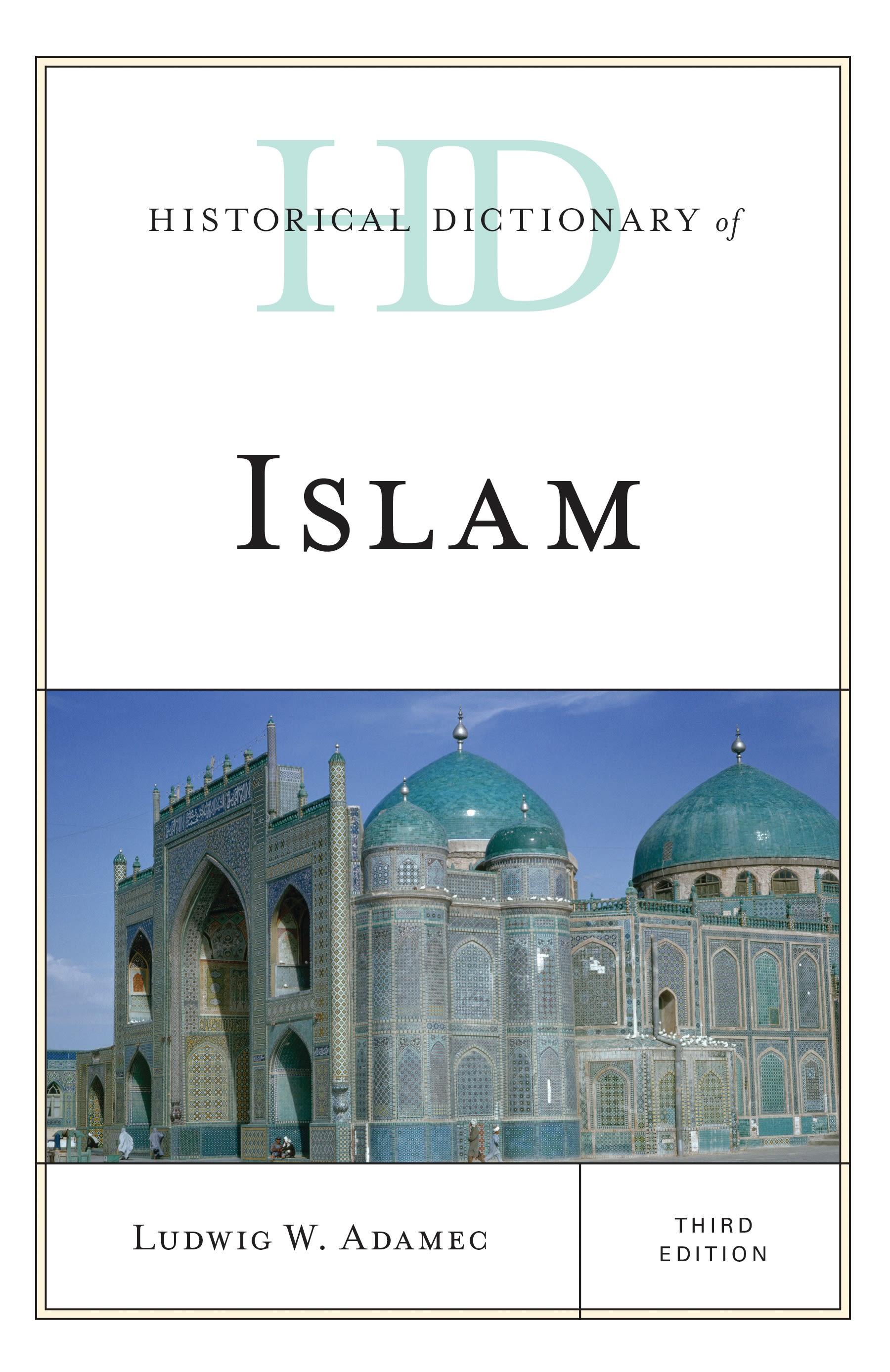
This third edition of Historical Dictionary of Islam contains a chronology, an introduction, appendixes, and an extensive bibliography. The dictionary section has over 700 cross-referenced entries on major sects, schools of theology, and jurisprudence, as well as aspects of Islamic culture. This book is an excellent resource for students, researchers, and anyone wanting to know more about Islam.
This third edition of Historical Dictionary of Islam contains a chronology, an introduction, appendixes, and an extensive bibliography. The dictionary section has over 700 cross-referenced entries on major sects, schools of theology, and jurisprudence, as well as aspects of Islamic culture. This book is an excellent resource for students, researchers, and anyone wanting to know more about Islam.
Pay easily by card, Klarna, Apple Pay or Google Pay. Not happy? You always have a 14-day money-back guarantee. Read more in our terms. If you have any questions, email us at hello@memmo.org.
Memmo makes studying easier – wherever you are in the world. We bring your course books and smart study tools together in one place: summaries, quizzes, podcasts and flashcards. Plus Ted, your study buddy who answers anything you wonder. Over 50,000 students already study here – built to help you learn faster and stress less.