
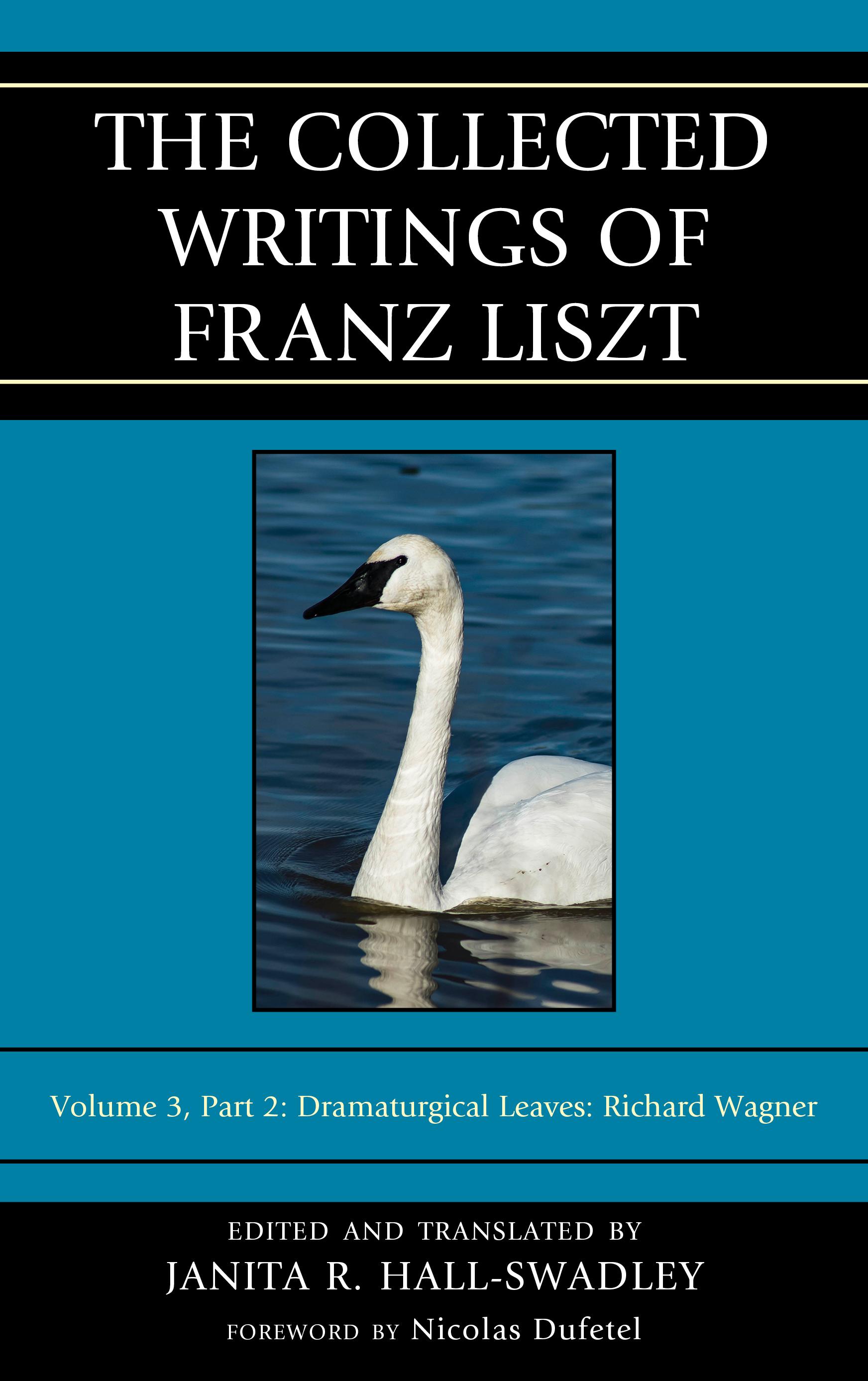
The Collected Writings of Franz Liszt: Dramaturgical Leaves: Richard Wagner completes the second half of Liszt’s writings about stage works, its composers, and music drama. In this volume, Liszt focuses on the works of his most controversial devotee and son-in-law, Richard Wagner, whose music dramas Liszt championed as conductor during his tenure in Weimar. Here, we see Liszt prove his skill and expertise as a music critic, as well. He offers a critical analysis of the aesthetic and musical principles that underlie Wagner’s operas, Tannhäuser, Lohengrin, and The Flying Dutchman, including a thorough discussion of Wagner’s Leitmotif system of composition. Additionally, his findings are substantiated with a plethora of music examples, which will satisfy those who wanted greater musical substance from his writings. He also foretells the magnitude of Wagner’s influence on prosperity in his pamphlet-length essay, The Rhine’s Gold. Finally, the editor and translator of this volume, Janita Hall-Swadley, provides a unique perspective on these same principles, which is based on Wagner’s own mysterious diagram of “The Philosopher’s Stone,” which was supposed to be included in the original 1863 edition of the composer’s important writing, Opera and Drama, but never made it to publication.
Pay easily by card, Klarna, Apple Pay or Google Pay. Not happy? You always have a 14-day money-back guarantee. Read more in our terms. If you have any questions, email us at hello@memmo.org.
Memmo makes studying easier – wherever you are in the world. We bring your course books and smart study tools together in one place: summaries, quizzes, podcasts and flashcards. Plus Ted, your study buddy who answers anything you wonder. Over 50,000 students already study here – built to help you learn faster and stress less.