
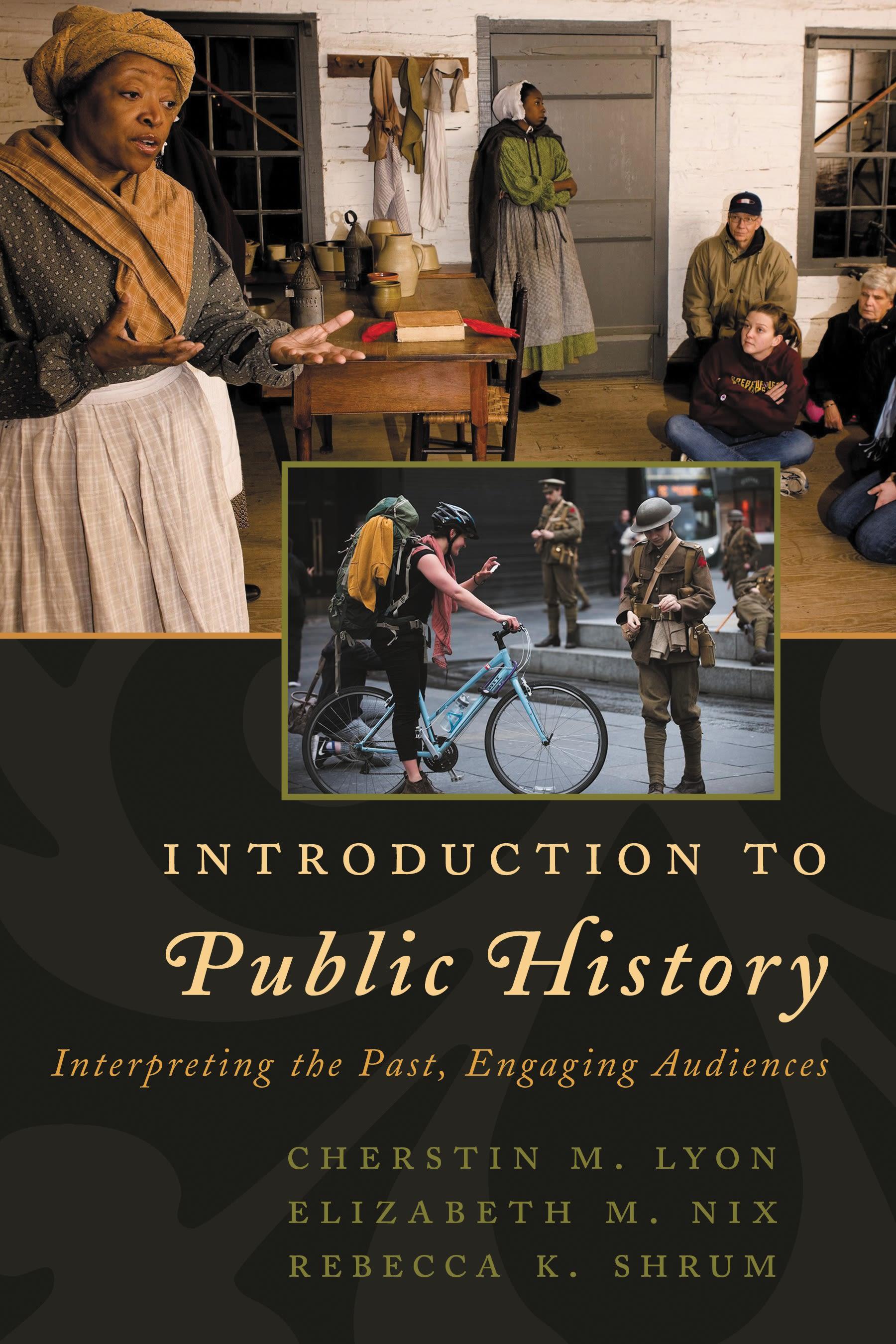
Introduction to Public History: Interpreting the Past, Engaging Audiences is a brief foundational textbook for public history. It is organized around the questions and ethical dilemmas that drive public history in a variety of settings, from local community-based projects to international case studies. This book is designed for use in undergraduate and graduate classrooms with future public historians, teachers, and consumers of history in mind.
The authors are practicing public historians who teach history and public history to a mix of undergraduate and graduate students at universities across the United States and in international contexts. This book is based on original research and the authors’ first-hand experiences, offering a fresh perspective on the dynamic field of public history based on a decade of consultation with public history educators about what they needed in an introductory textbook. Each chapter introduces a concept or common practice to students, highlighting key terms for student review and for instructor assessment of student learning. The body of each chapter introduces theories, and basic conceptual building blocks intermixed with case studies to illustrate these points. Footnotes credit sources but also serve as breadcrumbs for instructors who might like to assign more in-depth reading for more advanced students or for the purposes of lecture development. Each chapter ends with suggestions for activities that the authors have tried with their own students and suggested readings, books, and websites that can deepen student exposure to the topic.
The authors are practicing public historians who teach history and public history to a mix of undergraduate and graduate students at universities across the United States and in international contexts. This book is based on original research and the authors’ first-hand experiences, offering a fresh perspective on the dynamic field of public history based on a decade of consultation with public history educators about what they needed in an introductory textbook. Each chapter introduces a concept or common practice to students, highlighting key terms for student review and for instructor assessment of student learning. The body of each chapter introduces theories, and basic conceptual building blocks intermixed with case studies to illustrate these points. Footnotes credit sources but also serve as breadcrumbs for instructors who might like to assign more in-depth reading for more advanced students or for the purposes of lecture development. Each chapter ends with suggestions for activities that the authors have tried with their own students and suggested readings, books, and websites that can deepen student exposure to the topic.
Pay easily by card, Klarna, Apple Pay or Google Pay. Not happy? You always have a 14-day money-back guarantee. Read more in our terms. If you have any questions, email us at hello@memmo.org.
Memmo makes studying easier – wherever you are in the world. We bring your course books and smart study tools together in one place: summaries, quizzes, podcasts and flashcards. Plus Ted, your study buddy who answers anything you wonder. Over 50,000 students already study here – built to help you learn faster and stress less.