
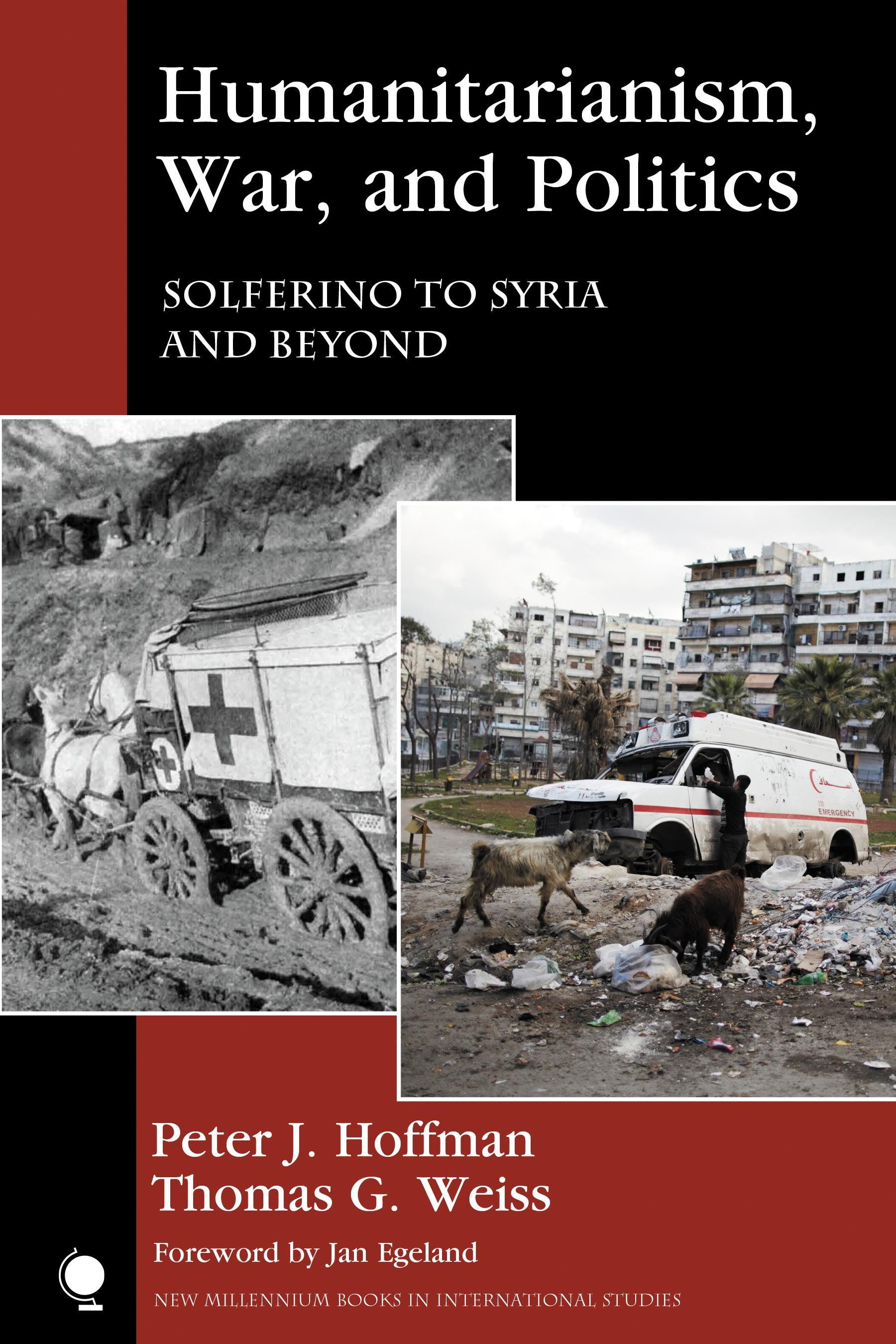
What is humanitarianism? This authoritative book provides a comprehensive analysis of the original idea and its evolution, exploring its triangulation with war and politics. Peter J. Hoffman and Thomas G. Weiss trace the origins of humanitarianism, its social movement, and the institutions (international humanitarian law) and organizations (providers of assistance and protection) that comprise it. They consider the international humanitarian system’s ability to regulate the conduct of war, to improve the wellbeing of its victims, and to prosecute war criminals. Probing the profound changes in the culture and capacities that underpin the sector and alter the meaning of humanitarianism, they assess the reinventions that constitute “revolutions in humanitarian affairs.”
The book begins with traditions and perspectives—ranging from classic international relations approaches to “Critical Humanitarian Studies” —and reviews seminal wartime emergencies and the creation and development of humanitarian agencies in the late nineteenth and twentieth centuries. The authors then examine the rise of “new humanitarianisms” after the Cold War’s end and contemporary cases after 9/11. The authors continue by unpacking the most recent “revolutions”—the International Criminal Court and the “Responsibility to Protect”—as well as such core challenges as displacement camps, infectious diseases, eco-refugees, and marketization. They conclude by evaluating the contemporary system and the prospects for further transformations, identifying scholarly puzzles and the acute operational problems faced by practitioners.
The book begins with traditions and perspectives—ranging from classic international relations approaches to “Critical Humanitarian Studies” —and reviews seminal wartime emergencies and the creation and development of humanitarian agencies in the late nineteenth and twentieth centuries. The authors then examine the rise of “new humanitarianisms” after the Cold War’s end and contemporary cases after 9/11. The authors continue by unpacking the most recent “revolutions”—the International Criminal Court and the “Responsibility to Protect”—as well as such core challenges as displacement camps, infectious diseases, eco-refugees, and marketization. They conclude by evaluating the contemporary system and the prospects for further transformations, identifying scholarly puzzles and the acute operational problems faced by practitioners.
Pay easily by card, Klarna, Apple Pay or Google Pay. Not happy? You always have a 14-day money-back guarantee. Read more in our terms. If you have any questions, email us at hello@memmo.org.
Memmo makes studying easier – wherever you are in the world. We bring your course books and smart study tools together in one place: summaries, quizzes, podcasts and flashcards. Plus Ted, your study buddy who answers anything you wonder. Over 50,000 students already study here – built to help you learn faster and stress less.