
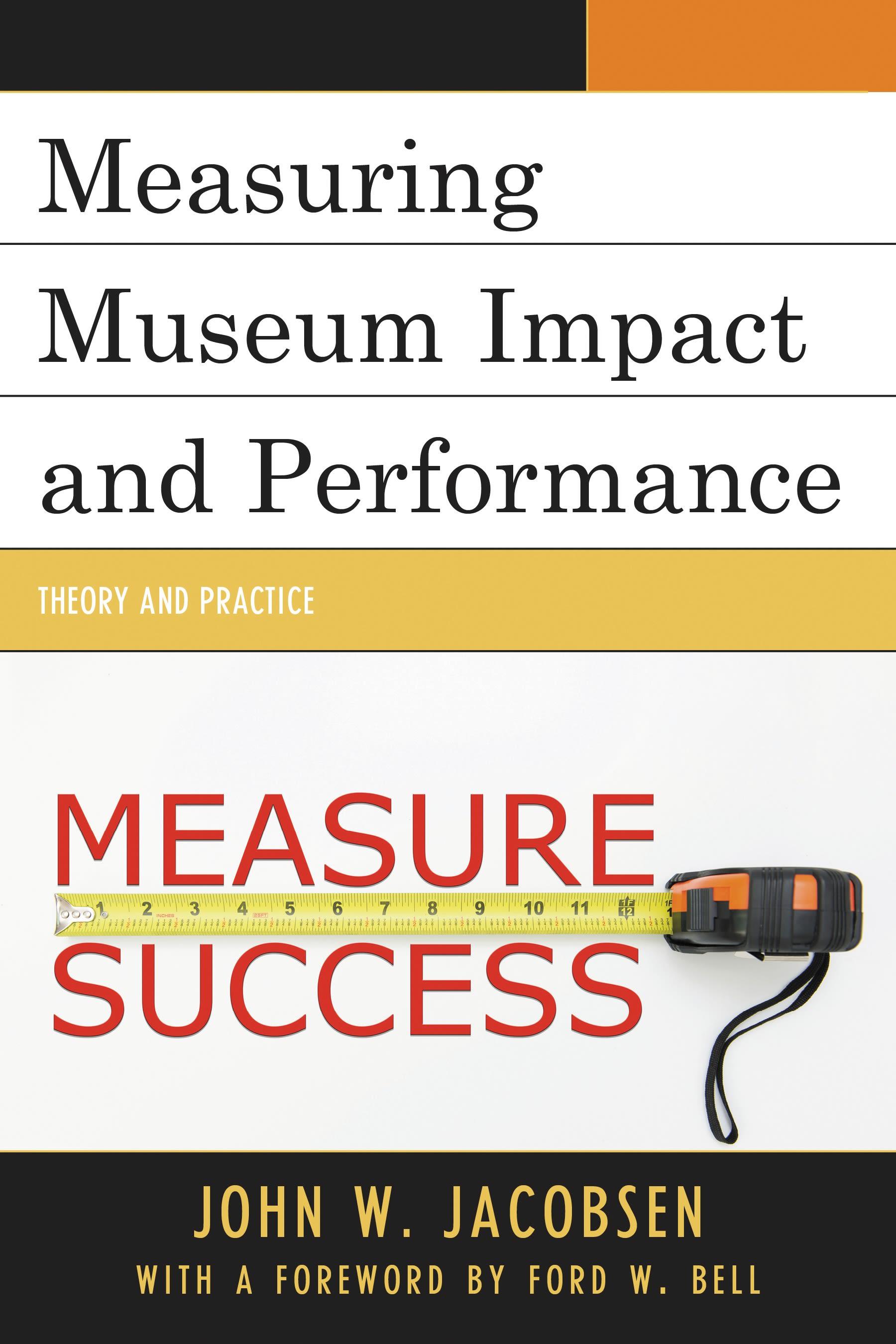
Based on extensive research and decades of experience, museum analyst and planner John W. Jacobsen provides both the theoretical underpinnings and the operational pragmatics of measuring any museum's intentional impact and performance by using 1,025 indicators drawn from 51 expert sources. Measuring Museum Impact and Performance: Theory and Practice provides museum professionals internationally with a clear, very open process that will improve their museum's value and performance by selecting indicators that monitor whether they are realizing their desired public, private, personal and institutional values. The book is not prescriptive, but liberating, as the framework recognizes that each museum needs to decide on its own purposes and priorities.
The book is organized in two parts: "Part 1: Theory" is scholarly and builds on the museum field’s rich literature; and "Part 2: Practice" provides step-by-step methods for any museum to set up its own dashboard of prioritized impact and performance indicators. Substantive attachments include: the list of the 51 source documents for the MIIP indicators; definitions of terms and data fields; a long list of precedented museum impacts; measurement formulas and worksheet templates, filled in for a sample museum; and the MIIP 1.0 database available online.
Readers will get the following benefits:
A literature review of prior work on measuring museum valueAn analysis of eleven well-established evaluation frameworks that synthesize into a revolutionary, yet practical, Museum Theory of ActionA robust and searchable menu of 1,025 existing and aspirational indicators (the MIIP 1.0 database) that you can use to start your own selectionAn analysis of the MIIP database using the Theory of Action that reveals 14 areas of potential museum impacts and benefitsA process to select and prioritize your museum’s intentional purposes and desired impactsA process to determine, measure and compare your museum’s key performance indicators (KPIs) A process to set-up and conduct peer museum comparisonsProcedures and examples of how to capture and report data used in your selected indicatorsPrinciples for using indicator data to inform museum management decisions
The book is organized in two parts: "Part 1: Theory" is scholarly and builds on the museum field’s rich literature; and "Part 2: Practice" provides step-by-step methods for any museum to set up its own dashboard of prioritized impact and performance indicators. Substantive attachments include: the list of the 51 source documents for the MIIP indicators; definitions of terms and data fields; a long list of precedented museum impacts; measurement formulas and worksheet templates, filled in for a sample museum; and the MIIP 1.0 database available online.
Readers will get the following benefits:
A literature review of prior work on measuring museum valueAn analysis of eleven well-established evaluation frameworks that synthesize into a revolutionary, yet practical, Museum Theory of ActionA robust and searchable menu of 1,025 existing and aspirational indicators (the MIIP 1.0 database) that you can use to start your own selectionAn analysis of the MIIP database using the Theory of Action that reveals 14 areas of potential museum impacts and benefitsA process to select and prioritize your museum’s intentional purposes and desired impactsA process to determine, measure and compare your museum’s key performance indicators (KPIs) A process to set-up and conduct peer museum comparisonsProcedures and examples of how to capture and report data used in your selected indicatorsPrinciples for using indicator data to inform museum management decisions
Pages: 180
Category: Företagande & Management
e-ISBN: 9781442263314
Shipping weight: 1.2 kg
Ships in: 1-2 days
Pay easily by card, Klarna, Apple Pay or Google Pay. Not happy? You always have a 14-day money-back guarantee. Read more in our terms. If you have any questions, email us at hello@memmo.org.
Memmo makes studying easier – wherever you are in the world. We bring your course books and smart study tools together in one place: summaries, quizzes, podcasts and flashcards. Plus Ted, your study buddy who answers anything you wonder. Over 50,000 students already study here – built to help you learn faster and stress less.