
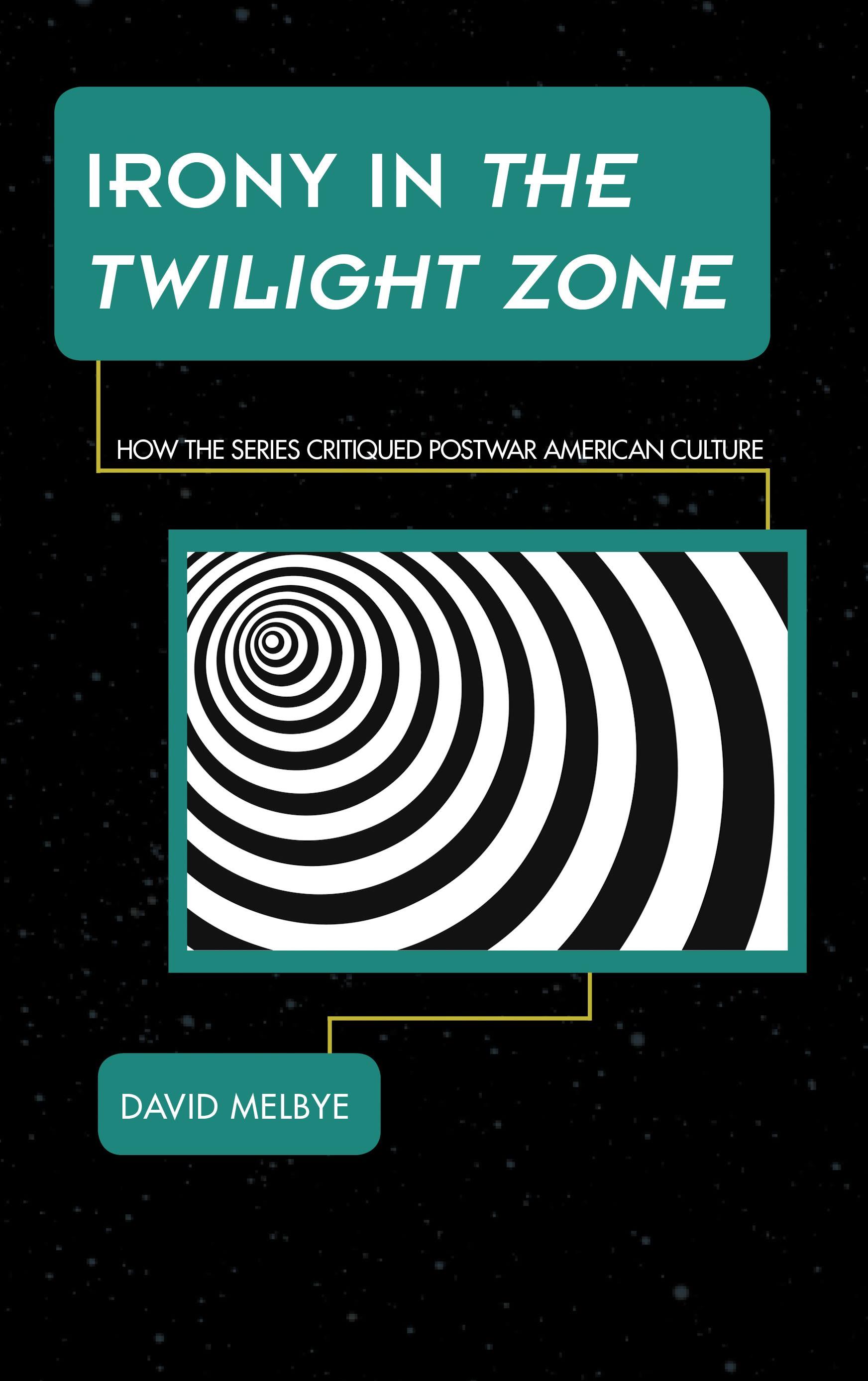
Rod Serling’s pioneering series TheTwilight Zone (1959 to 1964) is remembered for its surprise twist endings and pervading sense of irony.While other American television series of the time also experimented with ironic surprises, none depended on these as much as Serling’s. However, irony was not used merely as a structural device—Serling and his writers used it as a provocative means by which to comment on the cultural landscape of the time.
Irony in The Twilight Zone: How the Series Critiqued Postwar American Culture explores the multiple types of irony—such as technological, invasive, martial, sociopolitical, and domestic—that Serling, Richard Matheson, Charles Beaumont, and other contributors employed in the show. David Melbye explains how each kind of irony critiqued of a specific aspect of American culture and how all of them informed one another, creating a larger social commentary. This book also places the show’s use of irony in historical and philosophical contexts, connecting it to a rich cultural tradition reaching back to ancient Greece.
The Twilight Zone endures because it uses irony to negotiate its definitively modernist moment of “high” social consciousness and “low” cultural escapism. With its richly detailed, frequently unexpected readings of episodes, Irony in The Twilight Zone offers scholars and fans a fresh and unique lens through which to view the classic series.
Irony in The Twilight Zone: How the Series Critiqued Postwar American Culture explores the multiple types of irony—such as technological, invasive, martial, sociopolitical, and domestic—that Serling, Richard Matheson, Charles Beaumont, and other contributors employed in the show. David Melbye explains how each kind of irony critiqued of a specific aspect of American culture and how all of them informed one another, creating a larger social commentary. This book also places the show’s use of irony in historical and philosophical contexts, connecting it to a rich cultural tradition reaching back to ancient Greece.
The Twilight Zone endures because it uses irony to negotiate its definitively modernist moment of “high” social consciousness and “low” cultural escapism. With its richly detailed, frequently unexpected readings of episodes, Irony in The Twilight Zone offers scholars and fans a fresh and unique lens through which to view the classic series.
Pay easily by card, Klarna, Apple Pay or Google Pay. Not happy? You always have a 14-day money-back guarantee. Read more in our terms. If you have any questions, email us at hello@memmo.org.
Memmo makes studying easier – wherever you are in the world. We bring your course books and smart study tools together in one place: summaries, quizzes, podcasts and flashcards. Plus Ted, your study buddy who answers anything you wonder. Over 50,000 students already study here – built to help you learn faster and stress less.