
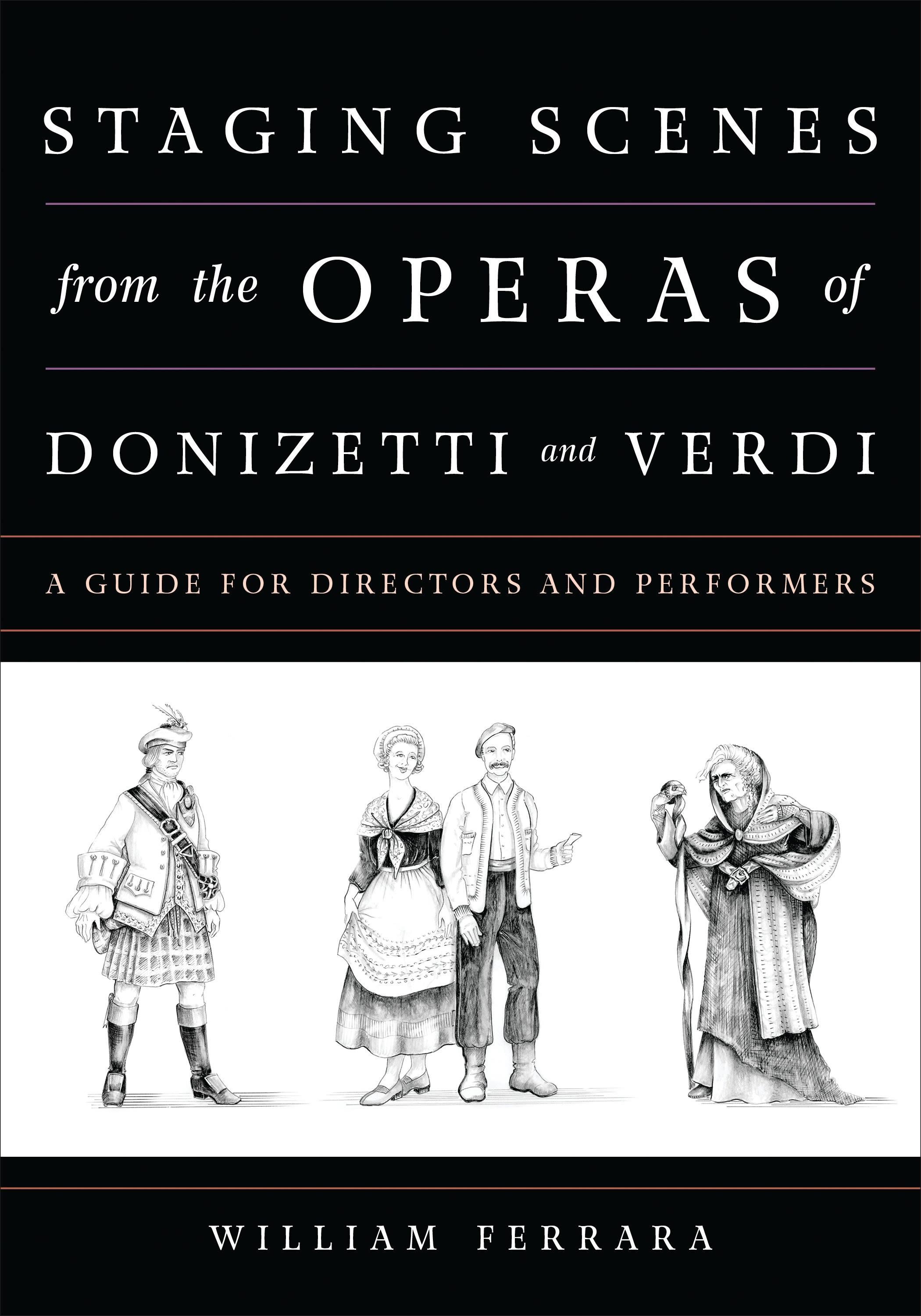
In Staging Scenes from the Operas of Donizetti and Verdi, veteran opera director William Ferrarapresents a detailed, practical exploration of the staging of twenty-one scenes from two of opera’s most beloved composers. He brings to life Donizetti’s delightful comedies, L’Elisir d’amore and Don Pasquale, and guides us throughthe haunted world of Lucia di Lammmermoor. He explores Verdi’s dark themes and imagery in scenes from Rigoletto, and the heartbreaking choices of the characters in La traviata.
With signature comic touches, vivid characters, and dynamic stage action, Ferrara brings tried-and-true techniques as well as lively new ideas to these favorite scenes. Topics include study and research, rehearsal planning, blocking, characterization, ideas for simplified sets and props, and costume design. The introduction to each of the five operas includes a brief description of the story and characters, and suggestions for several different approaches to staging—both traditional and modern. The heart of each chapter is the text and translation of the scene, embedded with line-by-line notes on character, movement, emotion, and interaction. This fresh approach to staging an opera scene by applying insights and ideas directly to the text sparks the student’s dramatic imagination and inspires a deeper understanding of the connection between words and music. In addition, by exploring creative improvisations, exercises and contemporary parallels, young performers are encouraged to build more authentic and dynamic performances.
Intended for college and university voice teachers seeking guidance for developing a scenes program or opera workshop class, this is also the perfect workbook for students studying opera stage direction, as well as graduate and undergraduate students performing opera scenes by Donizetti and Verdi.
With signature comic touches, vivid characters, and dynamic stage action, Ferrara brings tried-and-true techniques as well as lively new ideas to these favorite scenes. Topics include study and research, rehearsal planning, blocking, characterization, ideas for simplified sets and props, and costume design. The introduction to each of the five operas includes a brief description of the story and characters, and suggestions for several different approaches to staging—both traditional and modern. The heart of each chapter is the text and translation of the scene, embedded with line-by-line notes on character, movement, emotion, and interaction. This fresh approach to staging an opera scene by applying insights and ideas directly to the text sparks the student’s dramatic imagination and inspires a deeper understanding of the connection between words and music. In addition, by exploring creative improvisations, exercises and contemporary parallels, young performers are encouraged to build more authentic and dynamic performances.
Intended for college and university voice teachers seeking guidance for developing a scenes program or opera workshop class, this is also the perfect workbook for students studying opera stage direction, as well as graduate and undergraduate students performing opera scenes by Donizetti and Verdi.
Pay easily by card, Klarna, Apple Pay or Google Pay. Not happy? You always have a 14-day money-back guarantee. Read more in our terms. If you have any questions, email us at hello@memmo.org.
Memmo makes studying easier – wherever you are in the world. We bring your course books and smart study tools together in one place: summaries, quizzes, podcasts and flashcards. Plus Ted, your study buddy who answers anything you wonder. Over 75,000 students already study here – built to help you learn faster and stress less.