
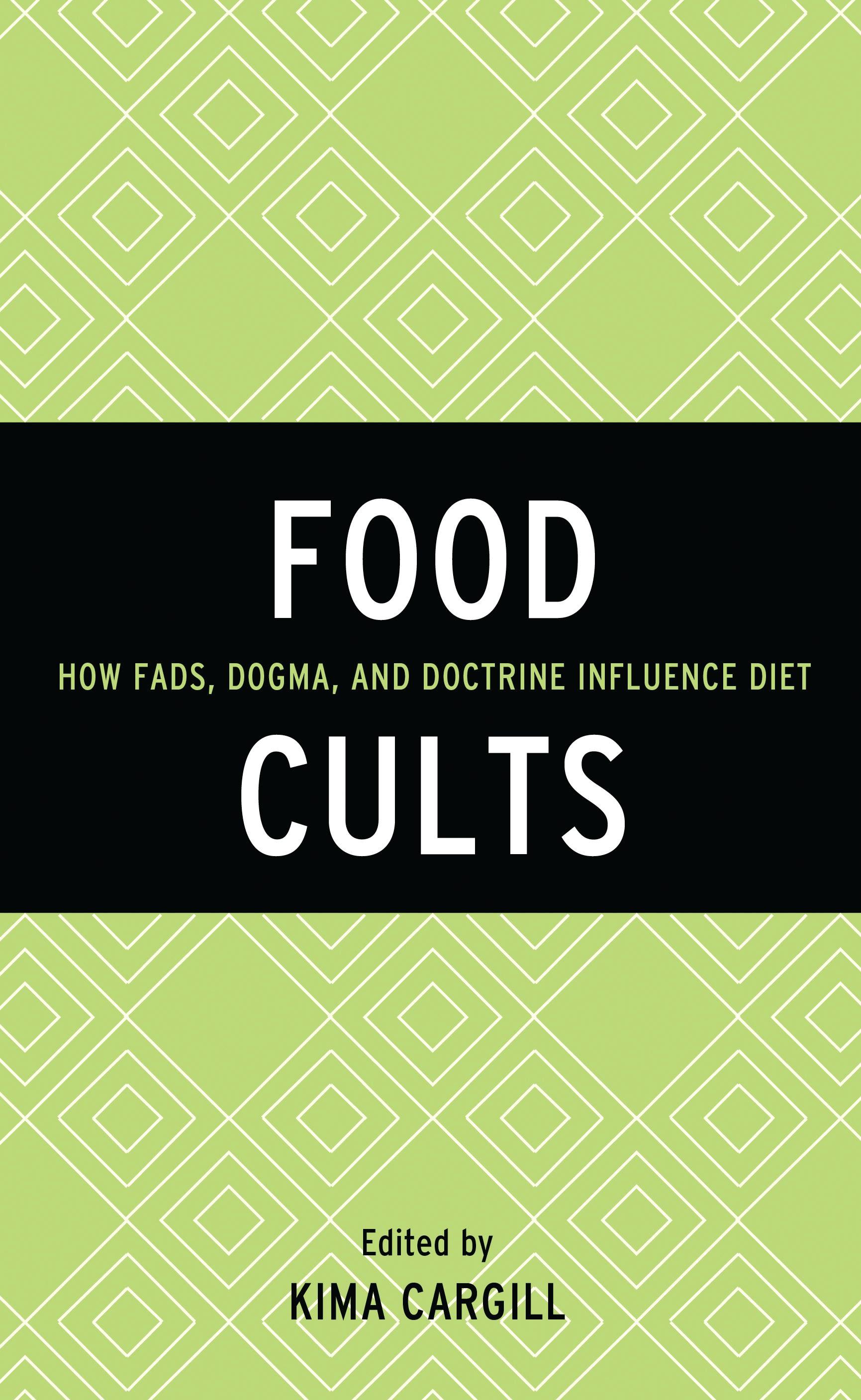
What do we mean when we call any group a cult? Definingthat term is a slippery proposition – the word cult is provocative and arguably pejorative. Does it necessarily refer to a religious group? A group with a charismatic leader? Or something darker and more sinister?
Because beliefs and practices surrounding food often inspire religious and political fervor, as well as function to unite people into insular groups, it is inevitable that "food cults" would emerge. Studying the extreme beliefs and practices of such food cults allows us to see the ways in which food serves as a nexus for religious beliefs, sexuality, death anxiety, preoccupation with the body, asceticism, and hedonism, to name a few. In contrast to religious and political cults, food cults have the added dimension of mediating cultural trends in nutrition and diet through their membership.
Should we then consider raw foodists, many of whom believe that cooked food is poison, a type of food cult? What about paleo diet adherents or those who follow a restricted calorie diet for longevity? Food Cults explores these questions by looking at domestic and international, contemporary and historic food communities characterized by extreme nutritional beliefs or viewed as "fringe" movements by mainstream culture. While there are a variety of accounts of such food communities across disciplines, this collection pulls together these works and explains why we gravitate toward such groups and the social and psychological functions they serve. This volume describes how contemporary and historic food communities come together and foment fanaticism, judgment, charisma, dogma, passion, longevity, condemnation and exaltation.
Because beliefs and practices surrounding food often inspire religious and political fervor, as well as function to unite people into insular groups, it is inevitable that "food cults" would emerge. Studying the extreme beliefs and practices of such food cults allows us to see the ways in which food serves as a nexus for religious beliefs, sexuality, death anxiety, preoccupation with the body, asceticism, and hedonism, to name a few. In contrast to religious and political cults, food cults have the added dimension of mediating cultural trends in nutrition and diet through their membership.
Should we then consider raw foodists, many of whom believe that cooked food is poison, a type of food cult? What about paleo diet adherents or those who follow a restricted calorie diet for longevity? Food Cults explores these questions by looking at domestic and international, contemporary and historic food communities characterized by extreme nutritional beliefs or viewed as "fringe" movements by mainstream culture. While there are a variety of accounts of such food communities across disciplines, this collection pulls together these works and explains why we gravitate toward such groups and the social and psychological functions they serve. This volume describes how contemporary and historic food communities come together and foment fanaticism, judgment, charisma, dogma, passion, longevity, condemnation and exaltation.
Pay easily by card, Klarna, Apple Pay or Google Pay. Not happy? You always have a 14-day money-back guarantee. Read more in our terms. If you have any questions, email us at hello@memmo.org.
Memmo makes studying easier – wherever you are in the world. We bring your course books and smart study tools together in one place: summaries, quizzes, podcasts and flashcards. Plus Ted, your study buddy who answers anything you wonder. Over 50,000 students already study here – built to help you learn faster and stress less.