
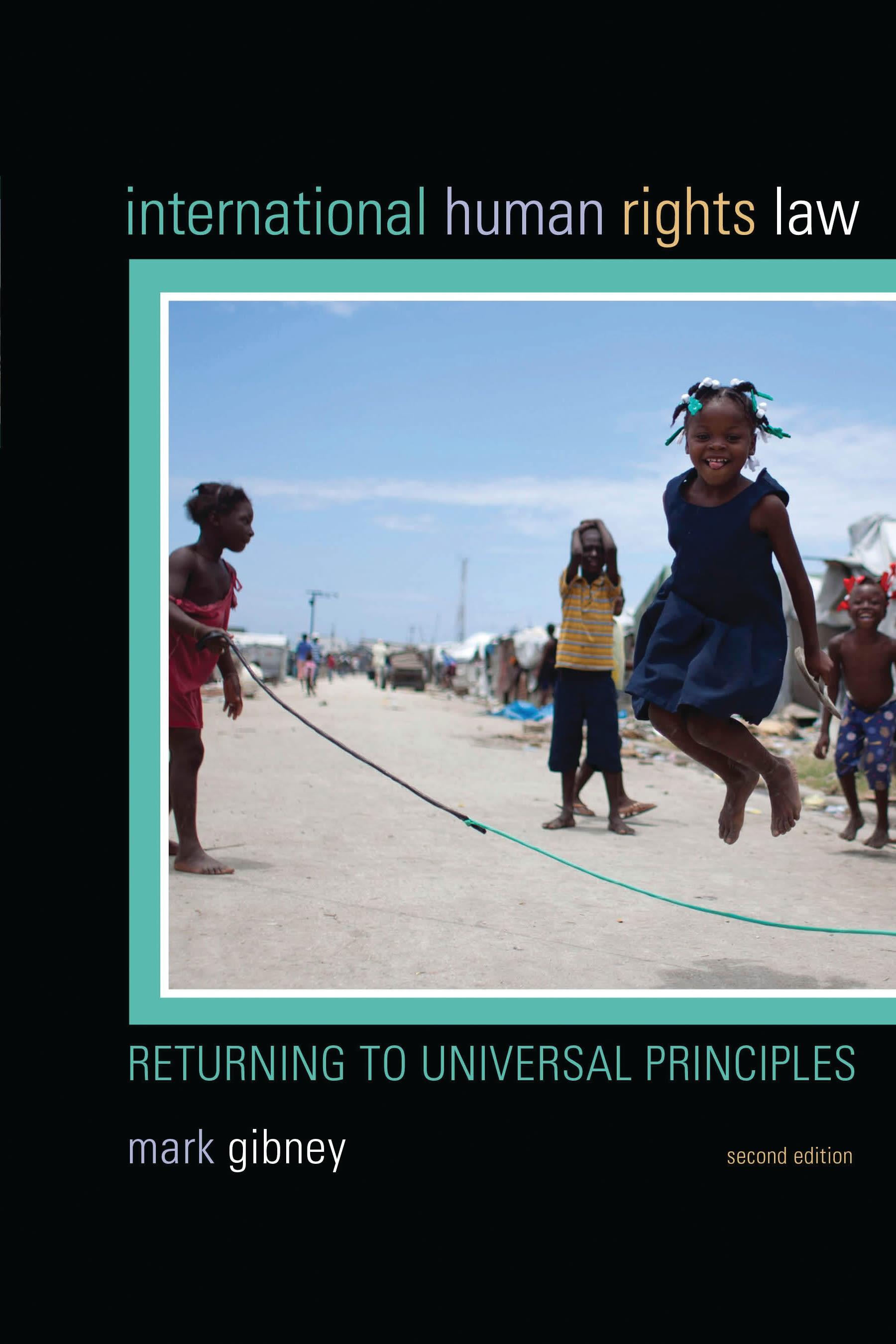
This clear and compelling textconfronts the dominant thinking on human rights, taking issue with the notion adopted by all states and even many academics that human rights obligations extend no further than their own territorial borders. Mark Gibney critiques cases from the U.S. Supreme Court, the International Court of Justice, and the European Court of Human Rights, arguing for a much broader reading of state responsibility on the basis that current law misses most of the ways in which states fail to protect human rights standards. Finally, Gibney takes up the issue of human rights enforcement, unquestionably the weakest aspect of international human rights law. He proposes several practical models that could begin to provide victims the “effective remedy” promised by the law itself. The book concludes that there is a moral and legal imperative to return to the universal principles human rights were founded on. And rather than witnessing the end of human rights—as some have suggested—we should see our times as the true beginning.
Pay easily by card, Klarna, Apple Pay or Google Pay. Not happy? You always have a 14-day money-back guarantee. Read more in our terms. If you have any questions, email us at hello@memmo.org.
Memmo makes studying easier – wherever you are in the world. We bring your course books and smart study tools together in one place: summaries, quizzes, podcasts and flashcards. Plus Ted, your study buddy who answers anything you wonder. Over 50,000 students already study here – built to help you learn faster and stress less.