
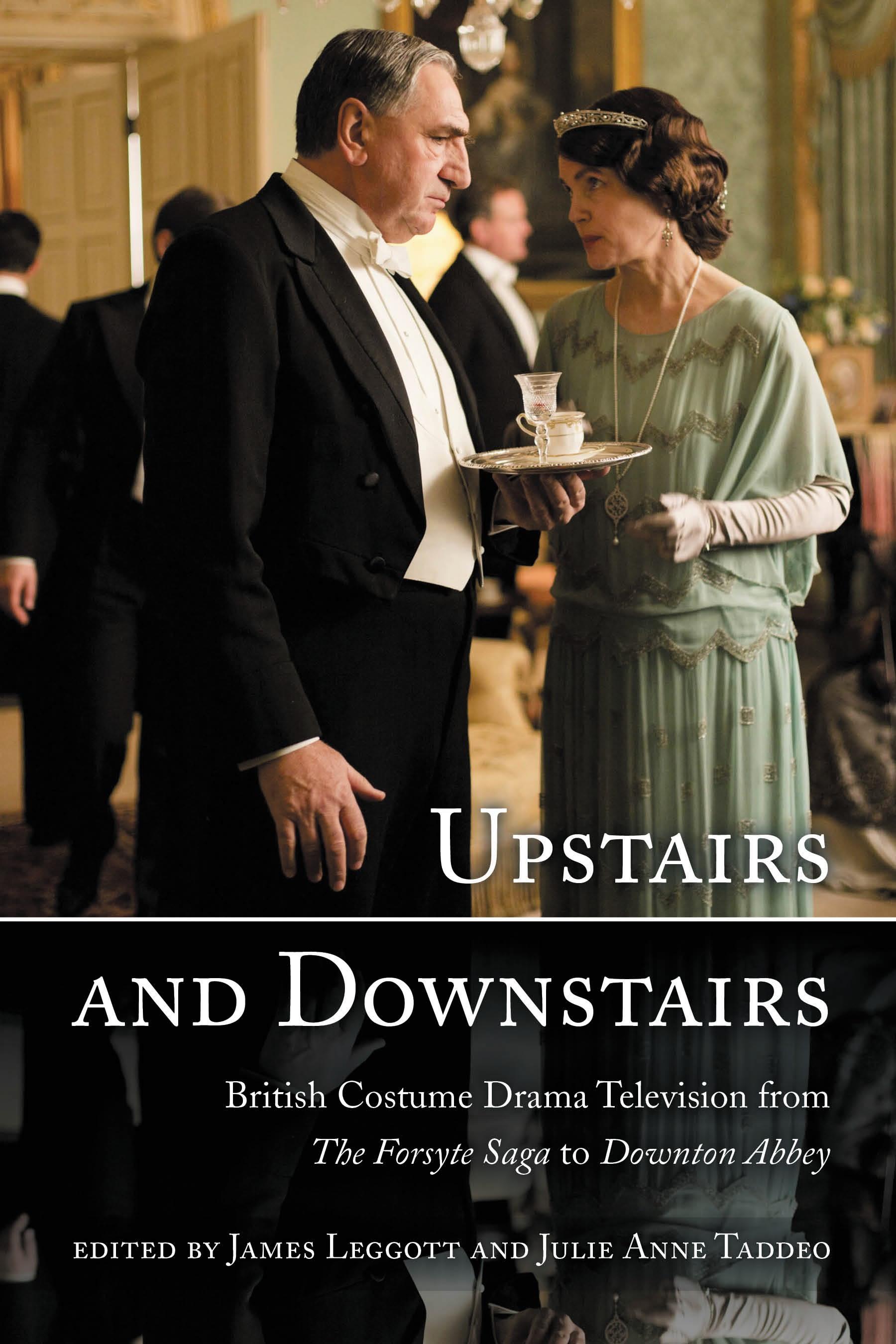
The international success of Downton Abbey has led to a revived interest in period dramas, with older programs like The Forsyte Saga being rediscovered by a new generation of fans whose tastes also include grittier fare like Ripper Street. Though often criticized as a form of escapist, conservative nostalgia, these shows can also provide a lens to examine the class and gender politics of both the past and present.
In Upstairs and Downstairs: British Costume Drama Television from The Forsyte Saga to Downton Abbey, James Leggott and Julie Anne Taddeo provide a collection of essays that analyze key developments in the history of period dramas from the late 1960s to the present day. Contributors explore such issues as how the genre fulfills and disrupts notions of “quality television,” the process of adaptation, the relationship between UK and U.S. television, and the connection between the period drama and wider developments in TV and popular culture. Additional essays examine how fans shape the content and reception of these dramas and how the genre has articulated or generated debates about gender, sexuality, and class.
In addition to Downton Abbey and Upstairs, Downstairs, other programs discussed in this collection include Call the Midwife, Danger UXB, Mr. Selfridge, Parade’s End, Piece of Cake, and Poldark. Tracing the lineage of costume drama from landmark productions of the late 1960s and 1970s to some of the most talked-about productions of recent years, Upstairs and Downstairs will be of value to students, teachers, and researchers in the areas of film, television, Victorian studies, literature, gender studies, and British history and culture.
In Upstairs and Downstairs: British Costume Drama Television from The Forsyte Saga to Downton Abbey, James Leggott and Julie Anne Taddeo provide a collection of essays that analyze key developments in the history of period dramas from the late 1960s to the present day. Contributors explore such issues as how the genre fulfills and disrupts notions of “quality television,” the process of adaptation, the relationship between UK and U.S. television, and the connection between the period drama and wider developments in TV and popular culture. Additional essays examine how fans shape the content and reception of these dramas and how the genre has articulated or generated debates about gender, sexuality, and class.
In addition to Downton Abbey and Upstairs, Downstairs, other programs discussed in this collection include Call the Midwife, Danger UXB, Mr. Selfridge, Parade’s End, Piece of Cake, and Poldark. Tracing the lineage of costume drama from landmark productions of the late 1960s and 1970s to some of the most talked-about productions of recent years, Upstairs and Downstairs will be of value to students, teachers, and researchers in the areas of film, television, Victorian studies, literature, gender studies, and British history and culture.
Pay easily by card, Klarna, Apple Pay or Google Pay. Not happy? You always have a 14-day money-back guarantee. Read more in our terms. If you have any questions, email us at hello@memmo.org.
Memmo makes studying easier – wherever you are in the world. We bring your course books and smart study tools together in one place: summaries, quizzes, podcasts and flashcards. Plus Ted, your study buddy who answers anything you wonder. Over 50,000 students already study here – built to help you learn faster and stress less.