
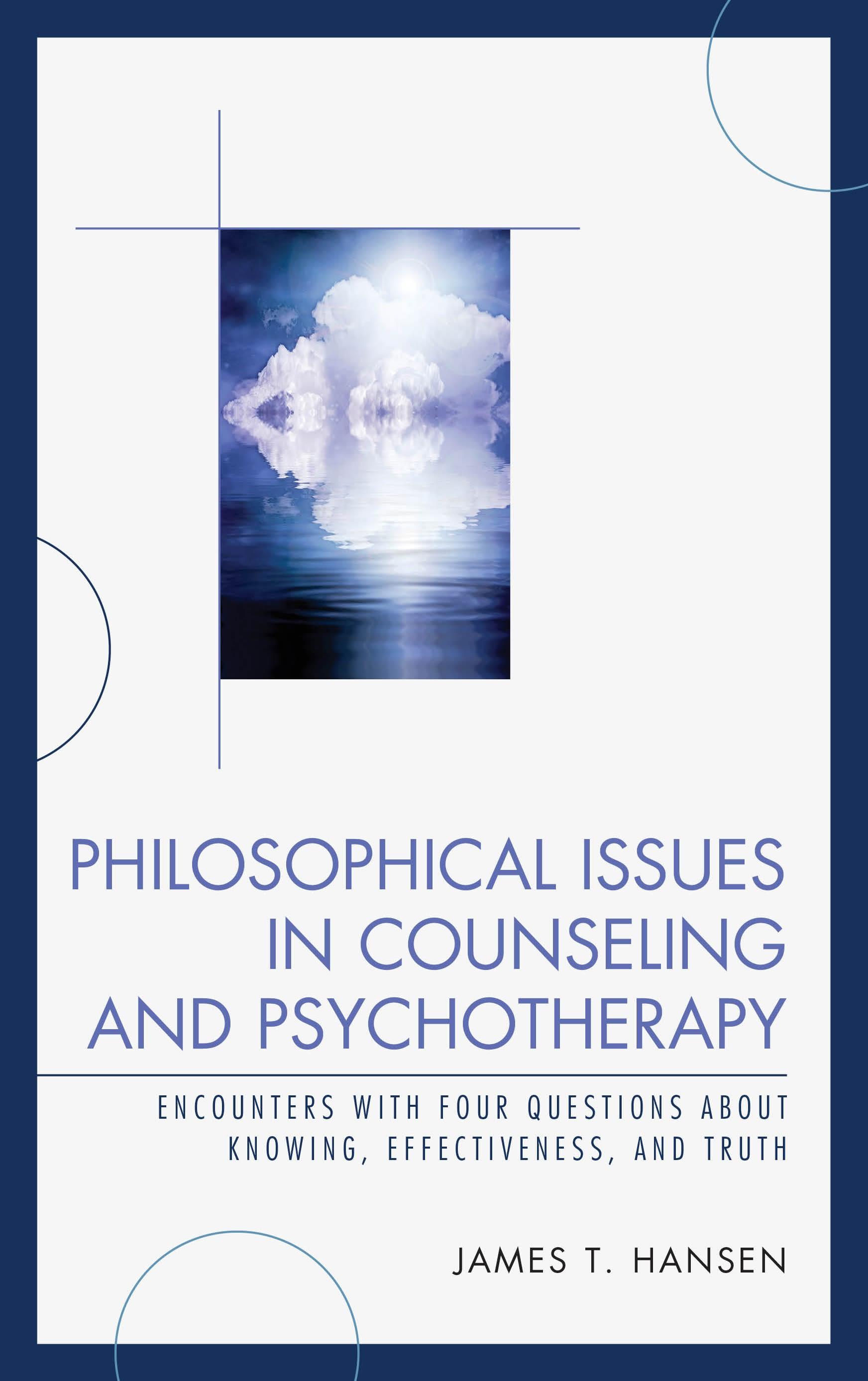
To become a counselor or psychotherapist, one must learn a confusing and conceptually disconnected array of theories, techniques, and ideologies. For instance, CBT, humanistic, and psychodynamic interventions have virtually opposite conceptual foundations, but they are all used to help clients. What principles, however, connect the various movements, trends, and methods of helping? In Philosophical Issues in Counseling and Psychotherapy: Encounters with Four Questions about Knowing, Effectiveness, and Truth, James T. Hansen asks and proposes beginning resolutions to four fundamental philosophical questions about knowing, effectiveness, and truth that are designed to unite and give meaning to diverse and seemingly contradictory models of helping: What does it mean to know a client? What makes counseling effective? Are truths discovered or created in the counseling relationship? Should counselors abandon the idea of truth? Although these questions are complex, Hansen provides plain language answers that make the material accessible to readers who have no formal education in philosophy. Furthermore, he addresses these questions in the context of his personal struggles to find meaning—making the book an engaging and highly enjoyable reading experience.
Pay easily by card, Klarna, Apple Pay or Google Pay. Not happy? You always have a 14-day money-back guarantee. Read more in our terms. If you have any questions, email us at hello@memmo.org.
Memmo makes studying easier – wherever you are in the world. We bring your course books and smart study tools together in one place: summaries, quizzes, podcasts and flashcards. Plus Ted, your study buddy who answers anything you wonder. Over 50,000 students already study here – built to help you learn faster and stress less.