
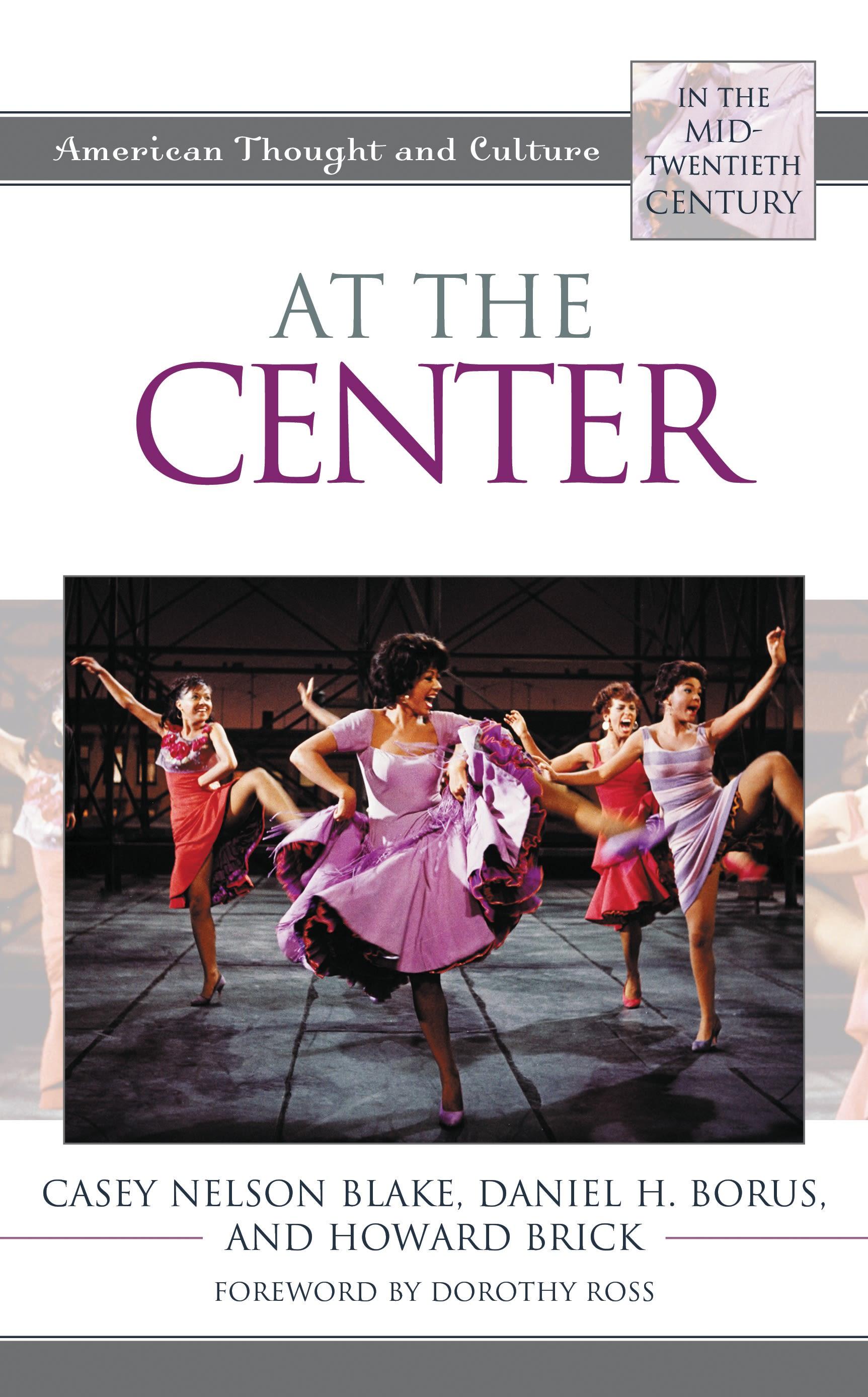
At a time when American political and cultural leaders asserted that the nation stood at “the center of world awareness,” thinkers and artists sought to understand and secure principles that lay at the center of things. From the onset of the Cold War in 1948 through 1963, they asked: What defined the essential character of “American culture”? Could permanent moral standards guide human conduct amid the flux and horrors of history? In what ways did a stable self emerge through the life cycle? Could scientific method rescue truth from error, illusion, and myth? Are there key elements to democracy, to the integrity of a society, to order in the world? Answers to such questions promised intellectual and moral stability in an age haunted by the memory of world war and the possibility of future devastation on an even greater scale. Yet other key figures rejected the search for a center, asserting that freedom lay in the dispersion of cultural energies and the plurality of American experiences. In probing the centering impulse of the era, At the Center offers a unique perspective on the United States at the pinnacle of its power.
Pay easily by card, Klarna, Apple Pay or Google Pay. Not happy? You always have a 14-day money-back guarantee. Read more in our terms. If you have any questions, email us at hello@memmo.org.
Memmo makes studying easier – wherever you are in the world. We bring your course books and smart study tools together in one place: summaries, quizzes, podcasts and flashcards. Plus Ted, your study buddy who answers anything you wonder. Over 50,000 students already study here – built to help you learn faster and stress less.