
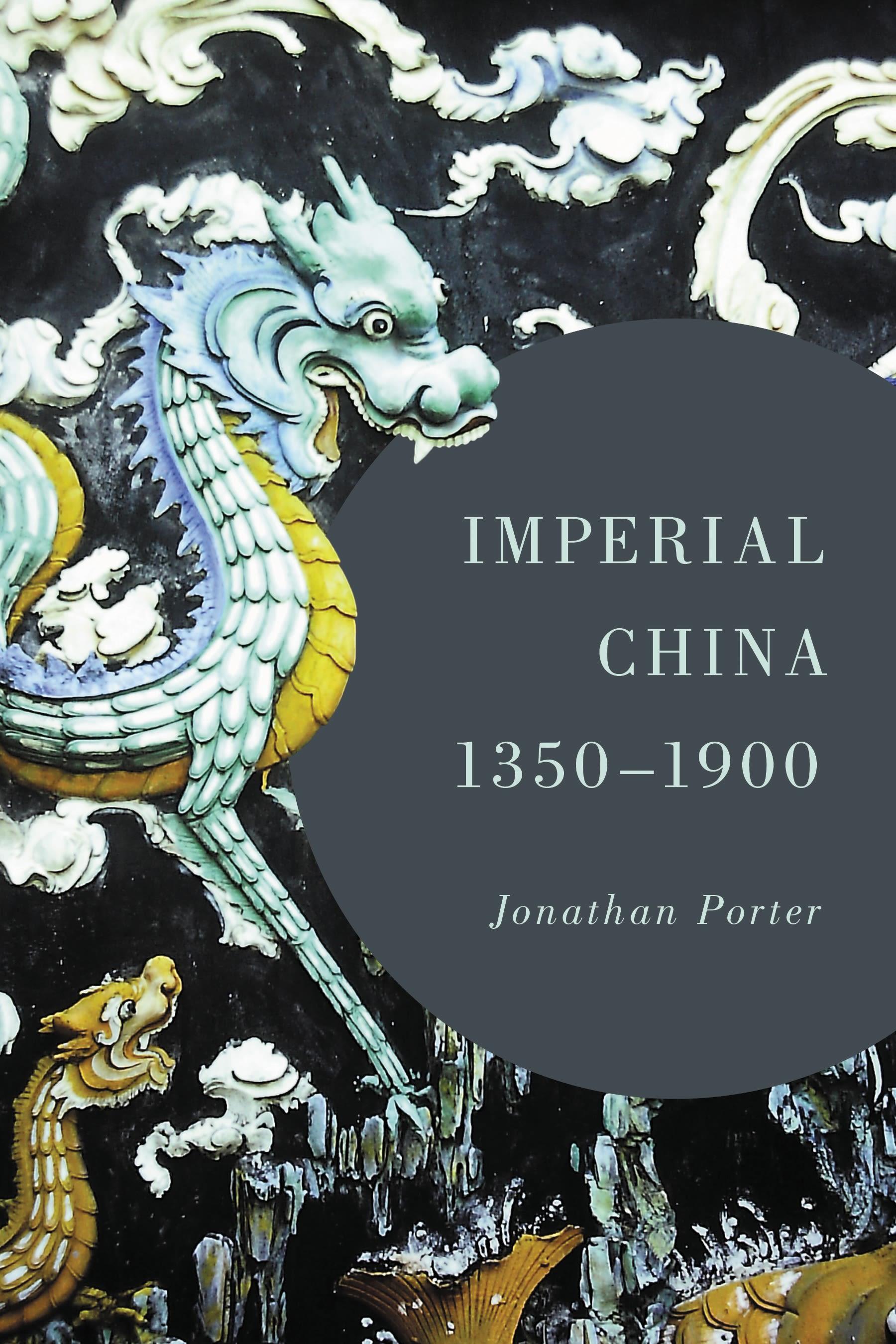
This clear and engaging book provides a concise overview of the Ming-Qing epoch (1368–1912), China’s last imperial age. Beginning with the end of the Mongol domination of China in 1368, this five-century period was remarkable for its continuity and stability until its downfall in the Revolution of 1911. Viewing the Ming and Qing dynasties as a coherent era characterized by the fruition of diverse developments from earliest times, Jonathan Porter traces the growth of imperial autocracy, the role of the educated Confucian elite as custodians of cultural authority, the significance of ritual as the grounding of political and social order, the tension between monarchy and bureaucracy in political discourse, the evolution of Chinese cultural identity, and the perception of the “barbarian” and other views of the world beyond China. As the climax of traditional Chinese history and the harbinger of modern China in the twentieth century, Porter argues that imperial China must be explored for its own sake as well as for the essential foundation it provides in understanding contemporary China, and indeed world history writ large.
Pay easily by card, Klarna, Apple Pay or Google Pay. Not happy? You always have a 14-day money-back guarantee. Read more in our terms. If you have any questions, email us at hello@memmo.org.
Memmo makes studying easier – wherever you are in the world. We bring your course books and smart study tools together in one place: summaries, quizzes, podcasts and flashcards. Plus Ted, your study buddy who answers anything you wonder. Over 50,000 students already study here – built to help you learn faster and stress less.