
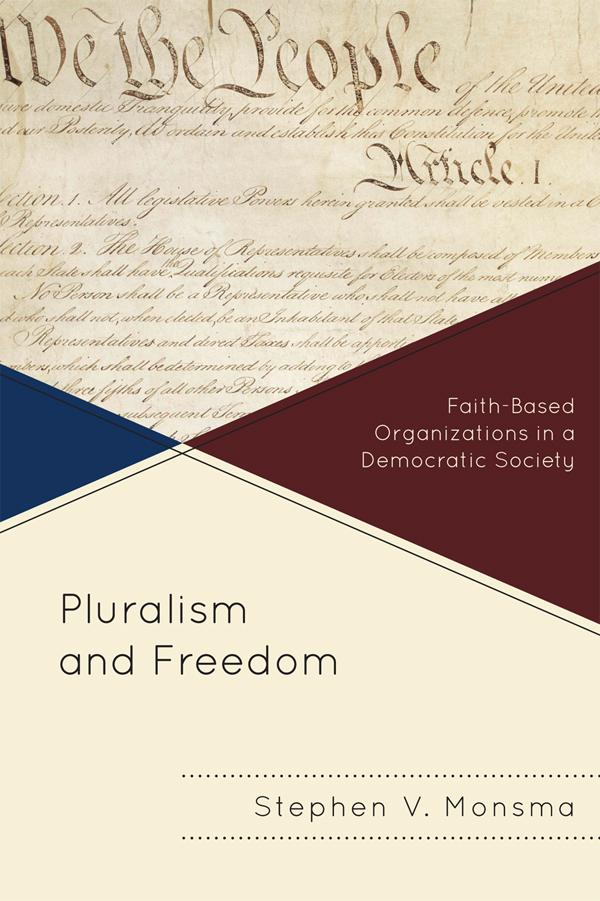
Faith-based organizations play a major role in providing a host of health, educational, and social services to the public. Nearly all these efforts, however, have been accompanied by intense debate and numerous legal challenges. The right of faith-based organizations to hire based on religion, the presence of religious symbols and icons in rooms where government-subsidized services are provided, and the enforcement of gay civil rights to which some faith-based organizations object all continue to be subjects of intense debate and numerous court cases. In Pluralism and Freedom, Stephen V. Monsma explores the question of how much autonomy should faith-based organizations retain when they enter the public realm? He contends that pluralism and freedom demand their religious freedom be respected, but that freedom of all religious traditions and of the general public and secular groups be equally respected, ideals that neither the left nor the right live up to. In response, Monsma argues that democratic pluralism requires a genuine, authentic—but also a limited—autonomy for faith-based organizations providing public services, and offers practical, concrete public policy applications of this framework in practice.
Pay easily by card, Klarna, Apple Pay or Google Pay. Not happy? You always have a 14-day money-back guarantee. Read more in our terms. If you have any questions, email us at hello@memmo.org.
Memmo makes studying easier – wherever you are in the world. We bring your course books and smart study tools together in one place: summaries, quizzes, podcasts and flashcards. Plus Ted, your study buddy who answers anything you wonder. Over 50,000 students already study here – built to help you learn faster and stress less.