
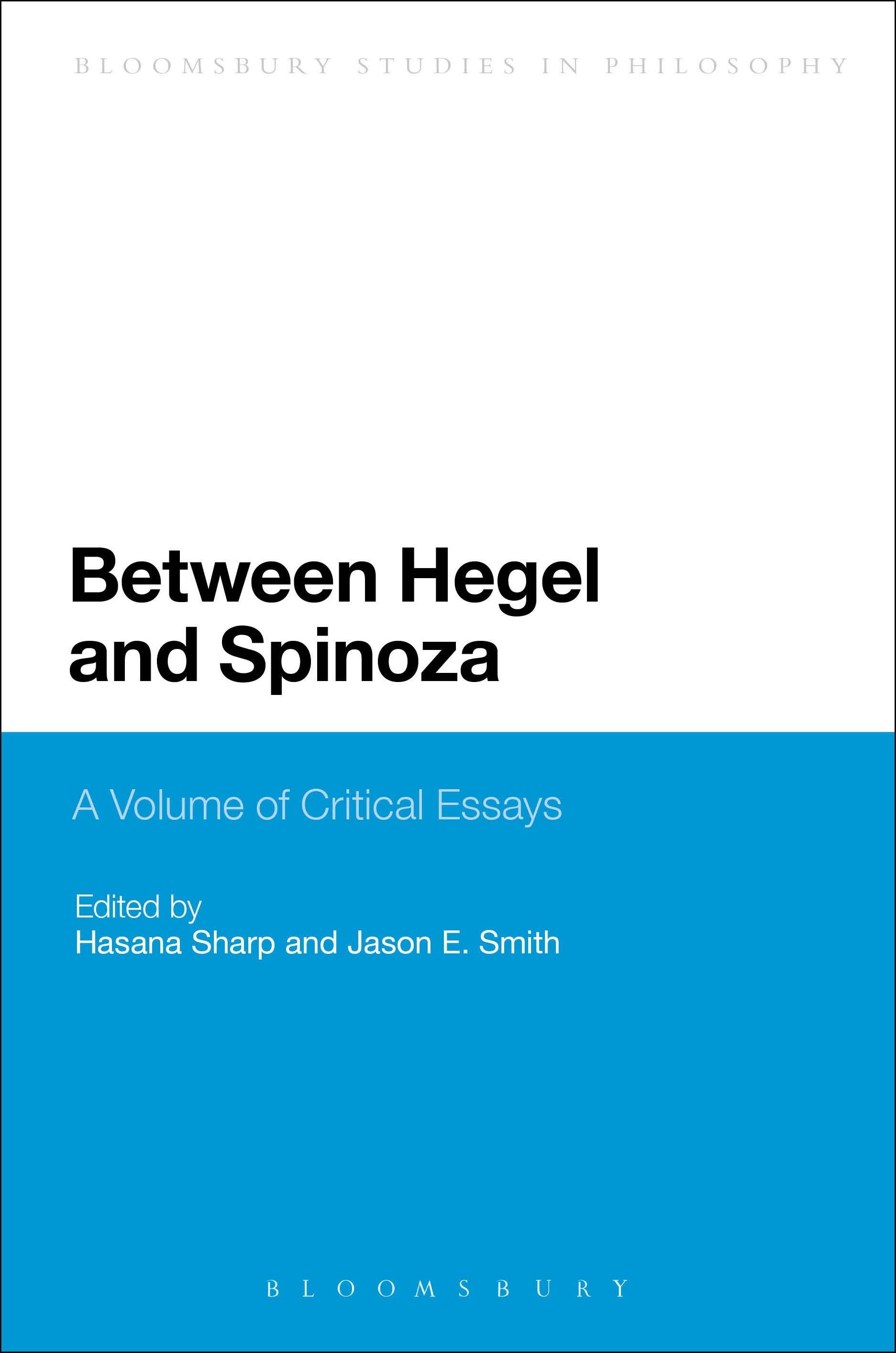
Recent
work in political philosophy and the history of ideas presents Spinoza and
Hegel as the most powerful living alternatives to mainstream Enlightenment
thought. Yet, for many philosophers and political theorists today, one must
choose between Hegel or Spinoza. As Deleuze's influential interpretation
maintains, Hegel exemplifies and promotes the modern "cults of death," while
Spinoza embodies an irrepressible "appetite for living." Hegel is the figure of
negation, while Spinoza is the thinker of "pure affirmation". Yet, between
Hegel and Spinoza there is not only opposition. This collection of essays seeks
to find the suppressed kinship between Hegel and Spinoza. Both philosophers
offer vigorous and profound alternatives to the methodological individualism of
classical liberalism. Likewise, they sketch portraits of reason that are
context-responsive and emotionally contoured, offering an especially rich appreciation
of our embodied and historical existence. The authors of this collection
carefully lay the groundwork for a complex and delicate alliance between these
two great iconoclasts, both within and against the Enlightenment tradition.
work in political philosophy and the history of ideas presents Spinoza and
Hegel as the most powerful living alternatives to mainstream Enlightenment
thought. Yet, for many philosophers and political theorists today, one must
choose between Hegel or Spinoza. As Deleuze's influential interpretation
maintains, Hegel exemplifies and promotes the modern "cults of death," while
Spinoza embodies an irrepressible "appetite for living." Hegel is the figure of
negation, while Spinoza is the thinker of "pure affirmation". Yet, between
Hegel and Spinoza there is not only opposition. This collection of essays seeks
to find the suppressed kinship between Hegel and Spinoza. Both philosophers
offer vigorous and profound alternatives to the methodological individualism of
classical liberalism. Likewise, they sketch portraits of reason that are
context-responsive and emotionally contoured, offering an especially rich appreciation
of our embodied and historical existence. The authors of this collection
carefully lay the groundwork for a complex and delicate alliance between these
two great iconoclasts, both within and against the Enlightenment tradition.
Pay easily by card, Klarna, Apple Pay or Google Pay. Not happy? You always have a 14-day money-back guarantee. Read more in our terms. If you have any questions, email us at hello@memmo.org.
Memmo makes studying easier – wherever you are in the world. We bring your course books and smart study tools together in one place: summaries, quizzes, podcasts and flashcards. Plus Ted, your study buddy who answers anything you wonder. Over 50,000 students already study here – built to help you learn faster and stress less.