
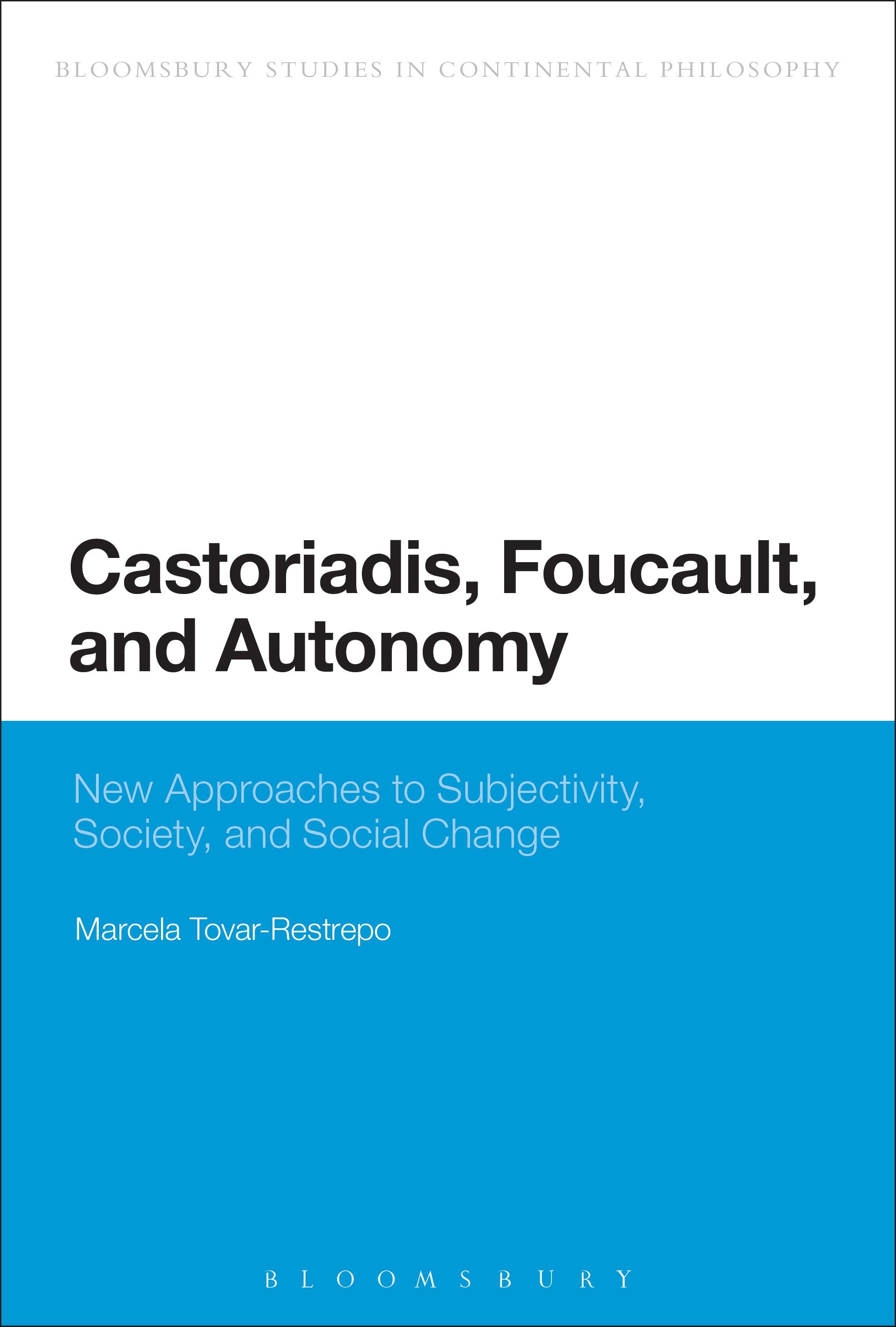
This book examines Cornelius Castoriadis' thought and the radical alternative it presents to the legacy of Michel Foucault, focusing on three key notions that are central in both scholars' theories: the subject, the production of social meaning and representation, and social/cultural change.
Castoriadis and Foucault faced similar theoretical and political challenges and tackled common questions, yet their conclusions diverged significantly. This important book establishes, for the first time, a critical dialogue between these two bodies of thought. Through a detailed exploration of the Castoridian perspective, Marcela Tovar-Restrepo addresses the limitations of Foucault's poststructuralist thought; exploring and comparing what those three central notions mean in each framework. In so doing, Tovar-Restrepo elucidates a greater understanding of their differences and the resulting consequences for the social sciences and the role of social theory. Ultimately, this book presents Castoriadis' philosophical and theoretical position as an alternative to unresolved poststructuralist problems and to what Castoriadis saw as a deterministic ontology embedded in political relativism; paving the way for an invigorating debate about autonomy and social change.
Castoriadis and Foucault faced similar theoretical and political challenges and tackled common questions, yet their conclusions diverged significantly. This important book establishes, for the first time, a critical dialogue between these two bodies of thought. Through a detailed exploration of the Castoridian perspective, Marcela Tovar-Restrepo addresses the limitations of Foucault's poststructuralist thought; exploring and comparing what those three central notions mean in each framework. In so doing, Tovar-Restrepo elucidates a greater understanding of their differences and the resulting consequences for the social sciences and the role of social theory. Ultimately, this book presents Castoriadis' philosophical and theoretical position as an alternative to unresolved poststructuralist problems and to what Castoriadis saw as a deterministic ontology embedded in political relativism; paving the way for an invigorating debate about autonomy and social change.
Pay easily by card, Klarna, Apple Pay or Google Pay. Not happy? You always have a 14-day money-back guarantee. Read more in our terms. If you have any questions, email us at hello@memmo.org.
Memmo makes studying easier – wherever you are in the world. We bring your course books and smart study tools together in one place: summaries, quizzes, podcasts and flashcards. Plus Ted, your study buddy who answers anything you wonder. Over 50,000 students already study here – built to help you learn faster and stress less.