
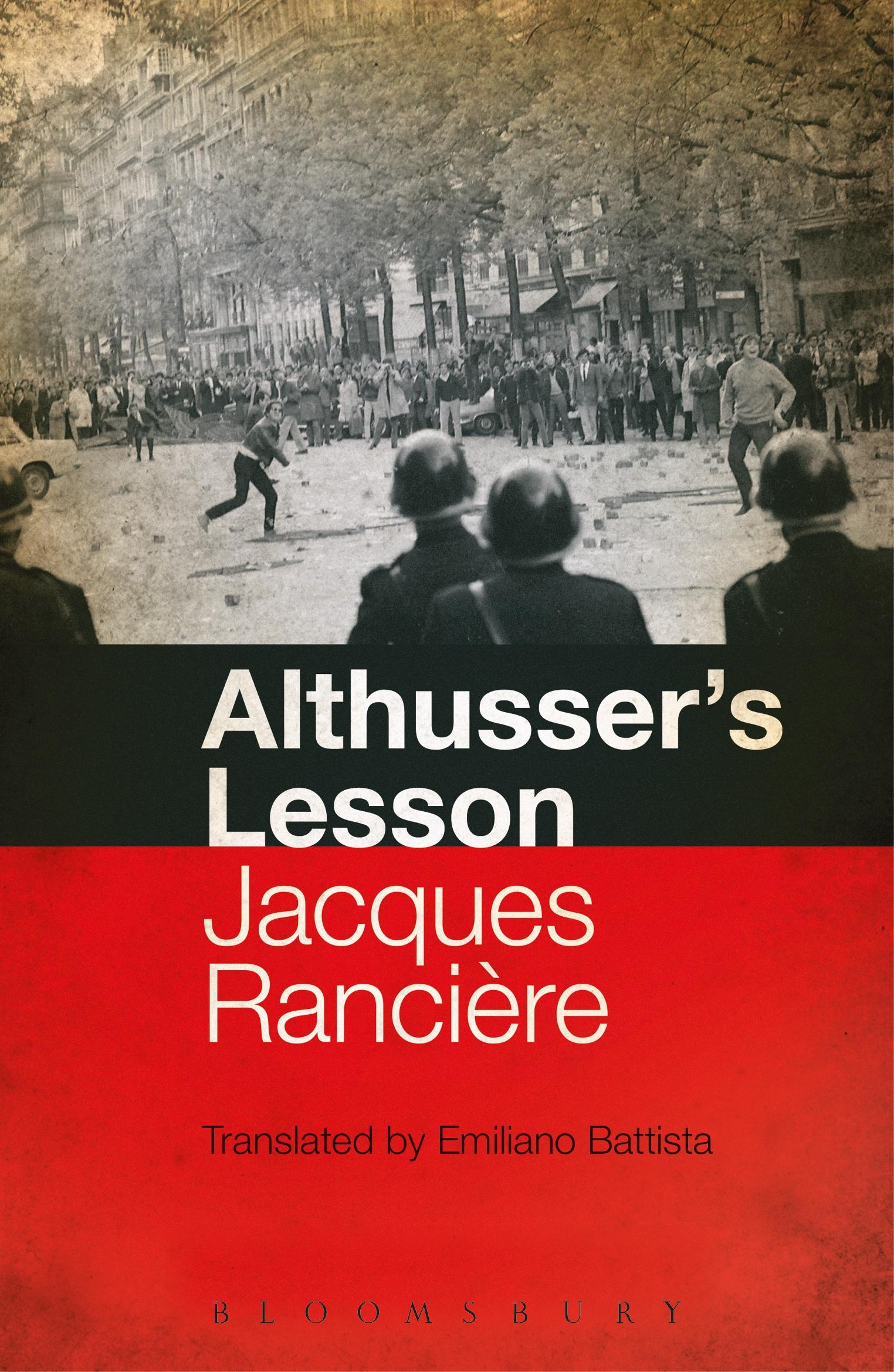
Jacques Rancière's first major work, Althusser's Lesson appeared in 1974, just as the energies of May 68 were losing ground to the calls for a return to order. Rancière's analysis of Althusserian Marxism unfolds against this background: what is the relationship between the return to order and the enthusiasm which greeted the publication of Althusser's Reply to John Lewis in 1973? How to explain the rehabilitation of a philosophy that had been declared 'dead and buried on the barricades of May 68'? What had changed? The answer to this question takes the form of a genealogy of Althusserianism that is, simultaneously, an account of the emergence of militant student movements in the '60s, of the arrival of Maoism in France, and of how May 68 rearranged all the pieces anew. Encompassing the book's distinctive combination of theoretical analysis and historical description is a question that has guided Rancière's thought ever since: how do theories of subversion become the rationale for order?
Pay easily by card, Klarna, Apple Pay or Google Pay. Not happy? You always have a 14-day money-back guarantee. Read more in our terms. If you have any questions, email us at hello@memmo.org.
Memmo makes studying easier – wherever you are in the world. We bring your course books and smart study tools together in one place: summaries, quizzes, podcasts and flashcards. Plus Ted, your study buddy who answers anything you wonder. Over 50,000 students already study here – built to help you learn faster and stress less.