
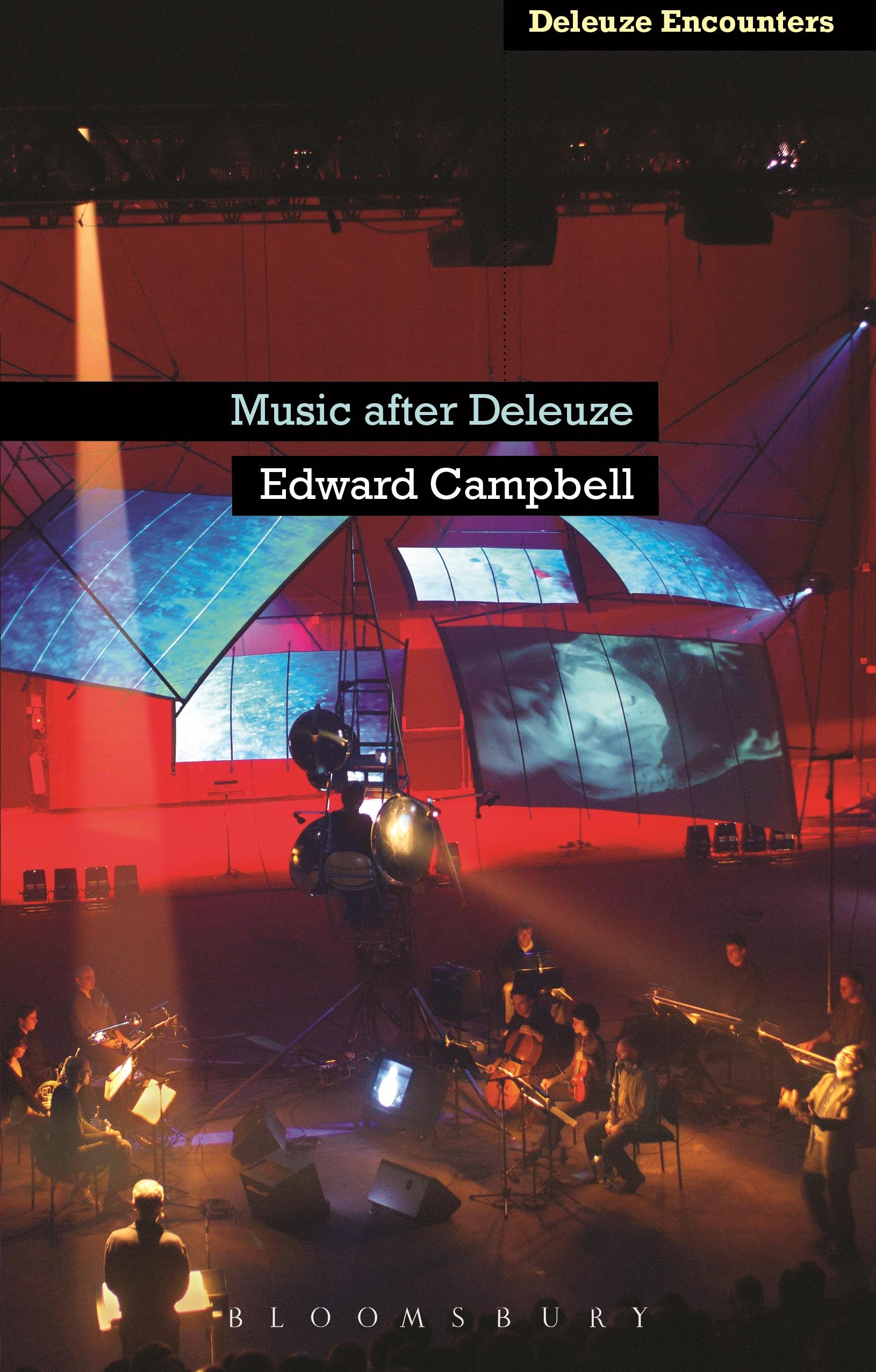
Music After Deleuze explores how Deleuzian concepts offer interesting ways of thinking about a wide range of musics. The concepts of difference, identity and repetition offer novel approaches to Western art music from Beethoven to Boulez and Bernhard Lang as well as jazz improvisation, popular and sacred music. The concepts of the 'rhizome', the 'assemblage' and the 'refrain' enable us to think of the specificity of musical works as the meeting of productive forces, for example in the contemporary opera of Dusapin and the experimental music theatre of Aperghis. The concepts of smooth and striated space form the starting point for musical and political reflections on pitch in Western and Eastern music. Deleuze's notion of time as multiple illumines the distinctive conceptions of musical time found in Debussy, Messiaen, Boulez, Carter and Grisey. Finally, the innovative semiotic theory forged in Deleuze-Guattarian philosophy offers valuable insights for a semiotics capable of engaging with the innovative, molecular music of Lachenmann, Aperghis and Levinas.
Pay easily by card, Klarna, Apple Pay or Google Pay. Not happy? You always have a 14-day money-back guarantee. Read more in our terms. If you have any questions, email us at hello@memmo.org.
Memmo makes studying easier – wherever you are in the world. We bring your course books and smart study tools together in one place: summaries, quizzes, podcasts and flashcards. Plus Ted, your study buddy who answers anything you wonder. Over 50,000 students already study here – built to help you learn faster and stress less.