
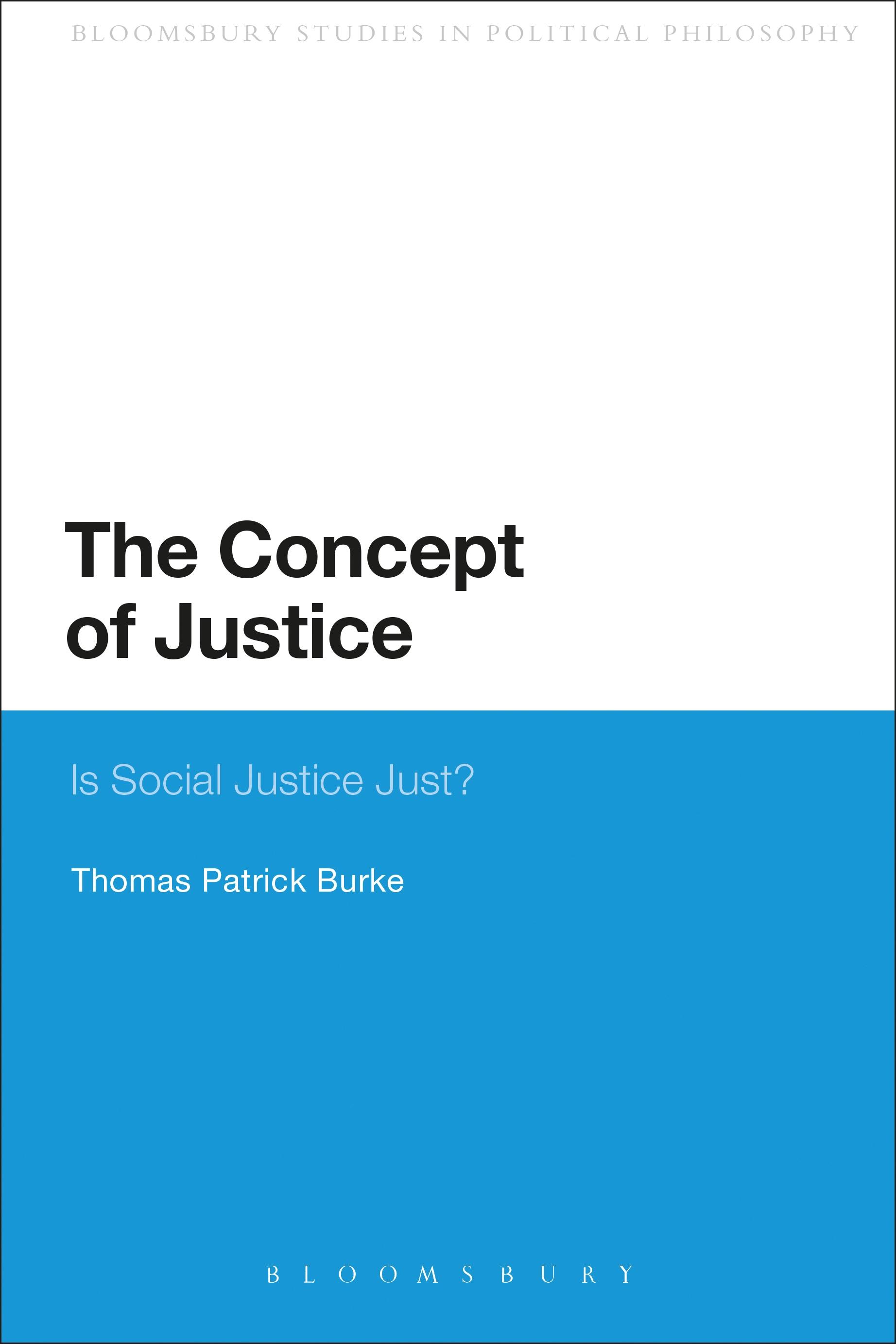
In The Concept of Justice, Patrick Burke explores and argues for a return to traditional ideas of ordinary justice in opposition to conceptions of 'social justice' that came to dominate political thought in the 20th Century. Arguing that our notions of justice have been made incoherent by the radical incompatibility between instinctive notions of ordinary justice and theoretical conceptions of social justice, the book goes on to explore the historical roots of these ideas of social justice. Finding the roots of these ideas in religious circles in Italy and England in the 19th century, Burke explores the ongoing religious influence in the development of the concept in the works of Marx, Mill and Hobhouse. In opposition to this legacy of liberal thought, the book presents a new theory of ordinary justice drawing on the thought of Immanuel Kant. In this light, Burke finds that all genuine ethical evaluation must presuppose free will and individual responsibility and that all true injustice is fundamentally coercive.
Pay easily by card, Klarna, Apple Pay or Google Pay. Not happy? You always have a 14-day money-back guarantee. Read more in our terms. If you have any questions, email us at hello@memmo.org.
Memmo makes studying easier – wherever you are in the world. We bring your course books and smart study tools together in one place: summaries, quizzes, podcasts and flashcards. Plus Ted, your study buddy who answers anything you wonder. Over 50,000 students already study here – built to help you learn faster and stress less.