
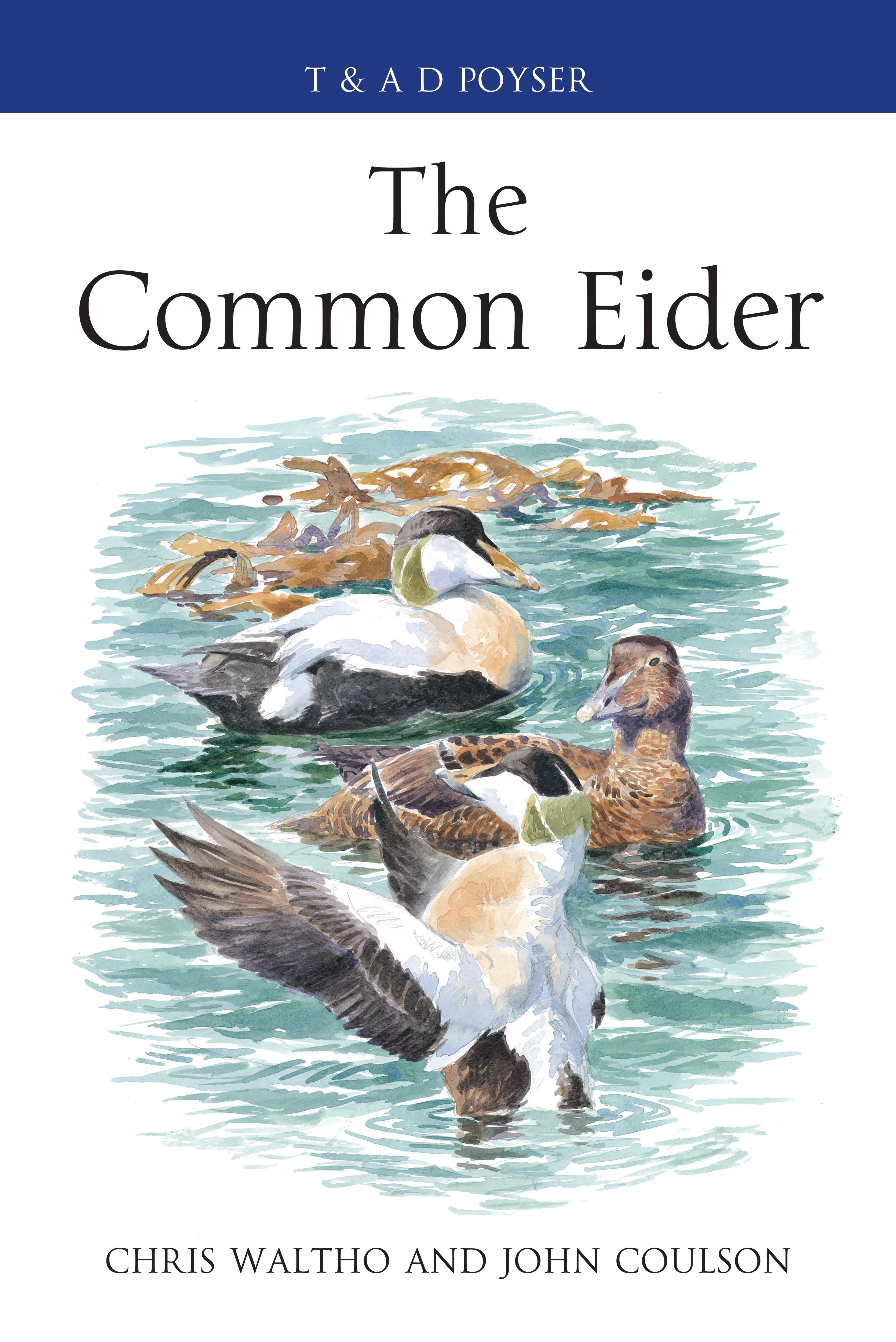
A monograph of the Common Eider, a large and familiar duck with a long and fascinating cultural history.
A common sight around the more northerly shores of the British Isles, the Common Eider is the largest duck in the northern hemisphere. The eider is particularly well adapted to cold-water environments; the insulating properties of eider down are iconic.
The species is taxonomically interesting, with a range of well-marked subspecies reflecting the patterns of ice coverage during ancient glaciations, and these ducks have also provided the focus for a number of important behavioural studies, especially on feeding ecology and energy budgets.
Eiders have a long association with humans, and have deep cultural significance in many societies. However, modern lifestyles are exposing these ducks to a wide range of new pressures.
This monograph provides a comprehensive portrait of the Common Eider; authors Chris Waltho and John Coulson bring together an extensive and diverse international literature, with sections on taxonomy, habitats, breeding biology, population dynamics, diet and foraging, dispersal and migration, and conservation.
A common sight around the more northerly shores of the British Isles, the Common Eider is the largest duck in the northern hemisphere. The eider is particularly well adapted to cold-water environments; the insulating properties of eider down are iconic.
The species is taxonomically interesting, with a range of well-marked subspecies reflecting the patterns of ice coverage during ancient glaciations, and these ducks have also provided the focus for a number of important behavioural studies, especially on feeding ecology and energy budgets.
Eiders have a long association with humans, and have deep cultural significance in many societies. However, modern lifestyles are exposing these ducks to a wide range of new pressures.
This monograph provides a comprehensive portrait of the Common Eider; authors Chris Waltho and John Coulson bring together an extensive and diverse international literature, with sections on taxonomy, habitats, breeding biology, population dynamics, diet and foraging, dispersal and migration, and conservation.
Pay easily by card, Klarna, Apple Pay or Google Pay. Not happy? You always have a 14-day money-back guarantee. Read more in our terms. If you have any questions, email us at hello@memmo.org.
Memmo makes studying easier – wherever you are in the world. We bring your course books and smart study tools together in one place: summaries, quizzes, podcasts and flashcards. Plus Ted, your study buddy who answers anything you wonder. Over 50,000 students already study here – built to help you learn faster and stress less.