
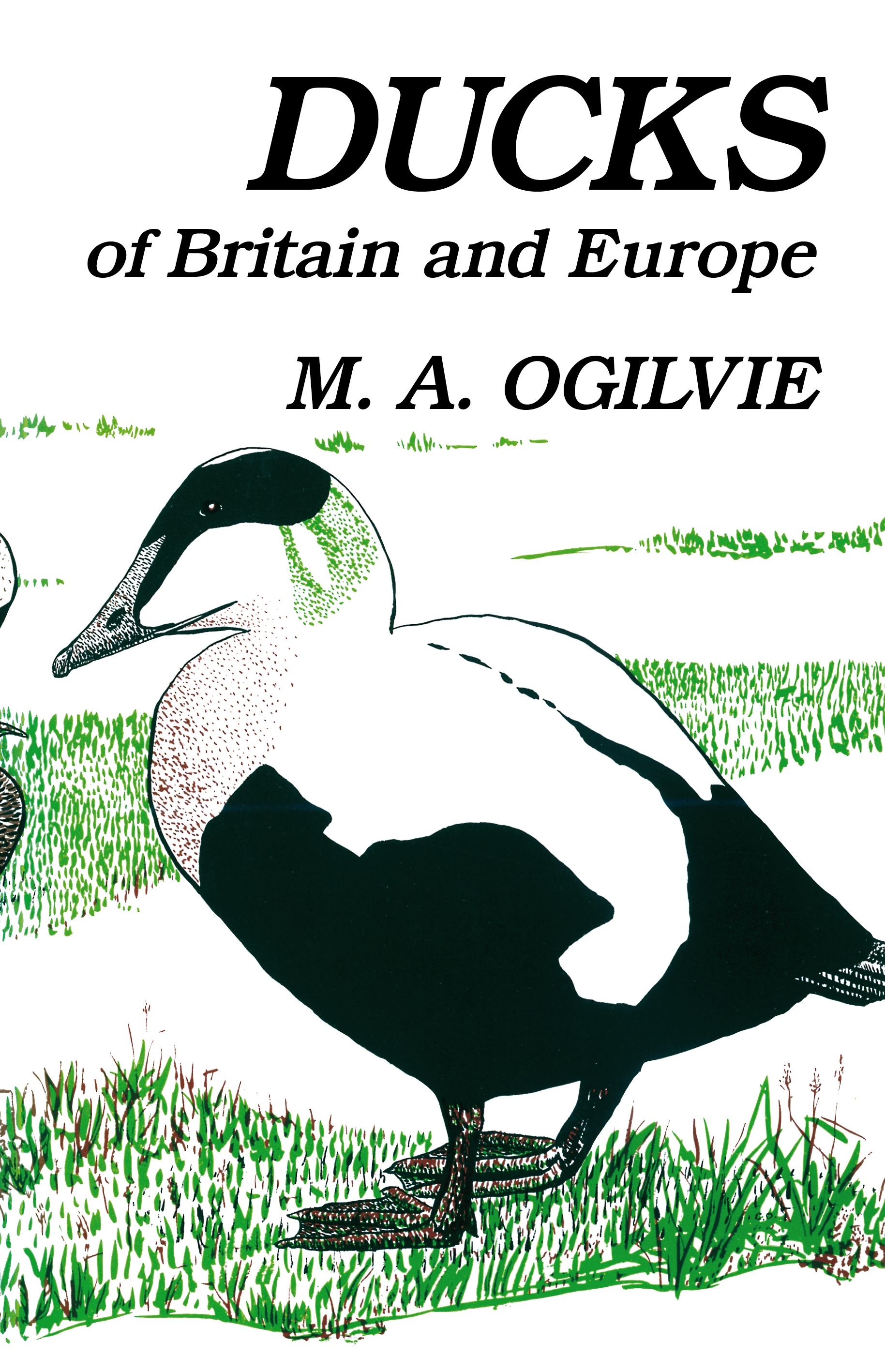
The identification, ecology and biology of the ducks of Europe.
The forty-two species or subspecies of ducks which occur in Europe, including eleven vagrants from North America or Asia, are the subject of this book. Its author is an accepted authority on ducks and geese, and has been a member of the research staff of the Wildfowl Trust at Slimbridge since 1960.
Most birdwatchers consider ducks to be especially attractive and interesting birds, and many species of ducks are also the legitimate quarry of wildfowlers. Both groups need to identify the species quickly and accurately, and almost half of the book is devoted to identification, offering a far more detailed account than is to be found in any of the field guides. There are detailed descriptions, species by species, of the adult males and females, immature birds, eclipse males, and downy young - voice, too, is dealt with - and full-colour plates of males and females show the flight patterns, so important for correct species identification.
The habits of European ducks are treated in chapters on behaviour and ecology, breeding biology, distribution and status, and the ever-fascinating topic of migration and navigation. The distribution chapter has maps showing the summer and winter ranges in Europe, North Africa, the Middle East and Central Russia, for 24 species. A final chapter considers the present day threats to ducks and their wetland habitats, and the conservation measures being taken to combat the threats.
The colour plates and more than 80 line drawings in the text are by Carol Ogilvie, the author's wife.
Jacket illustration by Carol Ogilvie.
The forty-two species or subspecies of ducks which occur in Europe, including eleven vagrants from North America or Asia, are the subject of this book. Its author is an accepted authority on ducks and geese, and has been a member of the research staff of the Wildfowl Trust at Slimbridge since 1960.
Most birdwatchers consider ducks to be especially attractive and interesting birds, and many species of ducks are also the legitimate quarry of wildfowlers. Both groups need to identify the species quickly and accurately, and almost half of the book is devoted to identification, offering a far more detailed account than is to be found in any of the field guides. There are detailed descriptions, species by species, of the adult males and females, immature birds, eclipse males, and downy young - voice, too, is dealt with - and full-colour plates of males and females show the flight patterns, so important for correct species identification.
The habits of European ducks are treated in chapters on behaviour and ecology, breeding biology, distribution and status, and the ever-fascinating topic of migration and navigation. The distribution chapter has maps showing the summer and winter ranges in Europe, North Africa, the Middle East and Central Russia, for 24 species. A final chapter considers the present day threats to ducks and their wetland habitats, and the conservation measures being taken to combat the threats.
The colour plates and more than 80 line drawings in the text are by Carol Ogilvie, the author's wife.
Jacket illustration by Carol Ogilvie.
Pay easily by card, Klarna, Apple Pay or Google Pay. Not happy? You always have a 14-day money-back guarantee. Read more in our terms. If you have any questions, email us at hello@memmo.org.
Memmo makes studying easier – wherever you are in the world. We bring your course books and smart study tools together in one place: summaries, quizzes, podcasts and flashcards. Plus Ted, your study buddy who answers anything you wonder. Over 50,000 students already study here – built to help you learn faster and stress less.