
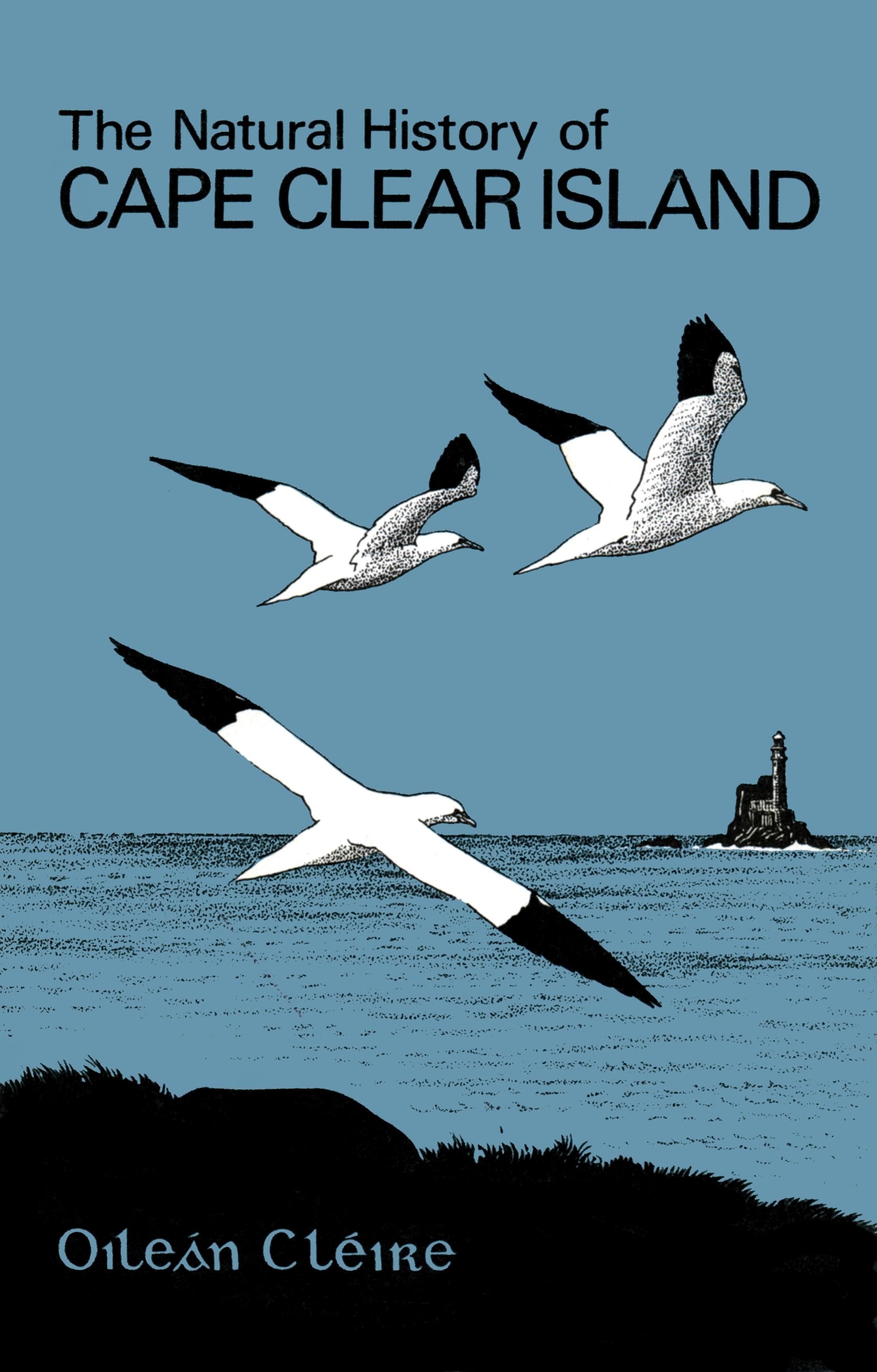
Cape Clear Island, the most southerly point of Ireland apart from the nearby Fastnet Rock, has been the site of a bird observatory since 1959.
This account of the island, its flora and fauna, its inhabitants and history, is weighted in favour of the birds but this is, perhaps, inevitable since the island offers so much of exceptional ornithological interest. Even so, a glance at the book's contents will show the wide range covered - from Killer Whales to the rare Kerry Slug and the Lusitanian flora that south-west Ireland shares with Iberia. Anyone with a general interest in natural history will find chapters on a variety of topics, each written by an acknowledged expert. The authors' enthusiasm for their subjects is always apparent; some sections are lighthearted but scientific accuracy is always maintained.
For the bird-watcher the book, like the island, is rich in fascinating material - not least the detailed list of species (accompanied by many maps and a unique set of more than 130 histograms), sections on sea-watching and seabird studies, and an account of the ornithological year.
The observatory has made important contributions to migration studies and, although it is perhaps best known as a vantage point for the study of some of Europe's largest sea bird movements, the island also receives many rarities and vagrants, from Asia and America as well as Europe. To whet the reader's appetite, Robert Gillmor's characteristically evocative pen- and-ink illustrations are liberally mingled with the text.
Those who already know the island's varied charms will have memories reawakened by this eminently readable book - those who have yet to visit this unique yet accessible place will surely be enticed to do so.
This account of the island, its flora and fauna, its inhabitants and history, is weighted in favour of the birds but this is, perhaps, inevitable since the island offers so much of exceptional ornithological interest. Even so, a glance at the book's contents will show the wide range covered - from Killer Whales to the rare Kerry Slug and the Lusitanian flora that south-west Ireland shares with Iberia. Anyone with a general interest in natural history will find chapters on a variety of topics, each written by an acknowledged expert. The authors' enthusiasm for their subjects is always apparent; some sections are lighthearted but scientific accuracy is always maintained.
For the bird-watcher the book, like the island, is rich in fascinating material - not least the detailed list of species (accompanied by many maps and a unique set of more than 130 histograms), sections on sea-watching and seabird studies, and an account of the ornithological year.
The observatory has made important contributions to migration studies and, although it is perhaps best known as a vantage point for the study of some of Europe's largest sea bird movements, the island also receives many rarities and vagrants, from Asia and America as well as Europe. To whet the reader's appetite, Robert Gillmor's characteristically evocative pen- and-ink illustrations are liberally mingled with the text.
Those who already know the island's varied charms will have memories reawakened by this eminently readable book - those who have yet to visit this unique yet accessible place will surely be enticed to do so.
Pay easily by card, Klarna, Apple Pay or Google Pay. Not happy? You always have a 14-day money-back guarantee. Read more in our terms. If you have any questions, email us at hello@memmo.org.
Memmo makes studying easier – wherever you are in the world. We bring your course books and smart study tools together in one place: summaries, quizzes, podcasts and flashcards. Plus Ted, your study buddy who answers anything you wonder. Over 50,000 students already study here – built to help you learn faster and stress less.