
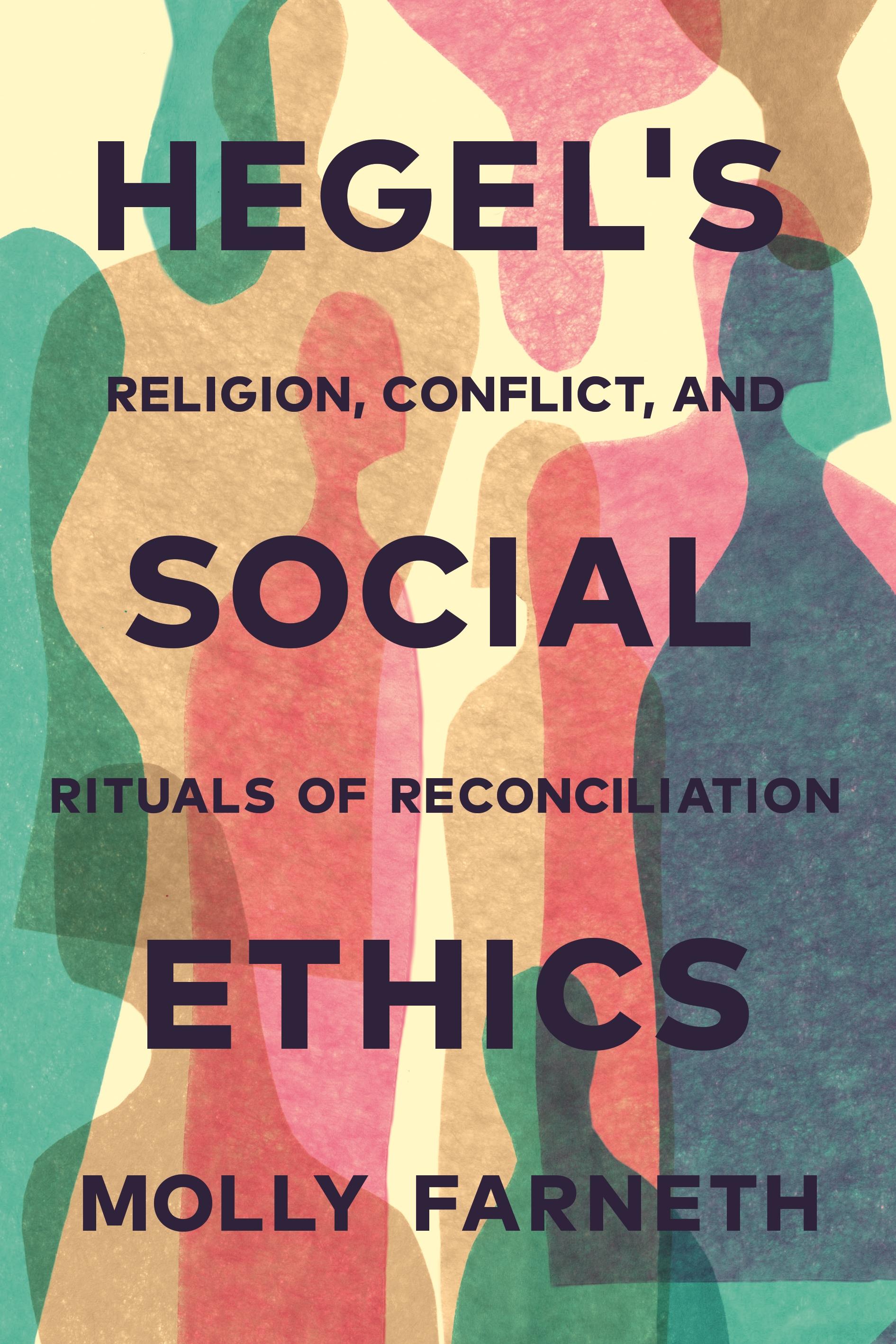
Hegel’s Social Ethics offers a fresh and accessible interpretation of G. W. F. Hegel’s most famous book, the Phenomenology of Spirit. Drawing on important recent work on the social dimensions of Hegel’s theory of knowledge, Molly Farneth shows how his account of how we know rests on his account of how we ought to live.
Farneth argues that Hegel views conflict as an unavoidable part of living together, and that his social ethics involves relationships and social practices that allow people to cope with conflict and sustain hope for reconciliation. Communities create, contest, and transform their norms through these relationships and practices, and Hegel’s model for them are often the interactions and rituals of the members of religious communities.
The book’s close readings reveal the ethical implications of Hegel’s discussions of slavery, Greek tragedy, early modern culture wars, and confession and forgiveness. The book also illuminates how contemporary democratic thought and practice can benefit from Hegelian insights.
Through its sustained engagement with Hegel’s ideas about conflict and reconciliation, Hegel’s Social Ethics makes an important contribution to debates about how to live well with religious and ethical disagreement.
Pay easily by card, Klarna, Apple Pay or Google Pay. Not happy? You always have a 14-day money-back guarantee. Read more in our terms. If you have any questions, email us at hello@memmo.org.
Memmo makes studying easier – wherever you are in the world. We bring your course books and smart study tools together in one place: summaries, quizzes, podcasts and flashcards. Plus Ted, your study buddy who answers anything you wonder. Over 50,000 students already study here – built to help you learn faster and stress less.