
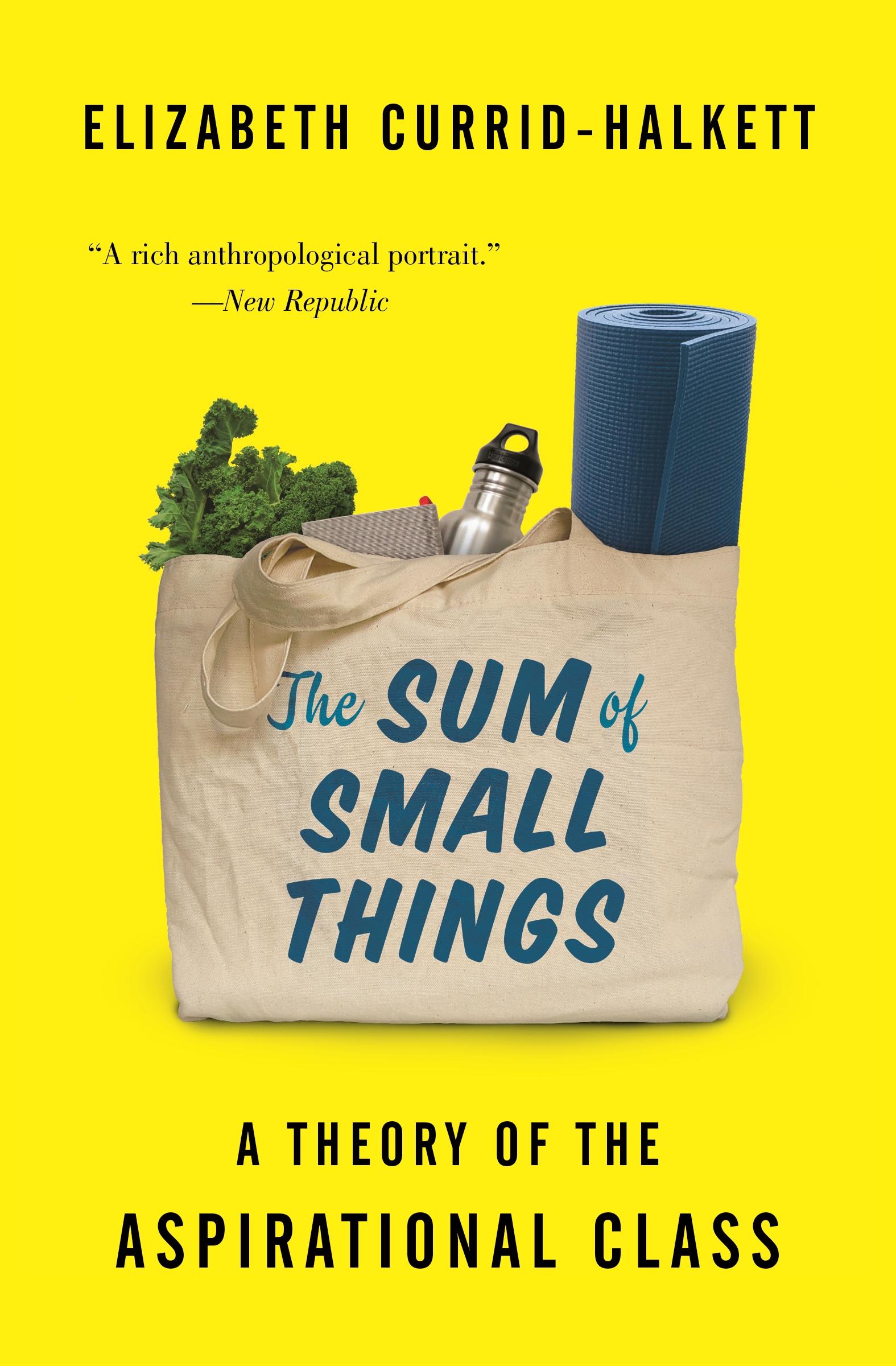
How the leisure class has been replaced by a new elite, and how their consumer habits affect us all
In today’s world, the leisure class has been replaced by a new elite. Highly educated and defined by cultural capital rather than income bracket, these individuals earnestly buy organic, carry NPR tote bags, and breast-feed their babies. They care about discreet, inconspicuous consumption—like eating free-range chicken and heirloom tomatoes, wearing organic cotton shirts and TOMS shoes, and listening to the Serial podcast. They use their purchasing power to hire nannies and housekeepers, to cultivate their children’s growth, and to practice yoga and Pilates. In The Sum of Small Things, Elizabeth Currid-Halkett dubs this segment of society “the aspirational class” and discusses how, through deft decisions about education, health, parenting, and retirement, the aspirational class reproduces wealth and upward mobility, deepening the ever-wider class divide.
Exploring the rise of the aspirational class, Currid-Halkett considers how much has changed since the 1899 publication of Thorstein Veblen’s Theory of the Leisure Class. In that inflammatory classic, which coined the phrase “conspicuous consumption,” Veblen described upper-class frivolities: men who used walking sticks for show, and women who bought silver flatware despite the effectiveness of cheaper aluminum utensils. Now, Currid-Halkett argues, the power of material goods as symbols of social position has diminished due to their accessibility. As a result, the aspirational class has altered its consumer habits away from overt materialism to more subtle expenditures that reveal status and knowledge. And these transformations influence how we all make choices.
With a rich narrative and extensive interviews and research, The Sum of Small Things illustrates how cultural capital leads to lifestyle shifts and what this forecasts, not just for the aspirational class but for everyone.
Pay easily by card, Klarna, Apple Pay or Google Pay. Not happy? You always have a 14-day money-back guarantee. Read more in our terms. If you have any questions, email us at hello@memmo.org.
Memmo makes studying easier – wherever you are in the world. We bring your course books and smart study tools together in one place: summaries, quizzes, podcasts and flashcards. Plus Ted, your study buddy who answers anything you wonder. Over 50,000 students already study here – built to help you learn faster and stress less.