
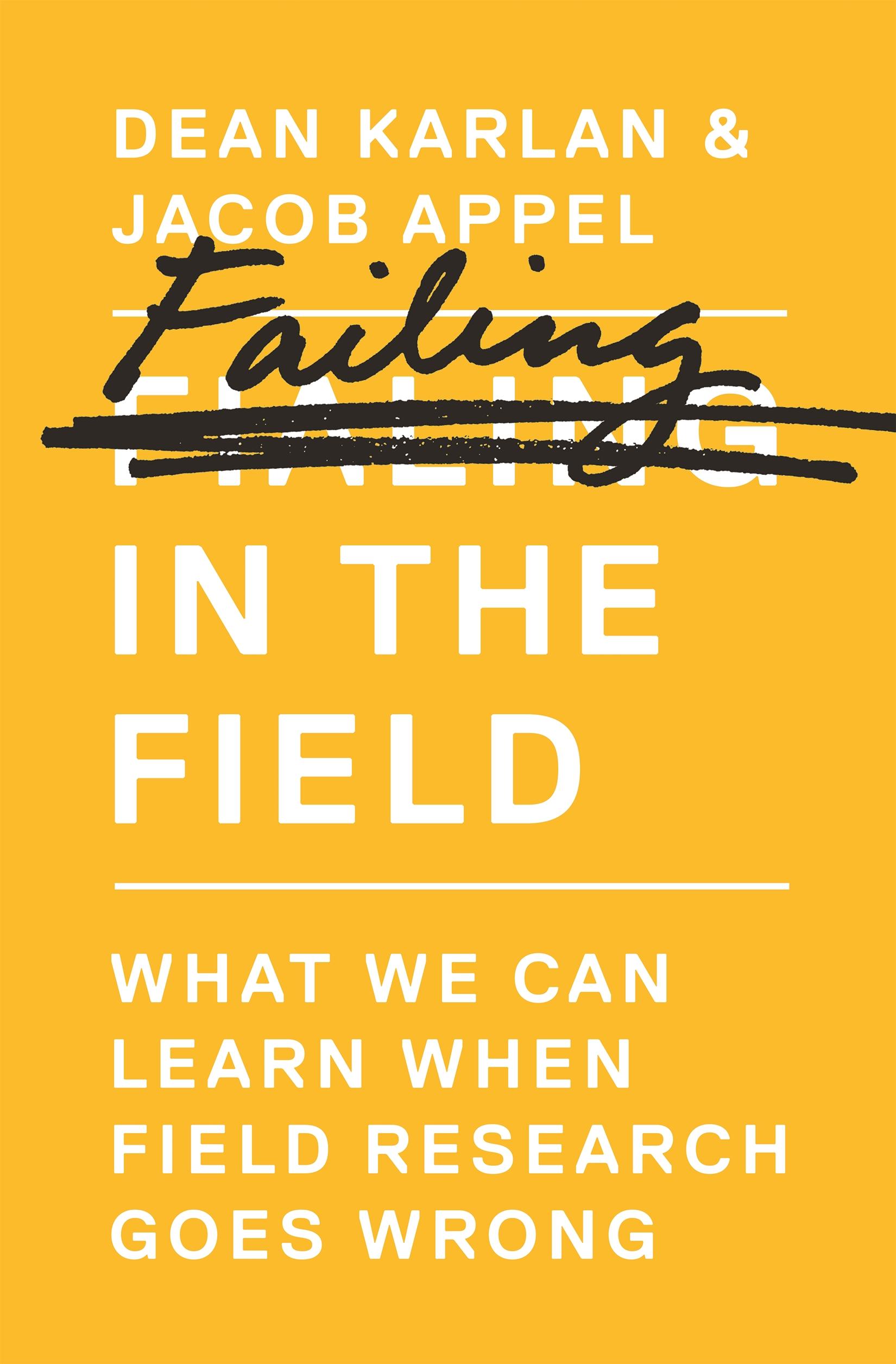
A revealing look at the common causes of failures in randomized control experiments during field reseach—and how to avoid them
All across the social sciences, from development economics to political science departments, researchers are going into the field to collect data and learn about the world. While much has been gained from the successes of randomized controlled trials, stories of failed projects often do not get told. In Failing in the Field, Dean Karlan and Jacob Appel delve into the common causes of failure in field research, so that researchers might avoid similar pitfalls in future work.
Drawing on the experiences of top social scientists working in developing countries, this book delves into failed projects and helps guide practitioners as they embark on their research. From experimental design and implementation to analysis and partnership agreements, Karlan and Appel show that there are important lessons to be learned from failures at every stage. They describe five common categories of failures, review six case studies in detail, and conclude with some reflections on best (and worst) practices for designing and running field projects, with an emphasis on randomized controlled trials. There is much to be gained from investigating what has previously not worked, from misunderstandings by staff to errors in data collection.
Cracking open the taboo subject of the stumbles that can take place in the implementation of research studies, Failing in the Field is a valuable "how-not-to" handbook for conducting fieldwork and running randomized controlled trials in development settings.
Pay easily by card, Klarna, Apple Pay or Google Pay. Not happy? You always have a 14-day money-back guarantee. Read more in our terms. If you have any questions, email us at hello@memmo.org.
Memmo makes studying easier – wherever you are in the world. We bring your course books and smart study tools together in one place: summaries, quizzes, podcasts and flashcards. Plus Ted, your study buddy who answers anything you wonder. Over 50,000 students already study here – built to help you learn faster and stress less.